


By Suresh Unnithan
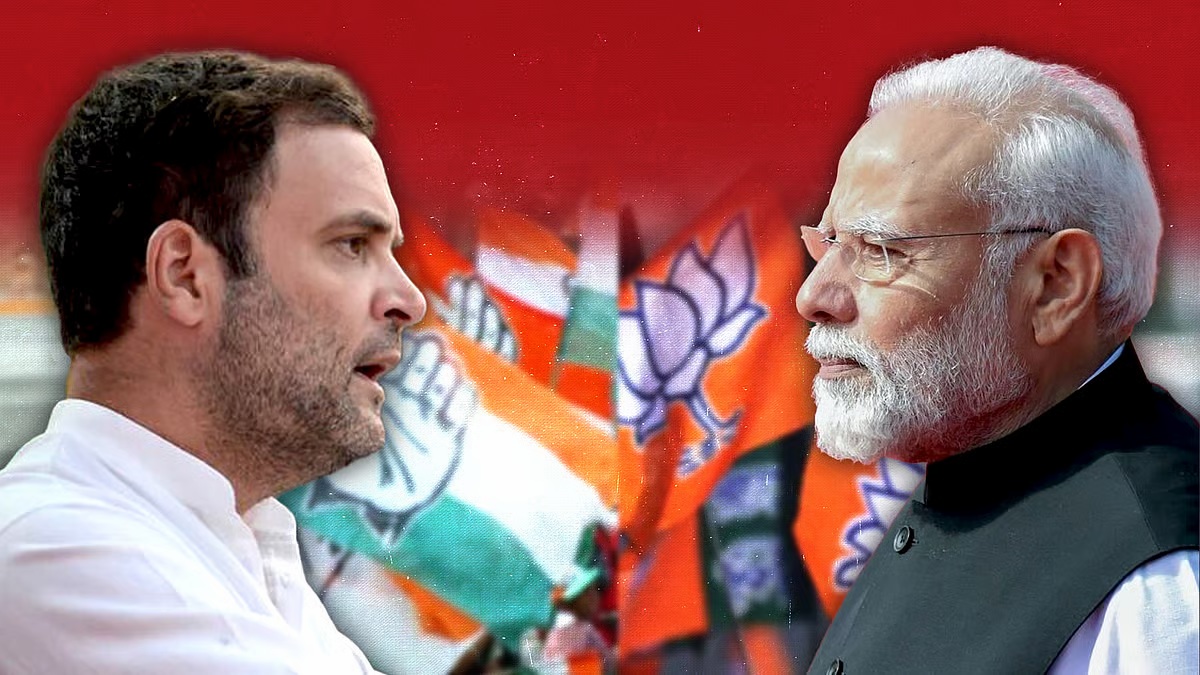
Rahul Gandhi’s invitation to Prime Minister Narendra Modi for an open debate on any stage and at any time has placed the Bharatiya Janata Party on the defensive. Issued on 2 November 2026, the challenge followed Modi’s characterisation of the opposition as an “obstructionist side” (avrodh paksh) rather than a legitimate “opposing side” (virodh paksh). Addressing the Rashtriya Ekta Diwas celebrations at Ekta Nagar in Gujarat on 31 October, the Prime Minister observed: “It is our misfortune that, at this time, the opposition in the country has abandoned its duty and has transformed from an opposition party into an obstructionist party. In their frustration and despair, these people are creating obstacles in the path of the country’s development. This is not healthy opposition; this is sheer obstruction. They have made this their core politics, and they are busy tearing apart the dignity and boundaries of the Constitution.”
He extended the charge to alleged external collusion: “Driven by more than a decade of frustration and disappointment, these people have now come out into the open. Who is secretly meeting whom abroad? Which anti-India forces are supporting them? Who is speaking the language of India’s enemies? We must recognise all these patterns. We must confront them unitedly.” Social media, he further contended, was being “weaponised” to disseminate rumours and tarnish the nation’s image.
Gandhi’s rejoinder on X inverted the imputation with calculated precision. “Mr. Modi, stop lying to this nation. You became PM because of foreign help. You remain PM because of foreign help. Your financial system is fully controlled and supported by foreigners. Foreign social media fully backs you,” he wrote. He then extended the challenge that has structured the subsequent exchange: “I challenge you to an open debate about this. Any stage, any time. Come if you have the guts. You won’t dare, because you’re terrified of what I know about you.”
By relinquishing the choice of venue and timing entirely to the Prime Minister, Gandhi has exposed a structural preference in the ruling party’s political repertoire. The BJP has long favoured carefully orchestrated spectacles, unidirectional addresses, and digital platforms where amplification remains subject to management. An unscripted, adversarial debate on claims of foreign financial leverage and institutional capture is the format the government has consistently declined. The absence of an immediate acceptance of the open offer has reinforced the impression of reluctance rather than confidence.
The challenge did not arise in isolation. It followed the INDIA bloc’s substantial Ramlila Maidan rally in Delhi on 1 November and a symbolic “public impeachment” of Chief Election Commissioner Gyanesh Kumar the preceding day. At the rally, Gandhi elevated the “vote chori” allegations into a direct demand for accountability. “Listen to me. What I say always turns out to be true, doesn’t it? I am telling every citizen and every youth of India: Gyanesh Kumar will be removed from the post of Chief Election Commissioner. Gyanesh Kumar will go to jail,” he declared. He characterised the alleged deletions as more than ordinary theft: “This is not regular chori. It is a theft of the voice of every person. In legal parlance, it is called the rarest of rare cases. It is called treason. Without Gyanesh Kumar, Narendra Modi wouldn’t have become PM and Amit Shah wouldn’t be Home Minister.”
He further contended that the 2024 mandate itself stood tainted. “In 2024, there was a 3% difference between the NDA and us. It was an illegal election, a stolen election. I am not saying this, the Election Commission is. They removed 13.3 crore voters from the list. That is one in every seven Indians, 15 per cent of India’s electorate.” Congress president Mallikarjun Kharge, moving the motion at the symbolic impeachment, enumerated six charges, including that Kumar “deleted 13.2 crore voters” during the Special Intensive Revision, rewrote Form 6 without parliamentary oversight, and acted “at the behest of Prime Minister Narendra Modi and Home Minister Amit Shah.” Kharge stated: “The right to vote is under threat because CEC Gyanesh Kumar is running the Election Commission on the directions of Modi and Shah.” He added that the government had earlier resorted to “Sansad chori, party chori, electoral bonds and now vote chori.”
Union Home Minister Amit Shah’s counter—issued from Hyderabad while leading a BJP padayatra—sought to relocate the contest inside Parliament. “Rahul ji, you don’t allow Parliament to run. Be it EVMs, SIR, infiltrators, I challenge you from Hyderabad. We are ready to convene a special session of Parliament. Come for debate,” he said. He characterised three crore deleted names as “Bangladeshi infiltrators” who “do not exist” and accused the opposition of protecting them as a vote bank: “Should infiltrators be removed from the country or not? Should SIR be conducted or not? The entire Congress and company is engaged in stopping SIR. Because these infiltrators are their vote bank.” He added that if a session were held, “Prime Minister Narendra Modi will shred Congress into pieces.”
A parliamentary setting, however, is not the “any stage, any time” format Gandhi proposed. It affords the government control over procedure, speaking order, and outcome. Framing the controversy principally as the removal of infiltrators addresses a different question from the opposition’s demand for independent scrutiny of the Election Commission and the CEC. The combination of declining an open forum while insisting the opposition is merely shielding illegal voters has left the BJP appearing evasive.
For the opposition, the sequence—symbolic impeachment, the Ramlila Maidan mobilisation, and the open-debate challenge—demonstrates a degree of coordination that has often proved elusive. Parties that diverge on many issues have converged on treating the integrity of the electoral rolls as a non-negotiable constitutional matter and on demanding Kumar’s removal. Whether the precise figure of roughly 13 crore deletions withstands independent audit remains a matter for transparent verification. What is already politically consequential is that the opposition has compelled the conversation onto the fairness of the process itself rather than allowing it to remain a closed administrative exercise.
The BJP continues to command institutional levers and can characterise the opposition as disruptive. Yet the optics of a Prime Minister declining an open debate while his government faces coordinated demands for the removal of the CEC are unfavourable. Gandhi has fixed neither the place nor the time; he has left both to Modi. That single gesture keeps the ruling side on the defensive. In a political culture long accustomed to managed spectacles, an unanswered challenge to debate the claims of foreign help, financial control, and electoral manipulation on any stage constitutes a form of accountability. For the moment, the opposition has succeeded in making the BJP appear unwilling to defend its record in the open. That is a weaker position than the one the government occupied before the exchange.
