

Women with Deafblindness Lead the Call for Visibility, Accurate Census Data and Leadership at Chennai Press Conference

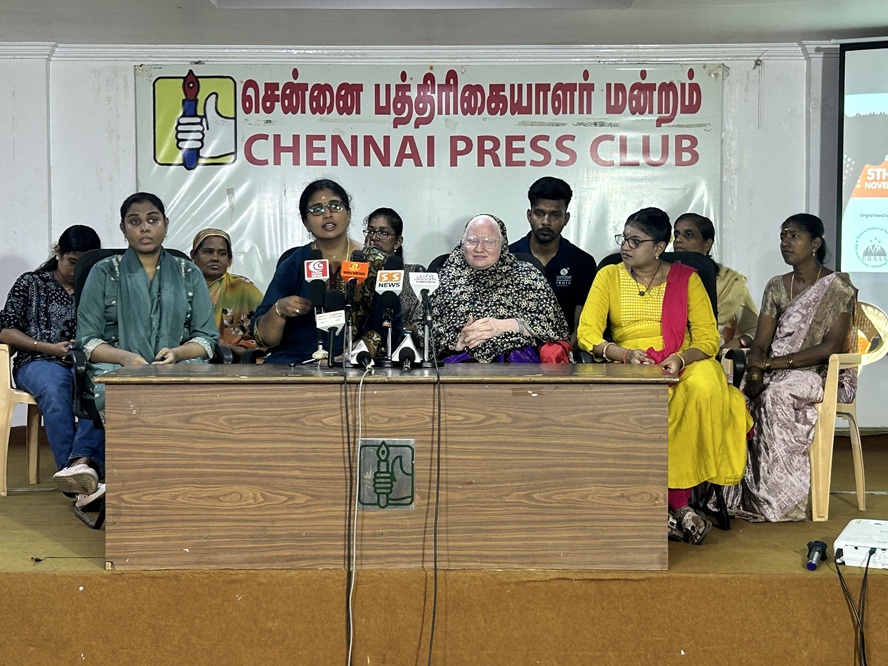
Chennai : Sense International India, in collaboration with The Spastics Society of Tamil Nadu (SPASTN), organised a press conference at the Press Club, Chennai, today to highlight the need for accurate identification and representation of people with deafblindness in Census 2027, accessible information and greater opportunities for women with deafblindness to participate in leadership and decision-making.
The press conference was led by adults with deafblindness from Udaan, Sense India’s national network of approximately 280 adults with deafblindness across 25 states. Udaan provides a platform for peer support, learning, leadership development and collective advocacy, enabling persons with deafblindness, particularly girls and women, to engage directly with the stakeholders, advocate for their rights and influence decisions that affect their lives.
Four women with deafblindness from the Udaan Network shared their journeys, experiences and aspirations with media representatives. Ganga, 27, from Bathery, Wayanad, is an independent professional who handles Malayalam typing for her organisation and travels independently. Vaishnavi, who communicates using sign language, is attending vocational training at SPASTN and is building her skills in tailoring and embroidery. Syed Ali Fathima, 25, holds a Master’s degree in English from Queen Mary’s College and is preparing for competitive examinations for banking and government jobs. Yasmin Babu, a woman with deafblindness, is building her independence through tailoring and vocational skills in Tamil Nadu. Fathima has completed internships with Sense International India.
Together, the speakers brought diverse perspectives on education, vocational training, professional aspirations, independence and creative expression, demonstrating the importance of recognising the abilities, choices and aspirations of women with deafblindness.
Deafblindness is a distinct disability arising from a combination of hearing and vision impairments, significantly affecting how individuals communicate, access information, navigate their surroundings and participate in everyday life. Limited awareness, inadequate identification and the lack of reliable data often leave people with deafblindness underrepresented in policies, programmes and public discourse. For girls and women, these barriers are further compounded by gender-based discrimination, social exclusion and limited opportunities to make decisions and participate in leadership.
A key focus of the press conference was the upcoming Census 2027, which presents an important opportunity to address the invisibility of people with deafblindness in India’s data systems. The speakers highlighted that accurate identification and representation are essential to understanding the population, recognising their diverse needs and ensuring that policies, programmes and resources respond to their lived realities. Beyond the Census, they stressed the need to strengthen disability identification and data collection across systems for evidence-based planning and service delivery.
The discussions also highlighted the role of assistive technology and accessible information in enabling people with deafblindness to communicate, access knowledge, exercise autonomy and participate independently in society. Media representatives were introduced to Insight, a knowledge and resource platform created with and for people with deafblindness.
Commenting on the engagement, Uttam Kumar, CEO, Sense International India, said, “Girls and women with deafblindness must be recognised not merely as beneficiaries of services, but as leaders, advocates and decision-makers. Today, four women from the Udaan Network spoke for themselves about their education, work, independence and aspirations. Census 2027 is an important opportunity to ensure that people with deafblindness are accurately identified and counted, so that their needs and lived realities shape policies, planning and resources. Equally, accessible information and assistive technology are essential for them to participate fully. Our role is to create spaces where their voices are heard and included in decisions that shape their lives.”
The engagement also sensitised journalists to deafblindness, its implications and the importance of accurate, respectful and rights-based reporting. SPASTN, a not-for-profit organisation working towards the empowerment and inclusion of persons with disabilities and an established partner of Sense India, supported the mobilisation of participants, coordination, accessibility arrangements and the meaningful participation of adults with deafblindness.
The message from Chennai was clear: people with deafblindness must have the opportunity to be heard, recognised and included in decisions that shape their lives.
****
