

God’s Own Country or a Convenient Hideout?How Wanted Killers Hide in Plain Sight Among Kerala’s Migrants

By Nanditha S
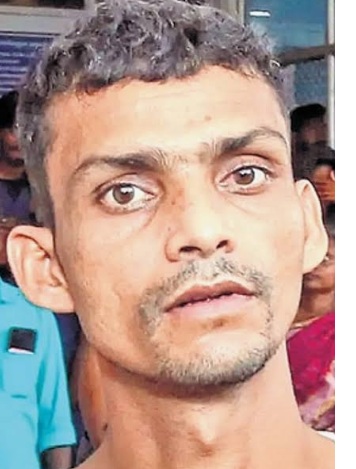
The arrest of Mohammed Ajaj Ahmed (also referred to as Ajaz Mohammed or Ajaj Ahamed) in Kollam on 6 November 2026 confirms a pattern successive Kerala governments have refused to confront. Ahmed, a 30- to 32-year-old native of Dumra Ketharia in Sitamarhi district, Bihar, had been living in a rented house in Andamukkam with his wife, parents and three children, working as a driver for footwear shops and advocates. Bihar Police wanted him for the 12 September 2026 daylight shooting of RJD-linked Baidyanath Mahto, a former Sitamarhi Zilla Parishad member, killed by motorcycle-borne assailants during his morning walk in Dumra. The murder triggered public outrage and clashes. Ahmed is also accused in the 2020 shooting of a woman during a robbery and faces over 11 to around 20 criminal cases in Bihar involving murder, attempted murder, Arms Act violations, robbery and theft. Described as one of Bihar’s most-wanted criminals, he had used Kerala as a base since around 2016–2019, travelling home to commit crimes and returning to blend in. A joint Bihar–Kollam East Police operation traced him after a tip-off; he was arrested while collecting a ₹25,000 security deposit, with local help identifying him. He was medically examined, produced for a transit warrant and handed over to Bihar Police.
This is how the system fails. An estimated 25–35 lakh migrant workers from Bihar, West Bengal, Odisha, Assam, Uttar Pradesh and elsewhere live and work in Kerala. Official records capture only a fraction—around 5.16 lakh registered under the Awaaz scheme. Police stations are supposed to maintain migrant labour registers and contractors to submit identity proofs, yet in practice history-sheeters, fugitives and foreign nationals enter, take jobs as drivers, vendors, labourers or waiters, and disappear into the crowd. When crime follows, the response is usually reactive: a tip-off, a joint team, one arrest. The structural gap remains.

The human cost is measured in names and bodies. The most searing example remains the 2016 rape and murder of Jisha. On 28 April 2016, the 30-year-old Dalit law student was found dead in her single-room house on the canal bund at Vattolipadi near Perumbavoor. She lived with her mother, a casual labourer. The post-mortem revealed she had been raped and savagely murdered: multiple stab wounds, intestines pulled out, private parts mutilated. Neighbours reported seeing a man in a yellow T-shirt leaving earlier that evening, but no one heard screams.
The accused was Ameerul Islam (Ameer-Ul-Islam), then 23, a migrant labourer from Nagaon, Assam, living and working roughly 200 metres away. According to the prosecution, he entered the house in an inebriated state, attempted to rape her, and, when she resisted, attacked her with a knife. DNA evidence from nail clippings, saliva and blood matched him. He fled the same day, travelled via Aluva, returned to Assam and was arrested from Kancheepuram, Tamil Nadu, in June 2016—nearly 50 days later.
The case became a major political issue ahead of the 2016 Assembly elections. The LDF government constituted a special investigation team. In December 2017 the Ernakulam Principal Sessions Court found him guilty of rape, murder, house-trespass and wrongful confinement and sentenced him to death. The Kerala High Court confirmed the death sentence in May 2024 as a rarest-of-rare case. The case exposed how easily a migrant with no prior local record could live in plain sight, commit extreme brutality and escape interstate.
In July 2023, Bihar migrant Ashfaq Alam (Asafaq Alam) lured the five-year-old daughter of a fellow migrant family in Aluva with the promise of sweets, raped her, strangled her and dumped the body in a marshy area behind the market. A special POCSO court convicted him and imposed the death sentence within months. Other cases include the 2018 murder of 60-year-old Molly in North Paravur by an Assam migrant living in her outhouse, and repeated targeting of elderly couples and women living alone. In September 2026, a man claiming to be from Jharkhand (later suspected of false details and no documents) assaulted a 72-year-old man and his 70-year-old wife in Pandippara, Idukki, during an alleged robbery attempt. Between 2016 and roughly 2023, police and media compilations recorded more than 5,200 cases involving migrant workers, including 159–161 murder cases; broader tallies put migrants accused in crimes since 2016 at over 10,500, with 168 accused in 127 murder cases alone.
The problem extends beyond Indian states. Bangladeshi nationals have been repeatedly arrested in Kerala with forged Aadhaar cards and other documents. Operation Clean in Ernakulam Rural led to 27 arrests in the Paravur area in early 2025; further arrests followed in Angamaly, Kollam and Kozhikode. Fake Indian identity documents can be obtained for a few hundred rupees through agents in West Bengal. Some have lived in the state for years as masons or in other trades before detection. Nepali nationals and others have also been found under assumed identities. When documents are counterfeit and registration is voluntary in practice, neither police nor employers can easily distinguish a legitimate worker from a fugitive or illegal entrant.
Drug trafficking has drawn official attention. Home Minister Ramesh Chennithala’s Operation Toofan, launched in June 2026 after the UDF took office, has registered thousands of cases, made thousands of arrests and seized large quantities of MDMA, ganja and other substances. Migrant workers feature prominently; Kochi alone saw migrant NDPS arrests rise from 103 in 2024 to 176 in 2025. The campaign is a necessary step against an organised trade. It is not a substitute for identity verification. The same networks that move narcotics can move people with criminal records. The same absence of real-time inter-state data and employer-level checks that allows a Bihar murderer to drive for lawyers in Kollam allows drug peddlers and robbers to operate under the cover of ordinary labour.
Successive governments—both LDF and UDF—share responsibility. After the Jisha and Aluva cases, promises of tighter rules and better tracking were made. Mandatory registration was discussed and partially implemented through schemes, yet the gap between estimated and registered numbers remains vast. The constitutional right of Indian citizens to move and work freely is real, but it does not require the state to remain wilfully blind to criminal antecedents. Other states maintain and share data on history-sheeters. Kerala can insist on Aadhaar-linked biometric enrolment at employment, mandatory intimation by contractors, and routine cross-checking with home-state police databases. Special drives can identify and remove those with active warrants or foreign nationals living illegally, while protecting genuine workers. Technology already exists for this; political will has not.
The mission cannot remain a press note. It requires a dedicated task force with clear timelines, public reporting, inter-state coordination and penalties for employers who hire without verification. Residents of Kerala—especially elderly people and women living alone—should not have to rely on chance tip-offs. They have the right to demand that elected representatives treat this as a core public-safety issue. Local bodies, resident associations and voters can press for measurable action: how many migrants verified this quarter, how many wanted persons identified, and what has been done about illegal foreign nationals.
Kerala’s economy needs migrant labour. Its people need safety. These are not contradictory goals if the administration distinguishes between workers who come to earn a living and criminals who come to hide. The recent Kollam arrest shows that the latter group has learned to treat the state as a low-scrutiny sanctuary. Operation Toofan demonstrates that a focused drive can produce results against drugs. The same urgency must now be applied to identity verification and the removal of those with blood on their hands. Only then can Kerala reclaim the description of God’s Own Country without irony. The administration must wake up. Citizens must insist that it does. Words are no longer enough.
This article is based on publicly reported facts, court records and official statements available at the time of writing and is intended as critical commentary. Details of ongoing cases may evolve with further investigation or judicial proceedings.
