


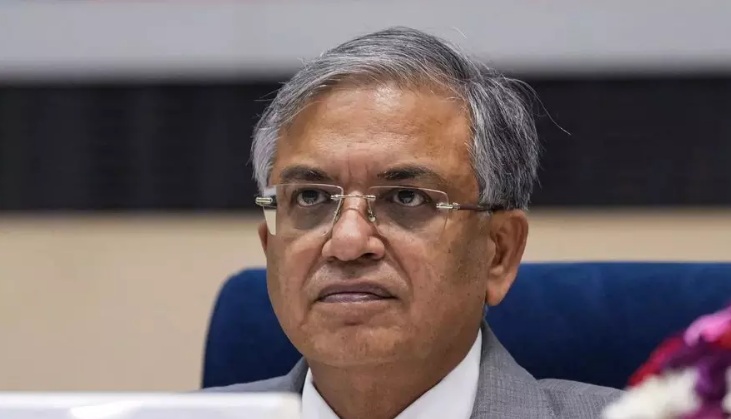
By Geetha Unnithan
Chief Election Commissioner Gyanesh Kumar is facing the sharpest scrutiny of his career as Kerala’s Vigilance and Anti-Corruption Bureau (VACB) reopens a 20-year-old bribery scandal that previous investigators chose to bury. Contractor V.O. Sajan of Chadayamangalam in Kollam district appeared before the VACB office at Muttathara in Thiruvananthapuram on 9 November 2026 and delivered a blunt indictment: the earlier probe was deliberately inadequate, statements supporting Kumar alone were recorded, and crucial evidence pointing to his role was ignored.
Sajan’s statement has reignited the question that the original investigation never answered — will the man who now heads India’s Election Commission finally face jail, or will he again walk free?
According to Sajan, when Kumar was Kerala’s Public Works Department Secretary around 2006, he demanded a ₹2 crore bribe to release payments for completed work on the World Bank-funded Kerala State Transport Project (KSTP). Sajan alleges Kumar deliberately withheld cheques for bills worth about ₹17 crore that engineers had already cleared, plunging the Indo-Malaysian joint venture PATI-BEL, its subcontractors, and workers into severe financial distress. Lee See Been, the Malaysian project engineer, personally told Sajan of the demand. The company refused to pay. The pressure, Sajan says, contributed directly to Lee’s suicide in Malaysia in November 2006. Sajan further claims Lee’s family later informed company staff that the suicide note referred to Kumar.
Before entering the VACB office, Sajan told reporters that the original investigation selectively recorded statements favourable to Kumar while suppressing material that implicated him. He alleged that the then Chief Commercial Manager’s initial statement indicated Kumar’s involvement, but the official was later summoned and threatened with difficulties in clearing his own bills unless he removed Kumar’s name. Sajan has offered documentary evidence and is prepared to produce Lee’s family members, former employees, and other witnesses who were never examined earlier. He has stated that the failure to conduct a proper inquiry is precisely why Kumar was never named an accused.
The KSTP was a major road upgrade covering the MC Road stretch from Angamaly to Thiruvananthapuram, executed by PATI-BEL. After Lee’s death, the then CPI(M) government shifted Kumar out of the PWD. A VACB inquiry into multiple complaints continued until around 2012. Officials later claimed no evidence of corruption against Kumar was established and the cases were closed. Critics now argue those closures were convenient rather than conclusive. Key witnesses such as Sajan were never examined, the suicide notes were never properly scrutinised in open proceedings, and the probe was allowed to fade once Kumar moved to central deputation.
The case has returned under the Congress-led government. Home Minister Ramesh Chennithala, after consulting Chief Minister V.D. Satheesan and obtaining legal opinion, directed the VACB to examine fresh complaints — first from KPCC leader Malayinkeezhu Venugopal and then from Sajan. The bureau has formed a special investigation team under Special Investigation Unit-1 and ordered an expeditious preliminary enquiry. Chennithala has stated that Kumar enjoys no protection as CEC for acts allegedly committed while he was a state PWD Secretary. Legal advice has indicated that proceedings under the Prevention of Corruption Act face no bar.
Whether this leads to an FIR, chargesheet, and ultimately jail remains the open question. The events are nearly two decades old. Reconstructing bank trails, contemporaneous documents, and consistent witness accounts from 2006 will be difficult. Previous closures give Kumar a ready defence. At the same time, Sajan’s appearance and his specific allegations of a selective earlier probe have placed new material on record that the original investigators never considered. If the special team finds sufficient corroboration — through documents, additional witnesses, or previously ignored statements — the case can move from preliminary enquiry to a full investigation and potential prosecution.
Kumar has offered no detailed public response. The political timing, coinciding with opposition protests over the Special Intensive Revision of electoral rolls, has invited accusations of vendetta, which the Chief Minister has denied. Yet the core allegations predate the current electoral controversies by two decades. The contractor who worked on the project has now appeared before Vigilance and accused the earlier process of protecting the man who later became Chief Election Commissioner.
For the first time in 20 years, the question is being asked in a formal inquiry: will Gyanesh Kumar land behind bars over the alleged ₹2 crore demand that preceded a Malaysian engineer’s suicide, or will the system once again allow him to walk free? The VACB’s special team now holds the answer.
