

Global Road Safety Initiative–2 to Bring Together 300 Road Safety Experts, Including 40 International Delegates, in India

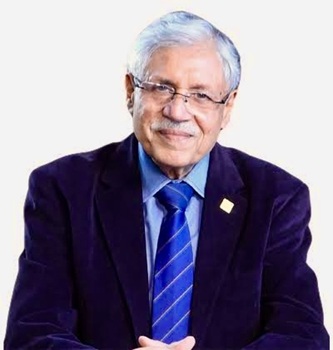
Nitin Gadkari, Union Minister for Road Transport & Highways to Inaugurate
New Delhi/ Faridabad: Around 300 road safety experts, policymakers, international delegates, government representatives, researchers and industry leaders, including nearly 40 participants from different parts of the world, will converge in Faridabad for the Global Road Safety Initiative–2 (GRSI-2), a four-day international conference being organised by the Institute of Road Traffic Education (IRTE) from November 30 to December 3, 2026.
The conference will be held at the College of Traffic Management & Forensic Science (CTM), Faridabad, NCR Delhi, and will provide an important international platform for sharing knowledge, exchanging best practices and developing collaborative approaches to address the growing challenges of road safety.
The conference will bring together leading experts and representatives from international organisations, including the United Nations Economic Commission for Europe (UNECE), United Nations Economic and Social Commission for Asia and the Pacific (UNESCAP), the UN Global Forum for Road Traffic Safety (WP.1), Global NCAP, government agencies, academic institutions and the global road safety community.
The international participation will include delegates and experts from the USA, Italy, Sweden, Belgium, Spain, Russia, Malaysia, Nepal, Sri Lanka, Bhutan and Nigeria, among others.
Dr. Rohit Baluja, President, IRTE and Director, College of Traffic Management & Forensic Science, said, “Road safety is a global challenge that demands collective commitment, stronger institutions and sustained international cooperation. With nearly 300 experts, including 40 international participants, coming together at GRSI-2, we aim to create a meaningful platform where global experience can translate into practical solutions for safer roads.
“India’s road safety challenges are particularly complex, and there is an urgent need to move beyond conventional approaches towards scientific road engineering, preventive forensics, evidence-based enforcement, responsible driving and capacity building. Our objective is to facilitate dialogue between countries, identify successful practices and develop actionable recommendations that can make a tangible difference, particularly in emerging economies.” Dr Baluja said.
The four-day programme will feature specialised technical sessions and discussions addressing some of the most pressing road safety concerns. The opening day will focus on developing comprehensive road safety strategies, particularly for emerging economies in Southeast Asia, and the transportation of hazardous goods. Another important session will examine the transition from basic vehicle control to responsible driving, including the effectiveness of automated driving tests in assessing hazard perception, judgement, driving skills and road-user behaviour.
The second day will feature discussions on safer vehicles, Bharat NCAP and Global NCAP, followed by the inaugural session scheduled to be addressed by the Hon’ble Union Minister for Road Transport and Highways, Shri Nitin Jairam Gadkari International experts will also deliberate on global conventions governing the transportation of hazardous goods and the need for strengthening institutional capacity in emerging economies.
A key highlight on December 2 will be the session on diagnosing road safety challenges through artificial intelligence, preventive forensics, transport planning, traffic engineering and forensic road safety audits. Dr. Baluja will present IRTE’s initiatives relating to Traffic Engineering Centres and the International Centre for Preventive Forensics, Traffic Management and Human Factors.
The conference will also feature country presentations and discussions on road safety governance, providing an opportunity for participating nations to share their respective regulatory frameworks, institutional experiences and successful interventions.
Powered two-wheeler safety will receive special attention, with dedicated sessions on vehicle design, helmet standards, injury prevention, trauma care and rehabilitation. A further session will examine the safety, training and regulation of powered two-wheeler delivery riders, with participation from industry representatives, vehicle manufacturers and government stakeholders.
The concluding day will focus on road safety governance in different countries and the formulation of recommendations emerging from the deliberations.
Through GRSI-2, IRTE seeks to strengthen international partnerships, encourage the adoption of scientific and evidence-based road safety interventions and promote a shared global commitment towards reducing road crashes, fatalities and serious injuries.
The initiative underscores the importance of bringing together governments, international organisations, industry, academia and road safety professionals to work towards safer, more responsible and sustainable mobility.
****
