


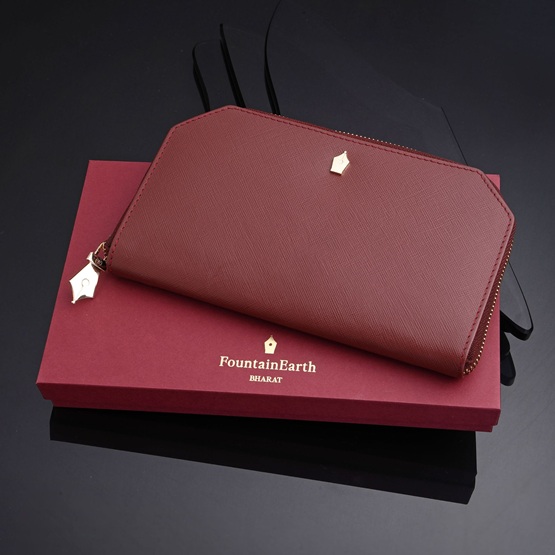
In the realm of personal accessories, the pattern of consumption has traditionally been one of fashion. New fashions emerge, old fashions pass away, and products are made obsolete before they are even worn out. However, this pattern of speed and visibility has not just influenced the design of accessories but also their perception. Now, a new perspective is slowly entering the scene. One that asks a quieter but more important question: what if accessories were built to be used, not replaced?
For emerging brands like FountainEarth, founded by Akshita Mangal and Jyoti Goyal,this question sits at the center of their design and business philosophy. Rather than treating accessories as seasonal objects, the brand approaches them as long-term utilities, items that become part of a person’s daily life and, over time, acquire meaning through use.
This shift from fast fashion to what can be described as “slow utility” is not simply about sustainability in the conventional sense. It is about redefining the role of objects in people’s daily lives. A wallet, a bag, or a belt is not necessarily something that is meant to be disposed of. Its life is often ended not because of any failure but because of the replacement of the object with something newer, something more trendy, something more fashionable.
The fast fashion approach, when it comes to accessories in particular, creates a small but significant disconnection between the object’s durability and the object itself. Materials are chosen based on price rather than durability. As such, the consumer is lured into a perpetual purchasing cycle that is normal but has significant ramifications.
On the other hand, a slow utility approach starts with a different set of priorities. It starts with questions like, can the product survive daily usage? Is the product repairable? Does the product have any longevity beyond a particular season?
This approach demands discipline at every stage, from the selection of the material to the construction of the product.
For example, the use of certified materials like recycled leather or natural leather gives rise to the concept of traceability. It gives both the producer and the consumer an idea of what the product is made of. More importantly, it ensures that sustainability is not a claim, but a verifiable attribute.
Equally important is the idea of service. In a fast fashion environment, the relationship between brand and consumer typically ends at the point of purchase. In a slow utility model, that relationship continues. Repair, maintenance, and long-term usability become part of the product promise. This changes how value is perceived. A product is no longer evaluated based solely on how it looks when it is new, but also on how it holds up over time.
There is also a cultural aspect to this. There is an increasing awareness among many consumers, especially younger professionals, about the cultural impact. The question is no longer limited to price or appearance. It extends to responsibility. What did this product cost the planet? How long will it last? Will it need to be replaced within a year?
These questions are gradually reshaping buying behavior. While fast fashion continues to dominate in volume, there is a visible movement toward fewer, better-made products. Accessories, being so utilitarian in nature, fit very well into this model. A good wallet or bag has longevity and can be useful for many years, making it an excellent candidate for long-term ownership.
At the same time, this new model creates new challenges for brands. Variety and trends are no longer enough. Brands must justify their existence through quality, transparency, and consistency. They must design products that can stand the test of time, both physically and aesthetically.
The idea of slow utility does not reject design or beauty. Rather than defining products by these attributes alone, products can also be described in terms of their appeal and usefulness as time passes after they come into the market. Wear becomes character. Use becomes value.
As the market evolves, the distinction between fashion and utility may become less rigid. Accessories will still carry personal expression, but that expression will increasingly be tied to intention rather than impulse. In this context, the move from fast fashion to slow utility is not a trend. It is a correction.
It reflects a growing recognition that the objects we carry every day should do more than complement our appearance. They should justify their presence in our lives, quietly, consistently, and over time.
