


By Suresh Unnithan
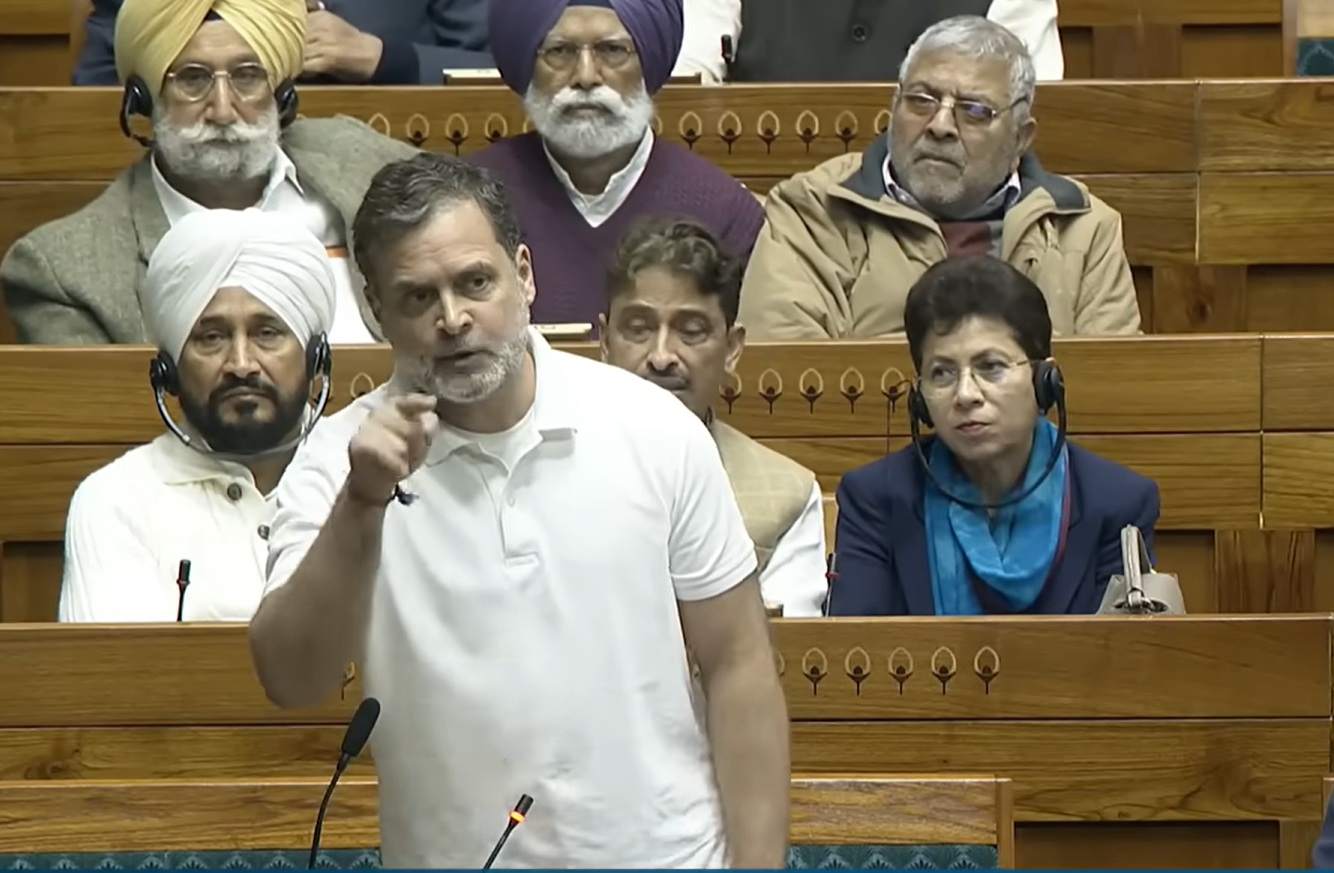
In a dramatic session of the Lok Sabha on February 2, 2026, what began as a routine debate on the Motion of Thanks to the President’s Address descended into chaos. Leader of the Opposition Rahul Gandhi attempted to quote excerpts from former Army Chief General MM Naravane’s unpublished memoir, Four Stars of Destiny, as published in The Caravan magazine. The reference was to the government’s handling of the 2020 India-China border crisis in eastern Ladakh. Senior ministers—Defence Minister Rajnath Singh, Home Minister Amit Shah, and Parliamentary Affairs Minister Kiren Rijiju—interrupted vociferously, leading to multiple adjournments. While the treasury benches cited parliamentary rules to justify their objections, their aggressive disruption achieved the opposite: it amplified suspicions of opacity and handed the opposition a narrative of government fear and immaturity.
The incident was triggered by remarks from BJP MP Tejasvi Surya earlier in the debate. Surya launched a sharp attack on the Congress-led UPA era, describing it as a “decade of lost opportunities” and criticising past President’s speeches for lacking vision on “Viksit Bharat” and India’s civilisational ethos. While Surya did not directly accuse the Congress of unpatriotism, his remarks implied a lack of national commitment, provoking Rahul Gandhi to respond on national security.
Rahul, holding a printout of The Caravan article, began: “Chinese tanks in Doklam…”—referring to an incident detailed in Naravane’s memoir excerpts. Before he could proceed, interruptions erupted. Defence Minister Rajnath Singh objected: “He should tell us if the said book has been published or not. It has not been published. He cannot claim to quote from it. I can say with confidence, the book has not been published.” Home Minister Amit Shah echoed: “When the book has not even been published, how can he (Rahul) quote from it?” Parliamentary Affairs Minister Kiren Rijiju cited House rules, warning that persistent defiance could lead to action against the member.
Speaker Om Birla upheld the objections, invoking Rule 349, which prohibits quoting from unauthenticated or unpublished material unrelated to House business. Rahul persisted, arguing the excerpts were “100% authentic” and relevant to rebutting accusations against the Congress. He questioned the government’s fear: “I am not able to understand. They say they are fighting terrorism; and they are scared to hear one quotation. What is written in it that they are so scared that I am not allowed to read it?”
The key revelation in The Caravan article, based on Naravane’s memoir, describes a tense moment on August 31, 2020. Four Chinese tanks, supported by infantry, advanced rapidly towards Indian positions at Rechin La in the Kailash Range. Naravane, informed of the escalation, repeatedly asked top leaders—including Rajnath Singh, NSA Ajit Doval, CDS General Bipin Rawat, and EAM S Jaishankar—”What are my orders?” Despite protocol preventing firing without clearance, no clear directives came as Chinese forces closed in. This portrayal suggests indecision at the highest levels, with the military left in limbo during a potential flashpoint post-Galwan.
Outside Parliament, Rahul sharpened his attack: “Naravane ji has written about the Prime Minister and Rajnath Singh ji clearly in his book… They are scared because if it comes out, the reality of Narendra Modi ji and Rajnath Singh ji will be revealed.” He added that the leader of the country “is supposed to give direction… not supposed to run away from decisions and leave decisions to other people’s shoulders.”
The government’s response, while technically grounded in rules, was undiplomatic and counterproductive. By shouting down the Leader of the Opposition rather than allowing him to speak and then delivering a measured rebuttal, the treasury benches appeared defensive and evasive. Rajnath Singh could have clarified the context of the 2020 standoff—highlighting disengagement agreements and infrastructure build-up—or questioned the authenticity calmly. Instead, the interruptions fuelled perceptions that the government has something to hide regarding the border crisis.
This overreaction sowed seeds of suspicion in the public mind. Why the panic over excerpts already published in a magazine? The memoir has been pending Ministry of Defence clearance for over a year, raising questions about delays. General Naravane himself has described the book as “maturing like aged wine,” but the government’s sensitivity suggests discomfort with its contents. As Rahul noted, “Everyone in the Army knows what happened… you are trying to hide it from the people here.”
The episode also exposed immaturity in handling provocation. Tejasvi Surya’s aggressive rhetoric—mocking Congress’s electoral losses and implying ideological shortcomings—unnecessarily escalated tensions. Young, vocal MPs like Surya often inject fire into debates, but senior leaders must temper such sparks. Amit Shah defended Surya, stating he “nowhere questioned the patriotism of the Opposition,” but the damage was done. Inexperienced “motormouths,” as critics might call them, invite needless trouble, forcing the government into defensive postures.
Social media amplified Rahul’s narrative. Clips of his uncompromising stand circulated widely, with users praising his persistence against a “bullying” treasury. Posts highlighted the irony: a government claiming strong national security credentials appearing afraid of an Army chief’s account. Opposition supporters celebrated Rahul’s rebuttal as exposing “indecisiveness” at crucial junctures, while questioning why the book remains unpublished.
In contrast, a more mature approach would have defused the issue. Allow Rahul to read the excerpts, then respond with facts: no territory lost permanently, successful military responses, and diplomatic resolutions. Rajnath Singh, with his experience, could have asserted: “If the book was not allowed to be published as alleged, then why didn’t Mr. Naravane go to court against it?”—as he later did—but in the House, calmly. Instead, the disruption made the government look arrogant and crude, as critics described Shah’s interventions.
This incident underscores a broader pattern. The ruling party, with its majority, often resorts to volume over substance in Parliament, disrupting opposition speeches on sensitive issues. It projects strength internally but weakness externally, allowing the opposition to portray itself as a victim of suppression. Rahul Gandhi, often dismissed as ineffective, scored points by framing the shutdown as fear of truth.
Transparency on national security is vital in a democracy. Border issues with China remain unresolved, with periodic tensions. Debating an Army chief’s perspective—even from excerpts—strengthens accountability, not weakens it. By preventing discussion, the government inadvertently validated opposition claims of opacity.
In the end, the treasury benches’ undiplomatic approach backfired spectacularly. What could have been a minor procedural objection became a propaganda win for the opposition. Rahul Gandhi emerged portraying resolve, while senior ministers appeared immature and evasive. As Parliament resumes, the government must reflect: shouting down dissent does not silence questions—it amplifies them. A befitting reply in the House would have been far more effective than adjournments born of panic.
*Inputs From Nanditha Subhadra
