


By Suresh Unnithan
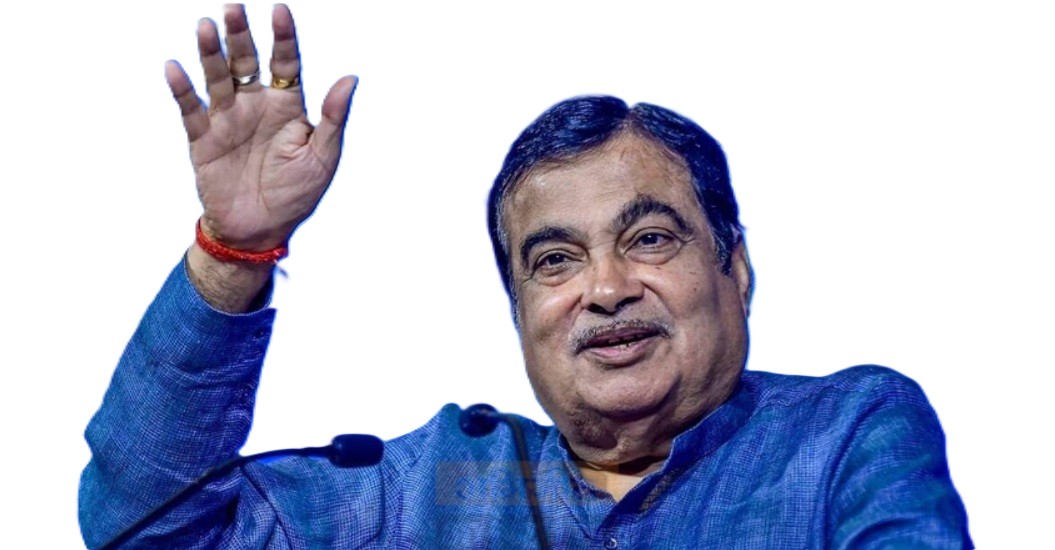
In a political landscape where promises often outshine delivery, Nitin Gadkari, the Union Minister for Road Transport and Highways, stands as a beacon of performance in the Modi Cabinet. While many ministers struggle to meet expectations, Gadkari has consistently delivered tangible results, earning him widespread admiration, even from opposition leaders who lavishly endorse him as the standout performer in Narendra Modi’s government. His approval ratings, consistently above 8/10, surpass even those of the formidable Home Minister Amit Shah, cementing Gadkari’s reputation as the Cabinet’s top achiever.
Unmatched Performance in Public Perception
Gadkari’s excellence is not just anecdotal; it’s backed by data. In the 2022 India Today-CVoter Mood of the Nation poll, he secured an impressive 8.45/10, outranking all other ministers across voter categories, including government servants. More recently, the August 2024 CVoter survey revealed that 13% of respondents saw Gadkari as a potential prime ministerial candidate, a testament to his enduring popularity. In contrast, Amit Shah, despite his strategic prowess, typically scores between 6-7/10 due to the less tangible outcomes of his portfolio. Gadkari’s ability to deliver visible, transformative infrastructure projects sets him apart in a cabinet where others often fall short.
Revolutionizing India’s Infrastructure with Unparalleled Productivity
Since 2014, Gadkari has spearheaded a remarkable transformation of India’s road network, overseeing the construction of over 90,000 kilometers of national highways. The daily construction rate has surged from 12 km in 2014-15 to nearly 30 km by 2025, driven by innovative financing, technology, and relentless execution. In 2025 alone, his ministry’s project outlay doubled to ₹5 lakh crore, covering roads, bridges, tunnels, and sustainable mobility initiatives like the E20 biofuel blend, which aims to cut oil imports by 10% and reduce emissions, despite challenges in vehicle compatibility.
Gadkari’s productivity is evident in the sector’s exponential growth. At the India Infrastructure Summit 2025, he highlighted the road infrastructure as the fastest-growing sector in the country, achieving a 25% growth rate. Multiple port connectivity projects spanning 2,700 km are underway, attracting ₹1 trillion in investments by 2030. Emphasizing green initiatives, Gadkari announced the development of hydrogen highways and the world’s first large-scale hydrogen truck trials, backed by a ₹500 crore budgetary allocation. These efforts align with India’s goal of becoming a $5 trillion economy, with world-class infrastructure at reduced costs and logistics expenses dropping to single digits by year-end. His focus on execution has overcome challenges in financing, technology, and road safety, creating a virtuous cycle of investments that benefits the nation holistically.
A Non-Partisan Vision for Development
Gadkari’s commitment to equitable development transcends political divides. He ensures that infrastructure projects benefit every state, regardless of the ruling party. In opposition-ruled Kerala, Gadkari announced a ₹3 lakh crore infrastructure upgrade at the February 2025 Invest Kerala Global Summit, including the four-laning of the Kozhikode-Palakkad National Highway 966 and the Thiruvananthapuram outer ring road. Tamil Nadu, under DMK rule, has also seen highway expansions, such as the Chennai-Bengaluru corridor. In West Bengal, governed by the Trinamool Congress, Gadkari’s ministry is enhancing the Kolkata-Siliguri stretch as part of a ₹3.73 lakh crore plan for eastern states. His pledge to elevate northeastern roads to U.S. standards within two years further underscores his inclusive approach.
Engineering Marvels in Challenging Terrains
In Jammu and Kashmir, Gadkari’s projects have bolstered connectivity and security. The Zojila Tunnel, Asia’s longest bidirectional tunnel at 14.2 km, is 70% complete as of 2025 with a budget of over ₹12,000 crore, ensuring year-round access between Srinagar and Ladakh. The Sonamarg Tunnel, inaugurated in January 2025 at ₹6,800 crore, mitigates avalanche risks and cuts travel time. Additionally, 19 projects worth ₹10,637 crore were sanctioned in June 2025, covering 653 km across the region.
In Assam, Gadkari’s ₹3 lakh crore investment includes an underwater tunnel in Dibrugarh and iconic Brahmaputra bridges like the New Saraighat and Jorhat-Majuli span. A ₹80,000 crore package, including a 2.9 km Brahmaputra bridge and the 118.5 km Guwahati Ring Road, promises to boost trade and tourism. In August 2025, 29 highway projects spanning 272 km were launched, solidifying his impact in the Northeast.
Beyond Roads: A Holistic Vision for Sustainable Progress
Gadkari’s vision extends far beyond highways, embodying a comprehensive approach to nation-building. Through the Faster Adoption and Manufacturing of Electric Vehicles (FAME) scheme, he has driven the deployment of 1.5 lakh e-rickshaws, transforming urban livelihoods by providing eco-friendly transport options for millions. This initiative has empowered small-scale entrepreneurs, particularly in tier-2 and tier-3 cities, fostering economic inclusion. His push for sustainable mobility includes the promotion of ethanol and methanol-based fuels, with pilot projects for flex-fuel vehicles launched in 2025, reducing India’s dependence on fossil fuels. The National Waterways project, under his stewardship, has seen investments double to ₹2 lakh crore, unlocking the potential of inland waterways to decongest roads and lower logistics costs. For instance, the Varanasi-Haldia waterway (NW-1) now handles 20% more cargo annually, boosting trade in eastern India.
Gadkari’s holistic vision also encompasses social and environmental dimensions. His ministry’s afforestation drives along highways, planting over 10 million trees by 2025, align infrastructure with environmental goals, mitigating carbon footprints and enhancing green cover. His innovative waste-to-wealth initiatives, such as using plastic waste in road construction, have recycled over 50,000 tonnes of plastic, setting a global benchmark for sustainable infrastructure. His pragmatic leadership—blaming delays on bureaucratic inflexibility rather than funding—has streamlined processes, with digital platforms like the PM GatiShakti portal ensuring real-time project monitoring and faster approvals.
Political Acumen: Earning Kudos From All
Gadkari’s political acumen shines through his ability to foster collaboration across party lines, earning him the rare distinction of being praised by opposition leaders. His impartiality and focus on national development over partisan gains have made him a “darling of the opposition.” In September 2025, Jammu and Kashmir Chief Minister Omar Abdullah, from the opposition National Conference, engaged positively with Gadkari in a video conference to address issues on National Highway 44, leading to immediate instructions for improvements. This interaction exemplifies Gadkari’s skill in resolving regional concerns swiftly, regardless of political affiliations.
Historically, opposition figures have lauded his work. In the 2022 Lok Sabha discussions, leaders from various parties praised his infrastructure achievements while raising concerns, highlighting his openness to dialogue. Sharad Pawar of the NCP has shared stages with Gadkari, exchanging mutual respect despite ideological differences. In 2024, Gadkari revealed that an opposition leader offered to support him for the prime ministerial post, underscoring his cross-party appeal and loyalty to his principles over personal ambition. Even in 2019, during parliamentary debates, leaders from across the spectrum showered praises on him for his delivery on road transport demands. This bipartisan admiration stems from his approachable style, where he entertains requests from all quarters without prejudice, building trust and unity through action.
A Leader for All: The People’s Champion
What truly distinguishes Gadkari is his accessibility, humility, and unwavering commitment to serving all Indians, regardless of region, religion, or political affiliation. Described as a “gentleman leader,” he maintains an open-door policy, welcoming opposition leaders, local representatives, and common citizens alike. His ability to listen and act swiftly has earned him trust across the spectrum. For instance, during a 2025 public grievance redressal camp in Nagpur, Gadkari personally addressed over 500 citizen complaints in a single day, ranging from road safety issues to project delays, ensuring follow-ups through his ministry’s dedicated portal. His down-to-earth demeanor—often seen relishing street food like vada pav or sabudana vada—resonates with the masses, contrasting the opulence of political life.
Gadkari’s inclusivity extends to his policy decisions. He has prioritized projects in marginalized regions, such as the Northeast and tribal areas, ensuring equitable development. His engagement with local communities, such as consulting tribal leaders in Assam for the Jorhat-Majuli bridge alignment, reflects a participatory approach that amplifies his appeal. His speeches often emphasize “development for all,” a mantra evident in his allocation of ₹1.5 lakh crore for rural road connectivity under the PM Gram Sadak Yojana in 2025, empowering remote villages with access to markets and education.
The Golden Standard of Governance
Compared to peers like Amit Shah, who excels in security and political strategy but scores lower in public-facing deliverables, or other ministers bogged down by policy complexities, Gadkari’s infrastructural achievements are unmatched. His impartiality, execution, and relatability make him not just a minister but the architect of a connected, inclusive India. As the nation strides toward global prominence, Nitin Gadkari’s legacy paves the way—literally and figuratively.
