

Will Modi Sail Delimitation Through Women’s Reservation Garb? Will Naidu Risk His Southern Future?

By Suresh Unnithan
As Parliament opens its special session today, on April 16, 2026, one question hangs heavy over the chamber: Will the Modi government manage to sail through the delimitation bill under the garb of the women’s reservation bill? And will N. Chandrababu Naidu—Andhra Pradesh Chief Minister and key NDA ally—risk his political future as a southern satrap by voting in favour of a legislation that many in the South see as a direct assault on federal equity?
The answer, if the BJP has its way, is yes on both counts. The Constitution (131st Amendment) Bill, 2026, and the Delimitation Bill, 2026, are being pushed as noble vehicles to deliver the long-delayed 33% women’s quota in the Lok Sabha and state assemblies. In truth, they represent a ruthless, surgically timed power grab. By expanding the Lok Sabha from 543 to 850 seats (815 for states, 35 for Union Territories) and triggering delimitation on the basis of 2011 Census population data, the Modi government is engineering a permanent northward shift in parliamentary power. Southern states that curbed population growth through decades of responsible governance are being penalised. The women’s reservation is the glittering Trojan horse; the real payload is Hindi-heartland dominance.
The arithmetic exposes the cynicism. Southern states—Tamil Nadu (39 seats), Kerala (20), Karnataka (28), Andhra Pradesh (25) and Telangana (17)—currently command 129 seats, or roughly 23.8% of the 543-seat House. Under a pure population-based redistribution using 2011 Census figures in an 850-seat chamber, their collective share is projected to shrink to about 20.7%. Absolute numbers may creep up modestly to around 164-166 seats, but relative influence evaporates. Uttar Pradesh, with its 2011 population weight, could leap from 80 to 125-143 seats. Bihar jumps from 40 to 62-79. Rajasthan and Madhya Pradesh see similar windfalls. UP and Bihar together could command nearly 220 seats—enough, with allies, to rule India without a single southern vote.
This is the “demographic penalty” southern leaders have long warned about. Kerala and Tamil Nadu boast total fertility rates of 1.6-1.8 children per woman—among India’s lowest—thanks to aggressive family planning, education and women’s empowerment. Bihar’s rate remains near 3.0; Uttar Pradesh hovers above 2.7. The South delivered on the very national population policy the Centre once championed. Now it is punished with diminished clout over GST shares, Finance Commission devolution, agricultural policy, industrial incentives and river water disputes. Telangana Chief Minister Revanth Reddy has demanded a “hybrid model” factoring in GSDP contribution (the South accounts for nearly 30% of India’s GDP) and human development indices. The Centre has contemptuously ignored him.
The government insists no state will lose seats and touts a uniform 50% pro-rata increase to preserve current proportions—UP to 120, Tamil Nadu to 59, Andhra to 38. Yet the bills deliberately reopen the constitutional freeze (in place since 1976) and base the exercise on 2011 data, leaving the door wide open for population-weighted outcomes. Future delimitations become optional, at the mercy of a future Hindi-belt majority. A fresh census that might include caste data—demanded by the INDIA bloc—is conveniently sidestepped. Why risk updated figures that would spotlight the South’s continued demographic discipline?
The weaponisation of women’s reservation is breathtaking in its audacity. The 2023 Nari Shakti Vandan Adhiniyam deliberately postponed implementation until after the post-2026 census and delimitation. Now, with Tamil Nadu and other southern polls looming, urgency materialises. Opposition parties, including the INDIA bloc, have repeatedly offered to implement the 33% quota immediately within the existing 543 seats. The government refuses. It bundles the popular demand with a massive expansion and boundary redraw that disproportionately rewards its northern strongholds. Congress leaders have labelled it “mischievous” and “anti-federal.” DMK’s M.K. Stalin and others call it a stunt to camouflage the real agenda: entrenching saffron power.
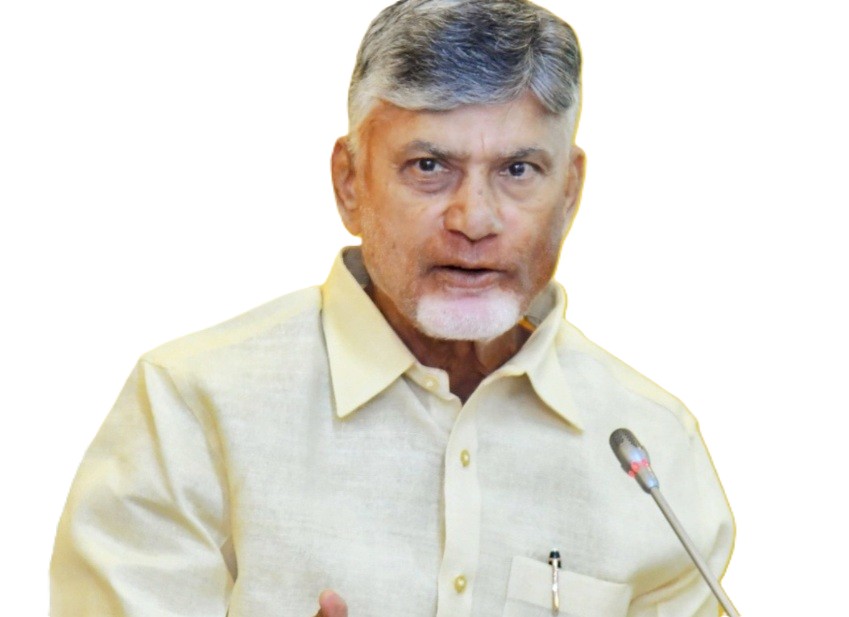
Chandrababu Naidu’s stance adds a layer of political tragedy to the farce. The TDP supremo, a self-styled southern satrap and NDA partner, has thrown his “100% support” behind the Centre’s formula. He claims the delinking of seats from raw population and the overall seat increase satisfies him scientifically. Naidu has written to party leaders and MPs urging unanimous backing for the women’s quota. Yet Andhra Pradesh, with its 25 seats today, stands to gain modestly at best while watching its long-term federal leverage erode. Will Naidu’s loyalty to the NDA survive the backlash from southern voters who see this as a betrayal? His YSRCP rivals have already signalled support, but the broader southern electorate—already wary of perceived Hindi imposition—may not forgive a leader who trades regional equity for central patronage.
Recent regional delimitations in Jammu & Kashmir and Assam have already raised red flags of “communal gerrymandering.” A three-member national Delimitation Commission—headed by a Supreme Court judge but appointed by the Centre—offers little reassurance to southern voices. Without transparency or adequate southern representation, the process risks carving safe seats for the BJP while fragmenting opposition bastions.
The federal cost is incalculable. India’s Constitution rests on a Union of States, not a unitary fiefdom run from the populous North. If the Hindi heartland secures enough seats to govern independently, southern states lose their veto on critical issues: language policy (fears of Hindi dominance), water sharing (Cauvery, Krishna), fiscal transfers and economic priorities. Prosperous, low-welfare-burden southern states have subsidised national development for decades. This Bill repays that contribution with marginalisation. Punjab and other smaller states face parallel erosion. The “one nation” slogan rings hollow when it means “one demographic bloc rules all.”
Prime Minister Modi and Home Minister Amit Shah have dismissed southern apprehensions as “lies” spread by the opposition. Yet the government’s own chosen 2011 Census data and independent projections tell the unvarnished truth: southern representation is being structurally diluted while the North surges. This rewards demographic irresponsibility and punishes precisely the states that delivered on national goals.
The INDIA bloc has closed ranks against the delimitation provisions, even while supporting women’s reservation in principle. Their demand is clear: delink the quota from this partisan redraw, conduct a transparent fresh census with caste data, and adopt a fair hybrid formula respecting economic contribution, human development and federal equity.
If this legislation passes unamended, April 16, 2026, will not be remembered as the dawn of greater women’s participation. It will be recorded as the day the Modi government delivered a clinical, long-term strike against southern India’s political relevance—disguised in the noble language of empowerment. Chandrababu Naidu may calculate that short-term NDA loyalty outweighs long-term southern resentment. History, however, rarely forgives satraps who sell their region’s future for a seat at the high table. The saffron fortress in the North grows taller, built atop the very demographic restraint the South enforced for the nation’s sake. India’s federal democracy deserves better than this cynical subterfuge. Southern states must resist; the rest of India should recognise the threat to its plural character.
