

Push for Women’s Equal Role Takes Centre Stage as Lok Sabha Debates Key Constitutional Bills

From Our Political Correspondent
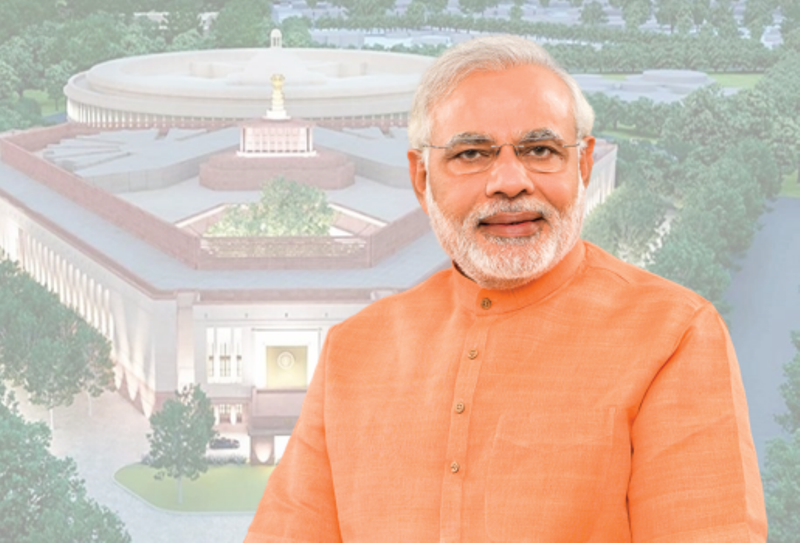
New Delhi: Prime Minister Narendra Modi on Thursday underscored the need to include women—who make up nearly half of India’s population—in the country’s decision-making processes, calling their participation essential for national development. Speaking in the Lok Sabha during a discussion on three key bills linked to the Nari Shakti Vandan Adhiniyam, he highlighted the growing role of “Nari Shakti” and stressed that greater representation in policymaking is the need of the hour.
The bills under consideration include the Constitution (One Hundred and Thirty-First Amendment) Bill, 2026, the Delimitation Bill, 2026, and the Union Territories Laws (Amendment) Bill, 2026.
Appealing for consensus, the Prime Minister urged opposition parties not to politicise what he described as a “historic” reform, stating that the legislation would strengthen democracy and benefit the entire nation. He warned that opposing such measures could carry political consequences in the future. Emphasising a broader vision of development, he noted that a developed India is not defined solely by infrastructure or economic growth, but also by equal participation of women. He reiterated the government’s commitment to the principle of “Sabka Saath, Sabka Vikas” in policymaking.
During the debate, Samajwadi Party MP Akhilesh Yadav expressed support for women’s reservation but questioned the timing of the bills, arguing that such significant legislation should follow the completion of the next census. Similarly, Congress MP Gaurav Gogoi backed the idea of reservation but opposed linking it to delimitation, urging the government to implement it immediately based on the current strength of the Lok Sabha.
On the other hand, Telugu Desam Party leader Dr. Byreddy Shabari welcomed the move, stating that women today are ready to lead at all levels—from grassroots governance to national leadership—and praised the initiative to enhance their role in governance.
Earlier in the day, Union Law Minister Arjun Meghwal introduced the Constitution Amendment Bill and the Delimitation Bill, while Home Minister Amit Shah presented the Union Territories Laws (Amendment) Bill in the House.
Calling the moment historic, Meghwal said the government is working to deliver political justice to women. He explained that the proposed amendment aims to ensure equality and cited Dr. B.R. Ambedkar’s view that a community’s progress is measured by the progress of its women. He added that implementing uniform reservation nationwide would require increasing the Lok Sabha’s strength by 50 percent, raising it to 815 seats, with 272 seats reserved for women.
Meghwal also noted that since the Census 2027 results are unlikely before late 2027 or early 2028, the 2011 Census would be used for delimitation and seat allocation purposes. He highlighted several government schemes aimed at women’s empowerment, including MUDRA Yojana, Lakhpati Didis, and Sukanya Samriddhi Yojana.
BJP MP Tejasvi Surya described the development as a long-awaited milestone, noting that women in India are now closer than ever to securing meaningful representation after decades of demand. He said the move would mark a new chapter in India’s development journey by ensuring women receive visible and tangible roles in nation-building.
The discussion on the bills is currently ongoing in the Lok Sabha.
