


By Geetha V P
The Bharatiya Janata Party (BJP), the political offshoot of the Rashtriya Swayamsevak Sangh (RSS), has in recent times increasingly diluted the Sangh’s deeply ingrained cadre-rooted work culture in favor of an autocracy-influenced, leader-centric model. This profound shift, accelerated under Narendra Modi’s dominance since 2014, marks a stark departure from the collective, ideology-driven ethos that defined the party’s origins and early decades. What began as a disciplined extension of the RSS’s organizational principles—emphasizing selfless service (seva), ideological purity, grassroots mobilization through shakhas, and Hindutva as a cultural-nationalist force rather than individual charisma—has evolved into a personality cult. In this new paradigm, the leader’s image overwhelmingly overshadows the cadre, and highly centralized decision-making eclipses consultative processes rooted in party forums and RSS guidance. This transformation has not only strained the historic symbiotic relationship between the BJP and RSS but also ignited an underlying ideological tussle, raising fundamental questions about the party’s fidelity to its roots, internal unity, and long-term sustainability amid evolving political challenges.
The BJP’s foundational history sharply underscores this contrast. Established as the Bharatiya Jana Sangh in 1951 by Syama Prasad Mookerjee, a steadfast nationalist and former president of the Hindu Mahasabha, the party served explicitly as the RSS’s political arm. The Jana Sangh drew its organizational strength directly from RSS pracharaks (full-time propagators) and daily shakhas (branch meetings), focusing on ideological commitment, collective discipline, and anti-partition nationalism over charismatic leadership. Following the 1975-77 Emergency imposed by Indira Gandhi, the Jana Sangh merged into the anti-Congress Janata Party coalition. However, ideological clashes—particularly over dual membership with the RSS—led to its dissolution. In 1980, it re-emerged as the Bharatiya Janata Party under the leadership of Atal Bihari Vajpayee, L.K. Advani, and Murli Manohar Joshi. These stalwarts consciously upheld a cadre-centric structure: major decisions emerged from national executive meetings, state-level consultations, RSS oversight, and feedback from anonymous grassroots workers (karyakartas), ensuring no single figure rose above the sangathan (organization).
Echoes of the Past: The Gradual yet Graceful Sidelining of Collective Stalwarts
The Vajpayee-Advani-Joshi era vividly exemplified this Sangh-aligned balance, where leadership was consultative and ideology paramount. Vajpayee, serving as India’s first BJP prime minister from 1998 to 2004, masterfully managed fragile coalitions with pragmatic moderation while consistently respecting RSS inputs on cultural and national issues. Advani, the fiery architect of the Ram Janmabhoomi movement that mobilized millions in the early 1990s, provided ideological intensity without seeking personal deification. Joshi, meanwhile, advanced Hindutva through education and cultural reforms, often in close coordination with RSS think tanks. The RSS maintained significant influence over key appointments, ensuring alignment with core principles like integral humanism and cultural nationalism. Yet, even these towering icons were not immune to marginalization as the party evolved and generational shifts occurred.
Advani’s prime ministerial ambitions were effectively quashed following the 2009 Lok Sabha defeat, where the BJP secured only 116 seats. Vajpayee, plagued by health issues after the 2004 loss, gracefully retreated into retirement, his moderate legacy frequently invoked but seldom fully replicated in later years. Joshi was progressively relegated to symbolic roles, eventually fading from frontline politics. These transitions, carefully overseen by the RSS, reinforced a foundational tenet: leaders are temporary stewards of the ideology; no individual is indispensable. The process was managed without acrimony, preserving party unity and allowing the organization to adapt to new electoral realities.
The Stark Rupture: Modi’s Era and the Rise of the Personality Monolith
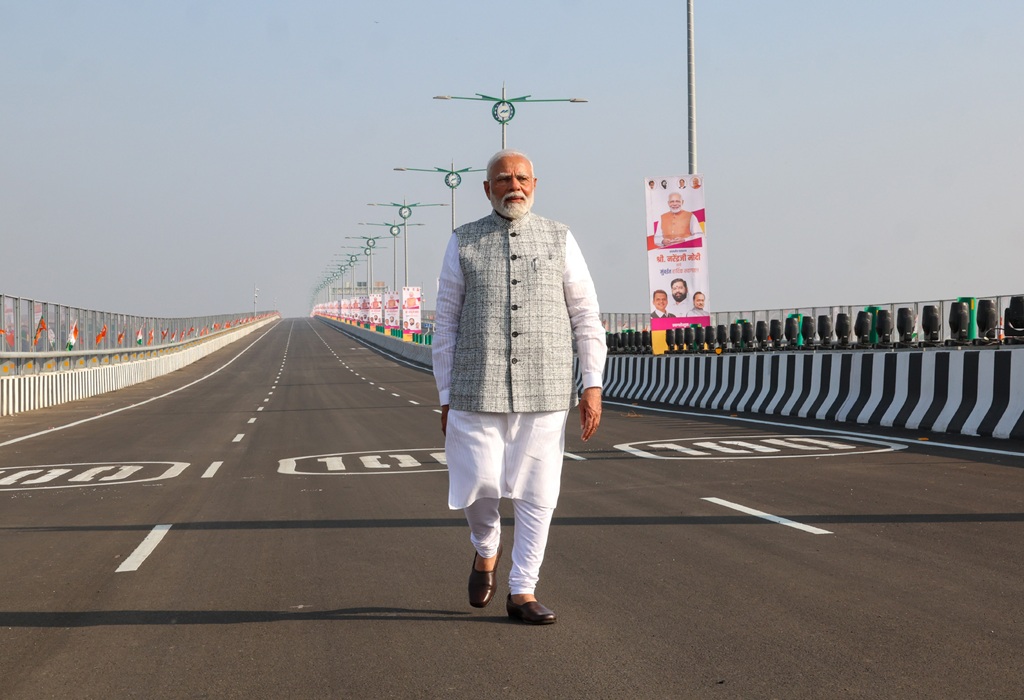
In stark contrast, the Modi era represents a fundamental inversion of this paradigm. Since assuming power in 2014 with a historic majority, the BJP has transformed into an unmistakably Modi-centric entity. Election campaigns, even for local bodies and municipal corporations, routinely feature Modi’s portrait prominently on posters, often dwarfing the actual candidates. Voters are implored to cast ballots “in Modi’s name” rather than on local issues, party manifesto commitments, or pure ideological appeals. This leader worship extends deep into governance: Modi, in tandem with Home Minister Amit Shah, personally oversees critical decisions—from cabinet formations and chief ministerial selections to appointments of state ministers, mayors, and even corporation chairpersons—frequently bypassing traditional party structures, national executive deliberations, or RSS consultations.
Long-time karyakartas, who dedicated decades to building the party from its marginal 2-seat tally in 1984 to national dominance, increasingly voice silent discontent. They feel sidelined as “migratory birds”—opportunistic entrants from rival parties or bureaucratic backgrounds—are swiftly rewarded with plum positions. Notable examples include Himanta Biswa Sarma, a former Congress stalwart who switched sides and became Assam’s chief minister; and technocrats-turned-ministers like Hardeep Singh Puri, Ashwini Vaishnaw, and S. Jaishankar, whose rapid ascents prioritize perceived loyalty to the leadership duo over grassroots tenure or ideological grooming. Internal critics argue that this influx dilutes Hindutva’s purist edge, introducing alleged corporate influencers who sway policies in critical sectors such as economy, infrastructure, and national security, often favoring crony interests over broader nationalist goals.
This cult of personality directly clashes with core RSS doctrine, which abhors individualism, ego-driven rule, and views leaders strictly as facilitators of collective seva. The RSS emphasizes decentralized shakha-based discipline, where ideology transcends personalities.
The Simmering Ideological Tussle: From Perceived Arrogance to Renewed Coordination
Tensions between the BJP and RSS have ebbed and flowed, but they intensified post-2014 with perceptions that Modi’s BJP was taking the Sangh for granted. A pivotal flashpoint came in 2024 when then-BJP president J.P. Nadda declared the party had “matured” and no longer required RSS support for electoral success—a remark widely interpreted as hubris that alienated cadres in Nagpur (RSS headquarters). This fueled discontent, contributing to the BJP’s reduced majority in the 2024 Lok Sabha polls, where it fell short of 272 seats and relied on allies.
Nadda’s term, originally set to end earlier, was repeatedly extended amid organizational delays and electoral exigencies, stretching into late 2025. As of December 14, 2025—the current date—the BJP Parliamentary Board appointed Bihar cabinet minister and five-term MLA Nitin Nabin as national working president, a move seen as preparatory for broader leadership transitions. Nabin, from the influential Kayastha community and representing Patna’s Bankipur seat, brings administrative experience and organizational roles, including as BJP in-charge for Chhattisgarh. This appointment signals ongoing revamps, with speculation that a full national president could emerge by early 2026, potentially reflecting greater RSS input on cadre revival.
RSS chief Mohan Bhagwat has consistently denied rifts, emphasizing “good coordination” with governments and framing differences as natural family matters. Recent developments, including NDA’s landslide in Bihar’s November 2025 assembly polls and improved outreach, suggest thawing strains. Meetings between RSS functionaries and BJP leaders, including Amit Shah and B.L. Santosh, underscore a pivot toward ideological fidelity and grassroots strengthening. The Sangh’s subtle push—influencing state appointments and advocating low-profile loyalists—aims to curb perceived “parallel power centers” and prevent the BJP from resembling Congress-style high-command culture. While critics argue it’s not too late for recalibration—the BJP remains a core Sangh Parivar member—prolonged autonomy risks permanent fractures, with opportunists potentially defecting when power ebbs.
Modi’s Horizon: Whispers of a Familiar Eclipse?
History offers ominous parallels for Modi’s future trajectory. Now 75, navigating coalition dependencies post-2024 and facing critiques on various fronts, he confronts murmurs of generational churn. The RSS, unwavering in prioritizing sangathan over personalities, could leverage appointments like Nabin’s to gradually dilute centralization, mirroring the quiet marginalization of Vajpayee, Advani, and Joshi.
The BJP’s enduring dominance hinges on synthesizing Modi’s unparalleled electoral magnetism with the Sangh’s disciplined, cadre-rooted core. As its political offshoot, abandoning these foundations for autocratic leader-centrism may secure short-term triumphs but invites long-term ideological hollowing and internal fragility. In the evolving dynamics of late 2025, with organizational renewals underway and relations showing signs of reconciliation, windows for course-correction remain open. Yet, indifference risks deepening schisms, opportunistic exits, and a repeat of history—where organizational purity demands the sidelining of yet another iconic figure. Ultimately, the party’s true strength lies in its ideology and nameless workers, not transient leaders; ignoring the RSS could prove fatal, fracturing the Parivar and eroding the very soul that propelled it from fringes to power.
* Inputs from Nanditha Subhadra
