


By Suresh Unnithan
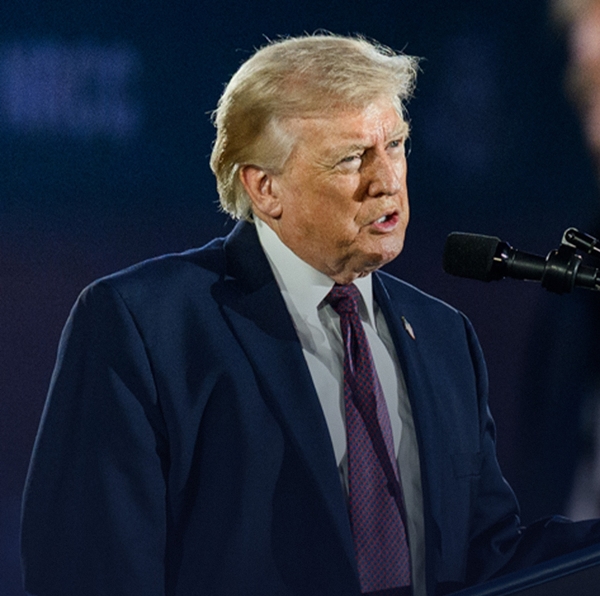
In the grand tradition of emperors admiring their new clothes, President Donald J. Trump delivered a prime-time address Wednesday night that was less a war update and more a real-estate closing pitch for the Middle East. With the confidence of a man selling timeshares in a fallout shelter, he stood at the podium and announced that Iran—yes, the same Iran still lobbing missiles at Israel—was essentially toast. “We are going to hit them extremely hard over the next two to three weeks,” he thundered. “We’re going to bring them back to the Stone Ages where they belong.”
The audience at home—those not already doom-scrolling Brent crude futures—must have felt a warm glow of nostalgia. Stone Ages! What a vintage Trump zinger, equal parts caveman cosplay and casual threat of civilizational rollback. He added, for good measure, that America’s “core strategic objectives are nearing completion” and that the whole messy business would wrap up “very shortly,” perhaps in those magical two-to-three weeks he’s been touting since Tuesday. “We hit them hard,” he insisted. “We got rid of a lot of the radicalized lunatics along the strait.” Translation: Mission accomplished, folks. Grab your MAGA hats and your discounted gasoline. We’re out.
Cut to ground level, where reality was busy filing a noise complaint.
In Tel Aviv, air-raid sirens were not consulting Trump’s teleprompter. Iranian drones and missiles—launched by a regime the president had just declared functionally extinct—were still streaking across Israeli skies Wednesday night, according to multiple defense sources. Iranian state television, never one for subtlety, broadcast footage of fresh launches while Supreme Leader successors (whoever they are this week) vowed to keep the party going. Finished? Iran’s idea of “finished” apparently includes a robust gift shop of ballistic souvenirs for the Holy Land.
Meanwhile, in the Strait of Hormuz—the 21-mile-wide oil jugular Trump keeps telling everyone else to “just take”—shipping had ground to a halt. Iranian speedboats and shore batteries weren’t exactly waving white flags; they were waving AKs and price-gouging tankers. China, Europe, and every other country that doesn’t get its crude delivered by DoorDash were politely declining Trump’s invitation to “fuel up their beautiful ships and take care of themselves.” The president’s solution? Let them sort it out. “There’s no reason for us to do it,” he shrugged. Classic Trump diplomacy: the geopolitical equivalent of tossing your car keys to a toddler and yelling “Drive safe!”
The markets, those humorless killjoys, responded with all the enthusiasm of a vegan at a Texas barbecue. As soon as Trump finished speaking, Brent crude—the global oil benchmark—leapt 5 percent to $106 a barrel in Asian morning trade Thursday. Stock futures from Tokyo to Singapore slid faster than a Trump tweet at 3 a.m. Analysts who had hoped for even a whisper of an exit ramp were left staring at charts that looked like a ski slope designed by gravity. “The speech failed to reassure global markets that the war was any closer to ending,” one Singapore trader told Bloomberg, “and that shipping through the Strait of Hormuz would return to normal.” In other words: nice speech, Mr. President; the oil traders would like a refund.
So what’s really happening here? Is this the art of the deal, or the art of the graceful(ish) exit? Trump’s two-to-three-week countdown has the distinct whiff of a man who has realized that endless Middle East wars play better in campaign ads than in actual governance. He’s spent weeks insisting the nuclear threat is obliterated, the navy sunk, the air force in ruins—yet every fresh Iranian barrage suggests the regime still has enough functioning hardware to ruin everyone’s Thursday commute. The “Stone Ages” line plays great at rallies; it plays less great when your allies are panic-buying U.S. crude at premium prices and your voters start noticing $4.50 gasoline.
The satire writes itself. Trump, the self-proclaimed dealmaker who once promised to end endless wars, now finds himself promising to end this endless war in a fortnight—right after one more spectacularly destructive bombing campaign. It’s the foreign-policy version of “the check is in the mail.” He’ll hit them hard, declare victory, hand the strait to whoever’s brave (or desperate) enough to grab it, and jet off to Mar-a-Lago for a victory lap. Meanwhile, Israeli families will keep dashing to bomb shelters, tanker captains will keep rerouting around floating mines, and your neighborhood gas station will keep posting new record highs.
By the time those two or three weeks tick by, expect the script to flip again. Perhaps Iran will be “totally defeated” yet somehow require just a few more “precision strikes.” Perhaps the Stone Ages will turn out to have excellent Wi-Fi for launching drones. Or perhaps—miracle of miracles—Trump will simply declare the mission “beautifully completed” and let the next news cycle swallow the details.
Because in Trump’s world, the war isn’t over until he says it is. And right now he’s saying it’s over in two to three weeks, maximum. Just don’t ask the Iranians. Or the Israelis. Or the oil traders. Or, for that matter, basic arithmetic.
