

US and Iran Agree to Two-Week Ceasefire, Reopening Strait of Hormuz After Five Weeks of War

From Our Foreign Desk
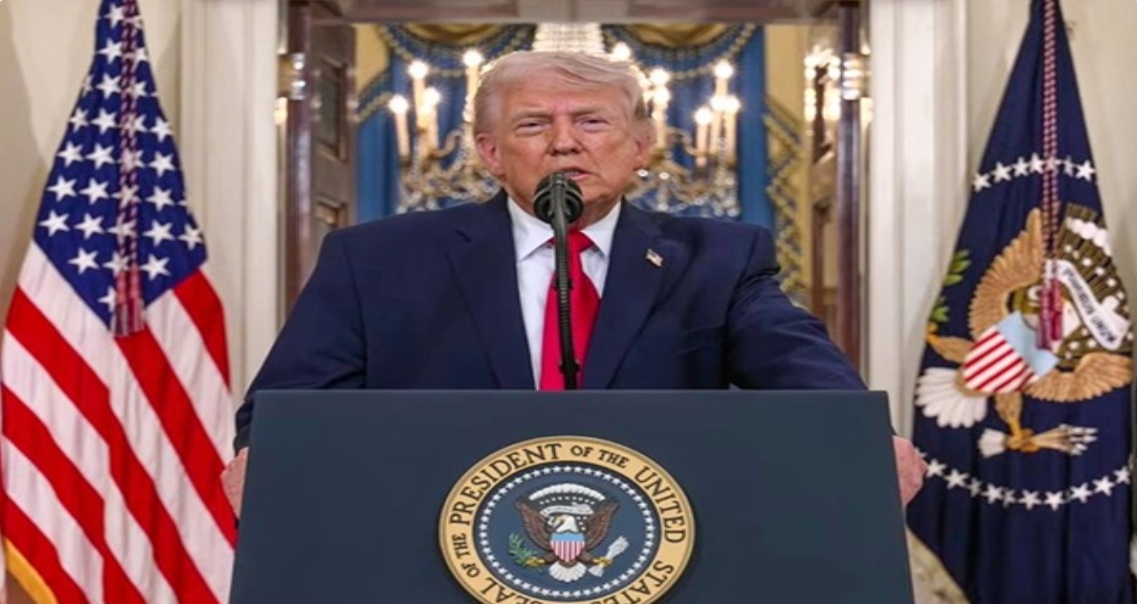
American President Donald Trump announced late Tuesday that the United States and Iran have reached a conditional two-week ceasefire, suspending American and Israeli strikes in exchange for the immediate, complete, and safe reopening of the Strait of Hormuz. The agreement, mediated by Pakistan, took effect as Trump’s self-imposed 8 p.m. deadline for Iran to comply or face further “destructive force” expired.
In a Truth Social post, Trump wrote: “Based on conversations with Prime Minister Shehbaz Sharif and Field Marshal Asim Munir of Pakistan… subject to the Islamic Republic of Iran agreeing to the COMPLETE, IMMEDIATE, and SAFE OPENING of the Strait of Hormuz, I agree to suspend the bombing and attack of Iran for a period of two weeks.” Iran’s Foreign Minister Abbas Araghchi confirmed Tehran’s acceptance, stating that if attacks halt, Iran will coordinate safe passage for shipping through the waterway.
The deal marks the first pause in direct hostilities since the war erupted on Feb. 28, 2026. That day, U.S. and Israeli forces launched Operation Epic Fury, executing nearly 900 strikes in the opening 12 hours on Iranian missile sites, air defenses, military infrastructure, and leadership targets. Supreme Leader Ali Khamenei was killed in the initial wave, along with dozens of senior officials. Iran retaliated with hundreds of missiles and thousands of drones across the region, striking U.S. positions in Kuwait and elsewhere. The fighting spread to Lebanon and Gulf states, killing thousands and displacing millions.
Iran responded to the onslaught by closing the Strait of Hormuz — the narrow chokepoint carrying roughly one-fifth of global oil supply — triggering a surge in energy prices and widespread supply disruptions. Trump had repeatedly threatened to “rain hell” on Iranian infrastructure, including power plants and bridges, if the strait remained blocked. Oil prices hovered near $110 a barrel in recent days before tumbling on news of the truce.
The two-week ceasefire is explicitly temporary. Earlier Pakistani-mediated proposals for a 45-day truce were rejected by Iran, which insisted on a permanent end to the conflict and presented a 10-clause counterproposal demanding an end to all regional hostilities, lifting of sanctions, reconstruction aid, and recognition of its sovereignty over the strait. Trump described the Iranian response as a “significant step” but “not good enough,” setting the Tuesday deadline.
Under the current framework, the immediate ceasefire reopens the strait while negotiators prepare for broader talks, expected to begin Friday in Islamabad. A senior U.S. official described the pause as a “bridging measure” to de-escalate and test Iranian compliance before addressing root causes — Iran’s nuclear program, ballistic missiles, and support for regional proxies.
The war’s origins trace to failed 2025 negotiations over Iran’s nuclear ambitions. After the U.S. withdrawal from the 2015 JCPOA and reimposed “maximum pressure” sanctions, indirect talks in Oman and Rome collapsed when Iran refused full dismantlement of enrichment facilities at Natanz, Fordow, and Isfahan. Israel struck first in June 2025; the U.S. followed with airstrikes on nuclear sites. A brief June ceasefire failed to hold, and tensions boiled over into full-scale war in late February.
Regional reactions were mixed. Gulf states welcomed the reopening of the strait for economic relief, while Israeli officials signaled continued vigilance. Iranian state media portrayed the agreement as a victory, claiming it forced Washington to negotiate after weeks of bombardment. Human rights groups expressed concern that the pause does little to address the humanitarian toll, including civilian deaths from strikes on populated areas.
Analysts caution that the truce is fragile. “This is not peace — it’s a timeout,” said one Middle East expert. “Both sides have achieved tactical goals: the U.S. and Israel degraded Iran’s nuclear and military capabilities; Iran demonstrated it could choke global energy flows. The real test comes in the next 14 days.”
As shipping resumes through the strait under Iranian military coordination, global markets breathed a sigh of relief. Yet diplomats in Islamabad face the harder task of forging a lasting accord on nuclear limits, sanctions, and regional security — issues that have eluded resolution for decades.
For now, the guns have fallen silent. Whether the silence lasts beyond two weeks remains to be seen.
