


By Nanditha Subhadra
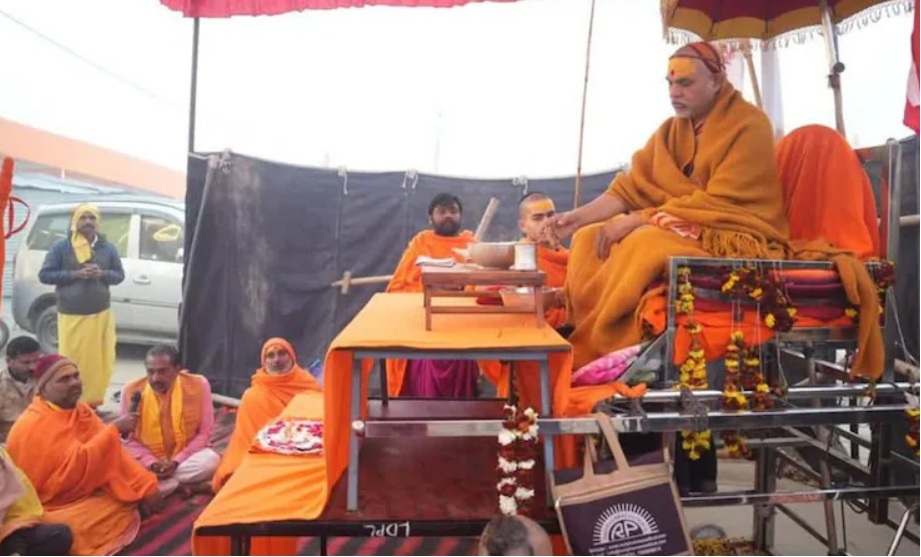
In the shadow of the sacred Sangam in Prayagraj, where the Ganga, Yamuna, and mythical Saraswati converge, a different kind of confluence is unfolding—one of politics, religion, and simmering resentment. On January 18, 2026, during the auspicious Mauni Amavasya at the Magh Mela, Shankaracharya Swami Avimukteshwaranand Saraswati of Jyotir Math was allegedly barred by Uttar Pradesh police from performing the traditional ‘shahi snan’ (royal bath) in his palanquin, leading to a confrontation that saw his disciples manhandled and the seer staging a dharna in protest. This incident, far from an isolated bureaucratic hiccup, has escalated into a full-blown crisis, with the Yogi Adityanath administration issuing a notice questioning the Shankaracharya’s very title—citing a pending Supreme Court case on his legitimacy. As the dust settles, the BJP’s aggressive posture risks alienating its core Hindu base, particularly upper-caste voters who hold Shankaracharyas in near-divine reverence. This controversy, rooted in the party’s apparent strategy to polarize Hindu society into pro- and anti-BJP factions, could prove a potential destructor for the BJP’s electoral fortress, unraveling its pro-Hindu narrative and handing the opposition a lethal weapon.
At its core, this feud exposes the BJP’s calculated intent to bifurcate Hindu society along loyalty lines—those who unquestioningly support the party’s brand of Hindutva versus those who dare critique it. By demanding “proof” of Avimukteshwaranand’s status as Shankaracharya, the Yogi government isn’t just challenging an individual; it’s undermining the sanctity of one of Hinduism’s most hallowed institutions. This move echoes a broader pattern where the BJP labels dissenting voices within the faith as “fake” or politically motivated, as seen in past instances where critics like the seer have been dismissed for opposing the Ram Temple’s premature inauguration in 2024 or highlighting beef exports from Uttar Pradesh despite the party’s cow protection rhetoric.
Such tactics aim to consolidate a “pro-BJP” Hindu bloc by portraying critics as anti-national or anti-dharma. However, this risks backfiring spectacularly. Hinduism, with its diverse sampradayas (traditions) and decentralized authority, thrives on debate and pluralism—not monolithic allegiance. By forcing a binary divide, the BJP is fracturing the very unity it claims to champion. Public discourse on platforms like X (formerly Twitter) reflects this schism: while some BJP supporters decry Avimukteshwaranand as a “fraud” aligned with opposition figures like Akhilesh Yadav, others, including voices within the party, condemn the government’s actions as an insult to Sanatan Dharma. This internal rebellion, exemplified by BJP leader Sunil Bhalara’s public rebuke, signals growing unease that Yogi’s “arrogance” is striking at Hinduism’s core.
Avimukteshwaranand’s influence extends far beyond Uttarakhand’s Jyotir Math; he commands a massive following among upper-caste Hindus—Brahmins, Kshatriyas, and Vaishyas—across India, who view Shankaracharyas as spiritual successors to Adi Shankaracharya, the unifier of Hindu philosophy. These communities, traditionally the BJP’s bedrock in the Hindi heartland, have been pivotal in the party’s victories, contributing significantly to its vote share in Uttar Pradesh (around 20-25% from upper castes alone). The seer’s criticisms—ranging from the Mahakumbh stampede in 2025, where he accused Yogi of concealing deaths, to alleged temple demolitions in Varanasi outpacing even Aurangzeb’s era—resonate deeply with orthodox Hindus who prioritize dharma over political expediency.
The Shankaracharya has considerable followings among BJP supporters in the South as well. This controversy can alienate these supporters from the party, particularly when the BJP is looking south to expand its base and influence, since the north is increasingly saturated for the party. If the controversy escalates, it will alienate a sizable influential section of the community, and that could prove fatal for the party’s electoral prospects in the coming polls in the southern states.
An all-out attack on the Shankaracharya could alienate this demographic, already showing signs of disillusionment post the 2024 Lok Sabha dips. In Uttar Pradesh, where upper castes form a critical swing vote, even a 5-7% erosion could cost the BJP dozens of seats in the upcoming assembly elections. Historical parallels abound: the 2004 arrest of Kanchi Shankaracharya Jayendra Saraswati by the Congress-led government fuelled Hindu outrage, contributing to the UPA’s image as anti-Hindu. Ironically, the BJP now risks the same fate, with X users urging Hindus to “reject” the party for its perceived Hinduphobia.
The BJP’s pro-Hindu image—built on milestones like the Ram Temple and anti-conversion laws—is its electoral lifeline. Yet, clashing with a Shankaracharya shatters this veneer, portraying the party as power-hungry rather than pious. Avimukteshwaranand’s dharna and hunger strike, coupled with his calls for Yogi’s resignation, have amplified accusations of governmental overreach. The Congress, seizing the moment, has demanded Modi’s apology, labeling the BJP as “neither for work nor for Ram” but solely for power. This narrative—BJP as anti-Hindu and arrogant—gains traction, especially as the opposition unites around the seer despite his past barbs at Rahul Gandhi.
In states like Madhya Pradesh and Rajasthan, where upper-caste voters swayed recent polls, this could embolden alliances like SP-Congress, peeling away disillusioned Hindus. Nationally, with 2029 Lok Sabha elections on the horizon, the controversy undermines Modi’s unifier persona, inviting comparisons to authoritarian regimes that meddle in religious affairs.
This crisis was avoidable through dialogue and respect for religious autonomy, yet the BJP’s choice of confrontation reveals a hubris that could prove fatal. By dividing Hindus and attacking a revered figure, the party is not just risking electoral setbacks—it’s courting long-term irrelevance in a faith it claims to represent. As voices on X warn of Yogi’s declining popularity and BJP’s casteist missteps, the fallout could cascade into a broader Hindu awakening against political overreach. For a party that rose on Hindutva, this controversy might well be the spoiler that dims its saffron glow.
