


By Nanditha Subhadra
In a surprising move the Trump administration has temporarily eased select sanctions on Russian oil exports. This pragmatic yet contentious decision seeks to flood global markets with additional supply and rein in skyrocketing crude prices triggered by the ongoing U.S.-Israel war with Iran. As threats to the Strait of Hormuz choke off vital Middle Eastern shipments, Washington is navigating a delicate balance: shielding consumers from energy shocks while preserving leverage against Moscow over its invasion of Ukraine.
The Spark for Market Chaos
The conflict erupted in late February 2026, with intensified U.S. and Israeli military strikes targeting Iranian facilities, infrastructure, and military assets. Iran retaliated aggressively, including direct threats—and partial implementation—of restrictions on maritime traffic through the Strait of Hormuz. This narrow waterway, flanked by Iran and Oman, serves as the gateway for approximately 20-21% of the world’s seaborne crude oil and a significant portion of liquefied natural gas (LNG).
Iranian officials declared intentions to block or severely limit passages, particularly for vessels linked to the U.S., Israel, or their allies, with statements warning that “not a single litre of oil” would transit to adversaries. The result has been dramatic: tanker traffic has plummeted, leading to a backlog of unsold crude in the Gulf, forced production cuts by OPEC members like Saudi Arabia, and widespread shipping halts due to heightened risks of attacks, mines, or seizures.
Global oil benchmarks reacted violently. Brent crude surged from pre-conflict levels around $67 per barrel to peaks nearing $120 in early March, before volatile swings brought it back toward $90-100 range by mid-month. West Texas Intermediate (WTI) followed similar patterns, hitting multi-year highs reminiscent of 2022 peaks. These spikes have fueled fears of stagflation, higher gasoline prices for American drivers (already climbing sharply), and broader economic strain worldwide, including in energy-importing nations like India.
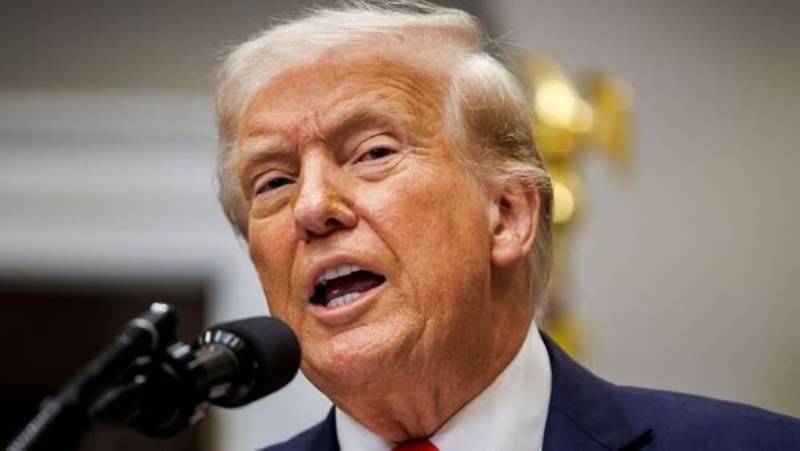
President Donald Trump has repeatedly assured the public that the war would end “very soon,” emphasizing military progress and U.S. readiness to “put an end to this threat once and for all.” To safeguard shipping, the administration has deployed U.S. Navy escorts for tankers, offered political risk insurance for Hormuz transits, and coordinated potential releases from strategic petroleum reserves—potentially hundreds of millions of barrels in tandem with allies via the International Energy Agency.
Despite these efforts, immediate supply shortfalls persisted, prompting urgent measures to diversify sources away from the disrupted Middle East.
Sanctions Relief: A Short-Term Bridge for Russian Oil
In early March 2026, the U.S. Treasury Department, led by Secretary Scott Bessent, rolled out calibrated relief. On or around March 6, a 30-day waiver was issued specifically allowing Indian refiners—major buyers of discounted Russian crude—to take delivery of sanctioned Russian oil already loaded and at sea without incurring U.S. penalties. Bessent framed this as a “stop-gap measure” and “deliberate short-term” action to prevent “stranded” barrels from exacerbating global shortages, especially as India faced acute deficits from traditional Gulf suppliers.
Bessent further indicated openness to broader easing, noting “hundreds of millions of barrels of sanctioned crude on the water” that could be unsanctioned to “create supply.” President Trump amplified this in public remarks around March 9-10, stating explicitly: “We have sanctions on some countries. We’re going to take those sanctions off until this straightens out.” He tied the policy directly to stabilizing the oil market amid the Iran crisis, while hinting at possible permanence if broader peace emerges.
On March 12, Bessent addressed the inherent contradictions head-on. He called the relief “unfortunate” due to the potential financial windfall for Russia, which could indirectly undermine U.S. pressure on Moscow over Ukraine. Yet he insisted the scope remained tightly limited—primarily covering existing cargoes in transit rather than new production—and confined to a “micro period” until the Hormuz situation normalizes. Bessent maintained that the steps would deliver no “significant financial benefit” to the Russian government in the grand scheme, prioritizing immediate global energy stability.
Geopolitical Trade-Offs and Mixed Reactions
This policy pivot exposes the stark tensions in U.S. strategy: prioritizing domestic economic relief and allied energy security against the imperative of isolating Russia financially. Proponents inside the administration defend it as essential crisis management—diverting non-Middle Eastern barrels to offset Hormuz disruptions, curb inflation risks, and protect consumers from prolonged high fuel costs.
Russia has responded positively, with signals from Moscow indicating readiness to boost exports to Europe, India, and other markets to help alleviate the crunch. India, praised by Bessent as a “very good actor” for previously complying with sanctions curbs, quickly capitalized on the waiver, snapping up millions of barrels.
Critics, however, have been vocal. Democratic lawmakers, including figures like Senators Elizabeth Warren, Chuck Schumer, and Ruben Gallego, condemned the move as inadvertently aiding an adversary, with some demanding immediate reversal. They argue it provides “material benefit to the enemy” at a time when Russia has been accused of supporting Iran militarily. Broader concerns focus on weakening sanction credibility and potential long-term erosion if temporary measures become de facto permanent.
As of mid-March 2026, oil prices have moderated somewhat but hover elevated, reflecting ongoing uncertainty. The trajectory hinges on the speed of de-escalation in the Iran conflict, the effectiveness of naval protections and reserve releases, and whether additional waivers follow.
Ultimately, this episode illustrates the profound entanglement of geopolitics, energy security, and economics. Regional wars can upend even the most entrenched policies, forcing leaders into uncomfortable compromises where short-term market relief clashes with long-term strategic goals. The Trump administration’s sanctions adjustment underscores a high-stakes gamble: averting an energy catastrophe now, while hoping the underlying conflicts resolve before unintended beneficiaries—like Russia—gain lasting advantage
