


From Our Political Correspondent
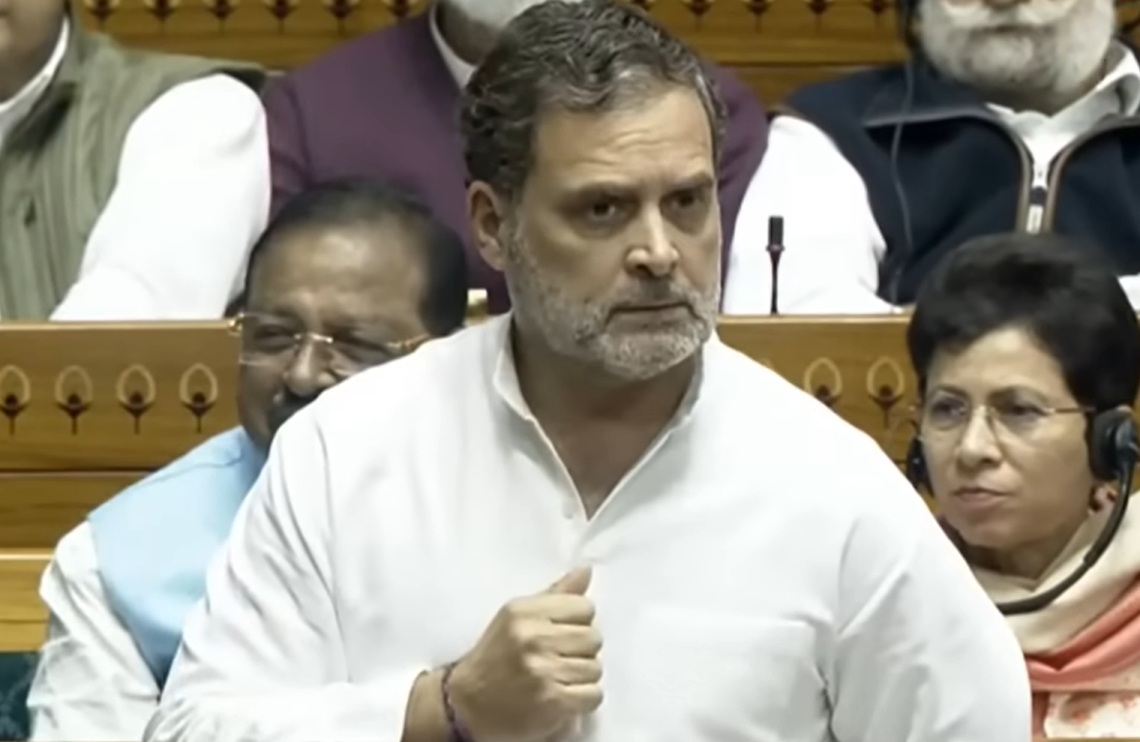
New Delhi: Leader of Opposition in the Lok Sabha Rahul Gandhi delivered a fiery speech today, sounding the alarm over India’s energy security as the ongoing war in the Middle East involving the United States, Israel, and Iran disrupts global oil supplies. Gandhi highlighted the closure of the Strait of Hormuz — a vital chokepoint through which approximately 20% of the world’s oil flows — as a major threat to India’s economy and daily life.
Addressing the House, Gandhi stated, “As everybody is aware, a war has broken out in the Middle East. The United States, Israel and Iran are at war. This war is going to have far-reaching consequences. The central artery from where 20 per cent of the global oil flows, the Strait of Hormuz has been closed. And this is going to have tremendous repercussions, particularly for us, because a very large portion of our oil and natural gas comes through the Strait of Hormuz.”
He described the emerging impacts as just the beginning, pointing to early signs of distress: “The pain has just started. Restaurants are closing, there is widespread panic about LPG, street vendors are affected, and as I said, this is only the beginning. The foundation of every single nation is its energy security.”
Gandhi sharply criticized what he described as India’s dependence on foreign approval for its energy sourcing decisions, particularly regarding oil purchases from Russia. He questioned why a nation of India’s size would allow the U.S. President to dictate terms on trade relationships with suppliers.
“I do not say this lightly, but allowing the United States to decide who we buy oil from, who we buy gas from, whether we can buy oil from Russia or not, whether our relationship with different oil suppliers can be decided by us… this is what has been bartered,” Gandhi said. “It has been a very puzzling fact for me… why a nation the size of India would allow any other nation… the President of another nation to give us permission to buy Russian oil, to decide who our relationships are with.”
He claimed to have solved this “puzzle,” attributing it to compromise. Turning his attention to Union Minister of Petroleum and Natural Gas Hardeep Singh Puri, Gandhi remarked, “We have a gentleman sitting here, who is the Oil Minister. He himself has said that he is a friend of Mr. Epstein.”
The reference to Jeffrey Epstein — the late American financier convicted of sex offenses and linked to high-profile figures — triggered immediate uproar in the House, with opposition members reportedly chanting “Epstein.” The Speaker intervened, halting Gandhi’s speech mid-sentence as he emphasized he was discussing oil and economic security.
The speech came amid reports of disruptions in global energy markets following Iran’s retaliatory actions in the Strait of Hormuz, including attacks on vessels that have effectively choked off shipping lanes. The conflict, which escalated dramatically in late February 2026 with U.S. and Israeli airstrikes on Iranian targets, has entered its second week with no resolution in sight, raising fears of prolonged supply shortages.
Government sources have maintained that India’s crude supplies remain secure through diversified sourcing and that domestic LPG production has been ramped up, with no widespread crisis for household use. However, opposition leaders, including Gandhi, have argued that the situation exposes vulnerabilities in India’s foreign policy and energy independence, warning that ordinary citizens — from small vendors to families — will bear the brunt if urgent measures are not taken.
The episode underscored deep political divisions in Parliament over India’s response to the Middle East crisis, with debates continuing on energy security, foreign relations, and the domestic fallout from global instability.
