

The Gulf Conflict and Helium Crisis: How Geopolitical Conflict Threatens the Future of IT, Semiconductors, AI, and Quantum Computing

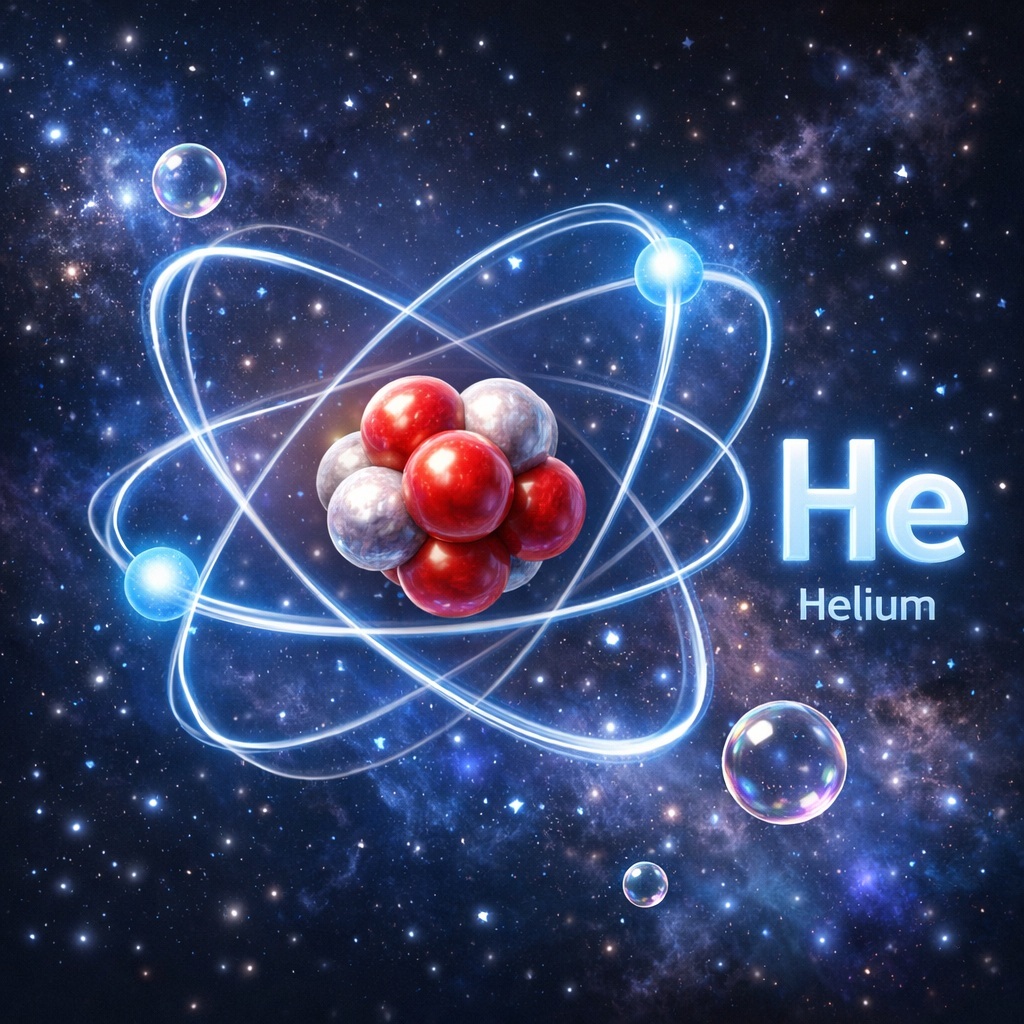
By Nanditha Subhadra
The 2026 battle in the Gulf, particularly involving Iran and Qatar, has triggered a severe global helium shortage with profound implications for the information technology (IT) industry. Helium, a non-renewable noble gas extracted as a byproduct of natural gas processing, plays a critical role in high-precision manufacturing and advanced computing. Qatar, which supplied roughly 30% of the world’s helium (approximately 63 million cubic meters out of a global total of around 190 million cubic meters in 2025), has seen its production crippled by strikes on key infrastructure. This disruption, compounded by instability in the Strait of Hormuz, highlights the fragility of supply chains supporting semiconductors, AI development, data centers, and emerging quantum technologies.
Qatar’s Role and the Mechanics of the Disruption
Qatar’s helium dominance originates from its massive North Field natural gas reserves. The Ras Laffan Industrial City hub, central to liquefied natural gas (LNG) and helium extraction, suffered direct strikes, leading to significant output reductions and full halts in some operations. QatarEnergy reported export cuts of up to 14% initially, with broader shutdowns following attacks in early 2026. Liquid helium, transported at near-absolute-zero temperatures, evaporates quickly if shipping is delayed. Military activity and heightened insurance risks in the Strait of Hormuz—the primary export route—have created logistical bottlenecks, with potential evaporation losses extending shortages for months even after any resolution of hostilities.
Impacts on Semiconductor Manufacturing and AI Development
The IT sector accounts for an estimated 24% of global helium consumption, a figure rising rapidly with surging demand for advanced chips. In semiconductor fabrication, especially at sub-5nm nodes used in Nvidia GPUs, AMD processors, and TSMC production, helium is essential for photolithography and plasma etching. It provides precise backside wafer cooling to prevent thermal warping, enables contamination-free purging, and supports extreme ultraviolet (EUV) lithography through its superior thermal conductivity and inert properties. Shortages risk lower yields, production delays, and constrained ramp-ups at fabs in Taiwan and South Korea—major importers reliant on Qatari supplies. This could slow the AI boom, where training large language models and scaling inference infrastructure depend on massive volumes of cutting-edge chips. Hyperscale data center expansions by companies like Google, Microsoft, and Amazon may face upstream bottlenecks, exacerbating existing power and capacity challenges.
Helium’s Indispensable Role in Quantum Computing
Quantum computing, poised to revolutionize IT through exponential processing power for optimization, cryptography, and simulation tasks, relies heavily on helium for cryogenic cooling. Superconducting qubits—used by leaders such as IBM and Google—must operate at temperatures near absolute zero (around 15-50 millikelvin) to minimize thermal noise, reduce decoherence, and maintain quantum coherence. Dilution refrigerators, the standard cooling systems for these platforms, use liquid and superfluid helium (helium-4 cooled below 2.17 K, where it exhibits zero viscosity and exceptional thermal conductivity) to achieve and sustain these ultra-low temperatures. Without stable helium supplies, qubit lifetimes shorten dramatically, limiting computational accuracy and scalability.
Emerging approaches, such as electrons-on-helium qubits, further underscore helium’s centrality. These platforms trap single electrons above a superfluid helium surface, offering potential advantages in coherence times and gate speeds while still requiring cryogenic environments. Any sustained shortage could delay research timelines, hinder commercialization, and stall progress toward fault-tolerant quantum systems that promise breakthroughs in drug discovery, materials science, and complex AI problems.
Economic Ramifications: Price Surges and Multi-Layered Shock
Helium prices have surged, with spot markets reporting doubling or tripling for some buyers in Asia and Europe. This adds direct cost pressure on chipmakers—where helium, though a small fraction of total expenses, is non-substitutable in key processes—and creates pass-through effects on IT hardware pricing. The crisis represents a multi-layered economic shock: immediate supply constraints, delayed AI-driven productivity gains, and potential capital expenditure adjustments in the semiconductor sector. Prolonged disruption could reshape investment priorities and expose over-reliance on concentrated global resources.
Alternatives, Mitigation, and Long-Term Consequences
The United States, the world’s largest helium producer, holds substantial reserves (estimated recoverable resources in the range of 8.5–20.6 billion cubic meters depending on assessments), providing a partial buffer through facilities like those in Wyoming. Increased domestic output, alongside contributions from Algeria, Russia, and emerging sources, offers some relief, though scaling takes time and much U.S. production serves domestic needs. Helium recycling in fabs has advanced, with closed-loop systems achieving 90-95% recovery rates, aiding short-term conservation.
Experts warn that full recovery could require months for infrastructure repairs, tanker repositioning, and quality certification. Long-term, the crisis accelerates calls for supply diversification, renewed investment in helium exploration, and onshoring of semiconductor and quantum research under policies like the CHIPS Act. While no perfect substitutes exist for helium’s cryogenic and thermal properties, research into alternative cooling methods and qubit technologies may gain urgency.
In conclusion, the 2026 Gulf helium crisis serves as a wake-up call for the IT industry. From foundational chip manufacturing and AI acceleration to the cryogenic demands of quantum computing, helium underpins technologies central to future innovation. As geopolitical tensions expose vulnerabilities in strategic material chains, industry leaders and policymakers must prioritize resilience—through diversified sourcing, recycling advancements, and strategic reserves—to safeguard the continued progress of digital transformation and next-generation computing.
*The author is an IT professional for over three decades
