

Snipers on Roofs, Naps on Schedule, Stairs Strictly Banned: Modi’s NZ Visit Proves Even Supermen Need Siesta Time

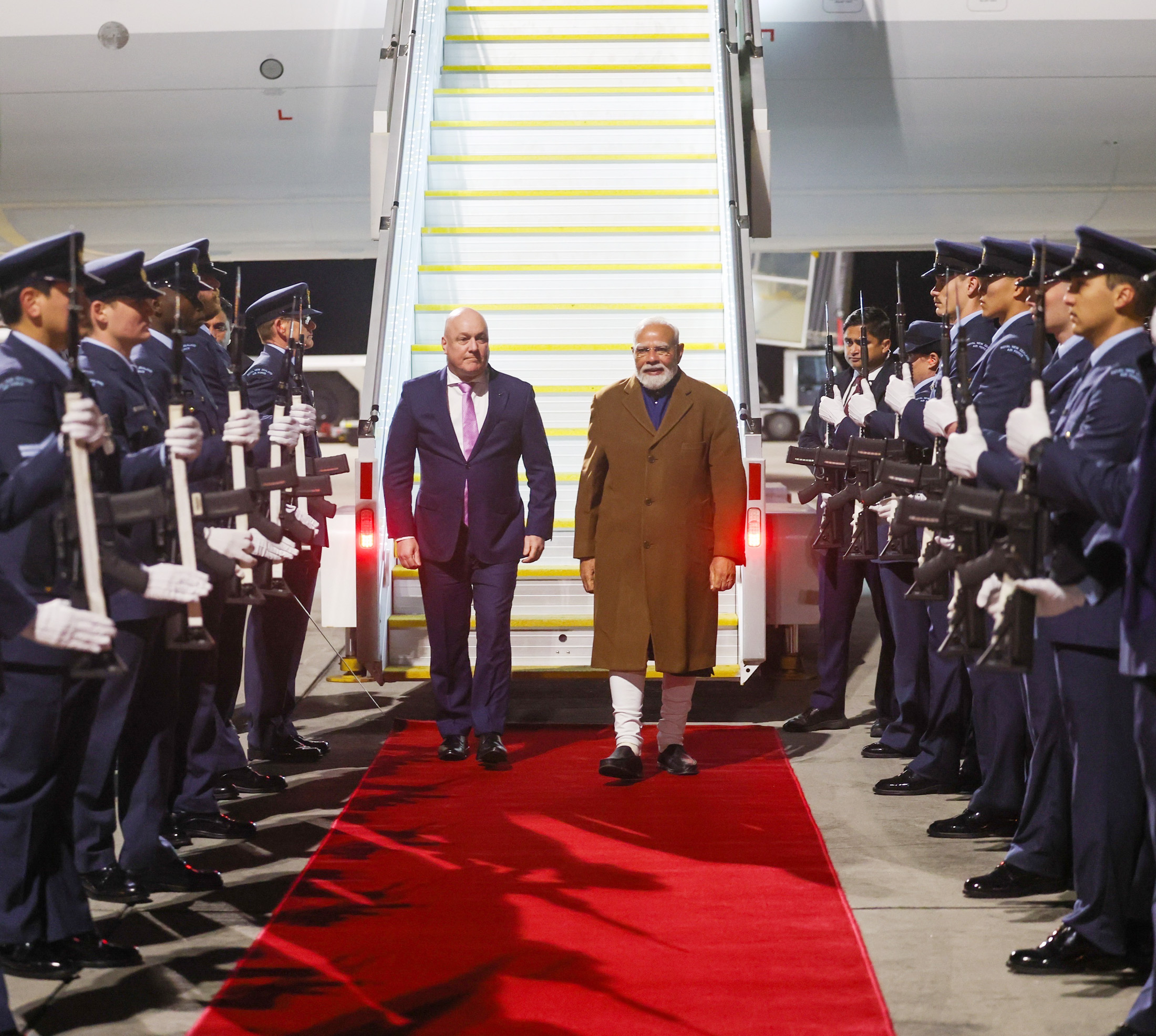
Indian Prime Minister Narendra Modi touched down in Auckland on Friday evening, marking the first official visit by an Indian leader to New Zealand in 40 years. The reception was warm: New Zealand Prime Minister Christopher Luxon personally welcomed him at the airport, and the itinerary promises bilateral talks on trade, defence, education, and deeper strategic ties. Yet the headlines leading up to and surrounding the visit have been dominated less by diplomacy and more by the extraordinary security and logistical cocoon enveloping the 75-year-old leader.
Rooftop snipers, bomb-sniffing dogs, specialised anti-terror units, extensive road closures, and a heavy police presence have transformed parts of Auckland into a high-security zone. These measures, while standard for a prominent global figure amid real-world threats, come with notable add-ons reported by local media: a preference for venues without stairs and a schedule accommodating dedicated “nap times” or rest periods. The no-stairs directive has drawn particular attention, widely linked to Modi’s 2019 stumble at Atal Ghat in Kanpur, where he missed a step on uneven stairs during a Namami Gange event and was quickly assisted by security. The incident was minor, quickly recovered from, and led to practical fixes like stair reconstruction — but it lingers in public memory.
Satire flows easily here. The man long projected as an embodiment of tireless energy — the non-stop campaigner, yoga enthusiast, and globe-trotting statesman — now travels with built-in siestas and ramp-friendly venues. Critics on social media and in opposition circles have pounced: “From ‘chai pe charcha’ to scheduled power naps,” one quipped. The optics clash with the vigorous image carefully honed since 2014. For a leader who has mocked “tired” opponents and championed 24×7 governance, these accommodations feel like a quiet acknowledgment of age’s realities.
Yet fairness demands nuance. At 75, Modi is navigating jet lag across a multi-nation tour (Indonesia, Australia, now New Zealand) packed with meetings, cultural events, and a major diaspora rally expected to draw thousands. Prudent scheduling that includes rest is responsible leadership, not frailty. World leaders of similar vintage — and younger — routinely manage health and stamina considerations. Security teams preparing for every contingency, including mobility, reflect thorough professionalism rather than panic. The 2019 fall was a one-off on poorly designed stairs; turning it into policy is cautious, not catastrophic.
The visit itself carries substance beyond the memes. Discussions aim to elevate ties to a Strategic Partnership, building on a recently concluded Free Trade Agreement. Trade targets, investment commitments (New Zealand eyeing billions in India), defence cooperation in the Indo-Pacific, and people-to-people links are on the table. For the Indian diaspora in New Zealand, Modi’s presence is a significant morale booster.
Still, the layered precautions invite reflection on image versus reality in Indian politics. A strongman narrative that once emphasised boundless stamina now includes visible guardrails for age. Supporters rightly argue this shows maturity and prioritises effectiveness over bravado. Detractors see vulnerability in the brand. Either way, it humanises a figure often presented as larger-than-life.
As Modi concludes this leg of his tour, the real measure will be outcomes — strengthened partnerships, tangible gains for India, and smooth execution despite (or because of) the extra layers. History will remember the diplomacy, not the nap schedule. But in the age of viral visuals and endless commentary, even stair-free venues and rest breaks become part of the story. Prudence in leadership is no vice; pretending physical limits don’t exist, perhaps, is the greater folly.
