

38 Crore Strong: A War with Gen Z Could Prove Fatal for the BJP’s Electoral Battle in 2029

By Geetha V P
There is a special kind of political arrogance that mistakes online abuse for strategy. For years, sections of the ruling ecosystem have treated Generation Z as little more than digital background noise — a disposable demographic to be trolled, polarised, lectured or casually dismissed between WhatsApp forwards and late-night reels. The assumption was almost charming in its simplicity: feed them a steady diet of nationalism, brand every inconvenient question as “anti-national,” and the young will either fall in line or stay silent. That comfortable delusion is now walking straight into a demographic wall. By 2029, this same generation will stand nearly 38 crore strong at the polling booth — the largest adult voting bloc India has ever seen. The people they spent years trying to intimidate into irrelevance are about to become the decisive force in the BJP’s electoral battle.
According to Election Commission data from the 2024 base year, Gen Z already accounted for 18.21 per cent of the registered electorate. The calculation is straightforward: the entire 18–19 age group (1.85 crore) plus roughly 80 per cent of the 20–29 cohort yields approximately 17.64 crore electors out of a total of 96.88 crore. By 2029 the entire generation will have crossed the voting threshold. The 18–29 age bracket alone is projected to form around 27.8 per cent of the voting-age population; when the trailing edge of Gen Z that will be 30–32 is added, their share crosses 35 per cent. In raw numbers they will dwarf every other generational cohort. The party that dreams of a decisive majority in Parliament and a clean sweep of major states will have to win a substantial portion of these 38 crore voters — or watch the dream dissolve.
What 2024 Already Told Us About Gen Z
Those who still believe Gen Z can be managed with the usual toolkit should look carefully at the hard numbers from 2024. The most reliable data comes from the CSDS-Lokniti post-poll survey:
Vote share by age group (2024 Lok Sabha elections)
- Up to 25 years (closest proxy for pure eligible Gen Z): BJP 39%, Congress 21%
- 26–35 years: BJP 37%, Congress 21%
- 36–45 years: BJP 36%, Congress 22%
- 46–55 years: BJP 37%, Congress 21%
- 56 years & above: BJP 35%, Congress 22%
When allies are added, the NDA’s combined share among young voters stood at approximately 46%. Congress allies, however, performed better among the young (around 12%) than BJP allies (around 7%), helping the INDIA bloc narrow the gap.
Compared with 2019, the BJP’s youth support saw a mild but noticeable erosion — down one percentage point among those under 25 and two percentage points among the 26–35 cohort (from roughly 40–41% earlier). Axis My India exit poll data painted a similar picture: in the 18–25 age group the NDA led the INDIA bloc by only two percentage points (43% versus 41%).
There was no dramatic youth revolt in 2024. The BJP still held a clear advantage over older age groups and remained the single largest choice among the young. But the first visible friction had appeared. Unemployment ranked as the single biggest grievance among the under-25s in the same surveys — a fact the abusive rhetoric of the online ecosystem has done nothing to address. The generation that many still dismiss as easily trollable had already started registering quiet dissatisfaction without needing street theatre to announce it.
Millennials in 2029: The Quiet Bloc Watching the Storm
While Gen Z surges to the front, the Millennials — born roughly between 1981 and 1996 — will occupy the second-largest space in the 2029 electorate. Projections place them at around 335–357 million voters, aged then between 33 and 48. This is the generation that entered the workforce during the early years of economic liberalisation, lived through the 2014 and 2019 mandates, and is now in its peak earning, family-forming and home-buying years.
Their electoral behaviour in 2029 will matter precisely because they are no longer the restless young. Millennials will bring higher turnout, greater economic stakes, and a sharper focus on delivery: stable jobs for themselves and their children, housing costs, education quality, and inflation that actually hits household budgets. In 2024 the overlapping 26–35 cohort already showed a modest erosion of BJP support. By 2029 that same group will be older, more settled, and less willing to accept narrative over performance. They will not necessarily swing dramatically, but they will amplify the consequences of any large Gen Z shift. If Gen Z turns hostile, Millennials will decide whether that hostility becomes decisive or remains contained.
The Blind Spot of Underestimation
Here lies the exquisite irony. The very style of politics that sections of the ruling ecosystem perfected — the constant drip of communal poison, the ritual abuse of dissenters, the casual branding of every inconvenient question as “anti-national” — is precisely the style that alienates Gen Z fastest. The assumption still in circulation is that the young can be frightened into silence, distracted by temple politics, or divided along the old fault lines of caste and community. They have not noticed that the children who grew up watching paper-leak scandals, jobless growth statistics, and climate reports on their phones have developed a different immune system.
Watch the typical response when a young person raises unemployment or examination integrity. The reply is rarely data. It is usually a sneer, a whataboutism, or an invitation to leave the country. The same online army that spent years perfecting the art of intimidation now faces a cohort that treats such tactics as comedy rather than threat. When you have already watched friends fail multiple competitive exams because the papers were sold in the open market, when you have seen the employment numbers remain stubbornly grim despite repeated claims of “achhe din,” the threat of being called an urban Naxal or a paid agent loses its sting. Populations that feel they have little left to lose are notoriously difficult to scare.
The party leadership itself is not entirely blind to the problem. Quiet conversations in Delhi have begun acknowledging that the aggressive cultural nationalism that once consolidated older voters is producing diminishing returns among those under thirty. Yet the ecosystem continues to operate on autopilot. Every abusive reel, every communal dog-whistle, every attempt to turn a policy failure into an identity war is recorded, shared, and remembered by a generation that organises faster than any party machine. They do not need a formal manifesto to know what they reject. Chronic joblessness, compromised examinations, visible economic unfairness, and the casual contempt shown toward their future are enough.
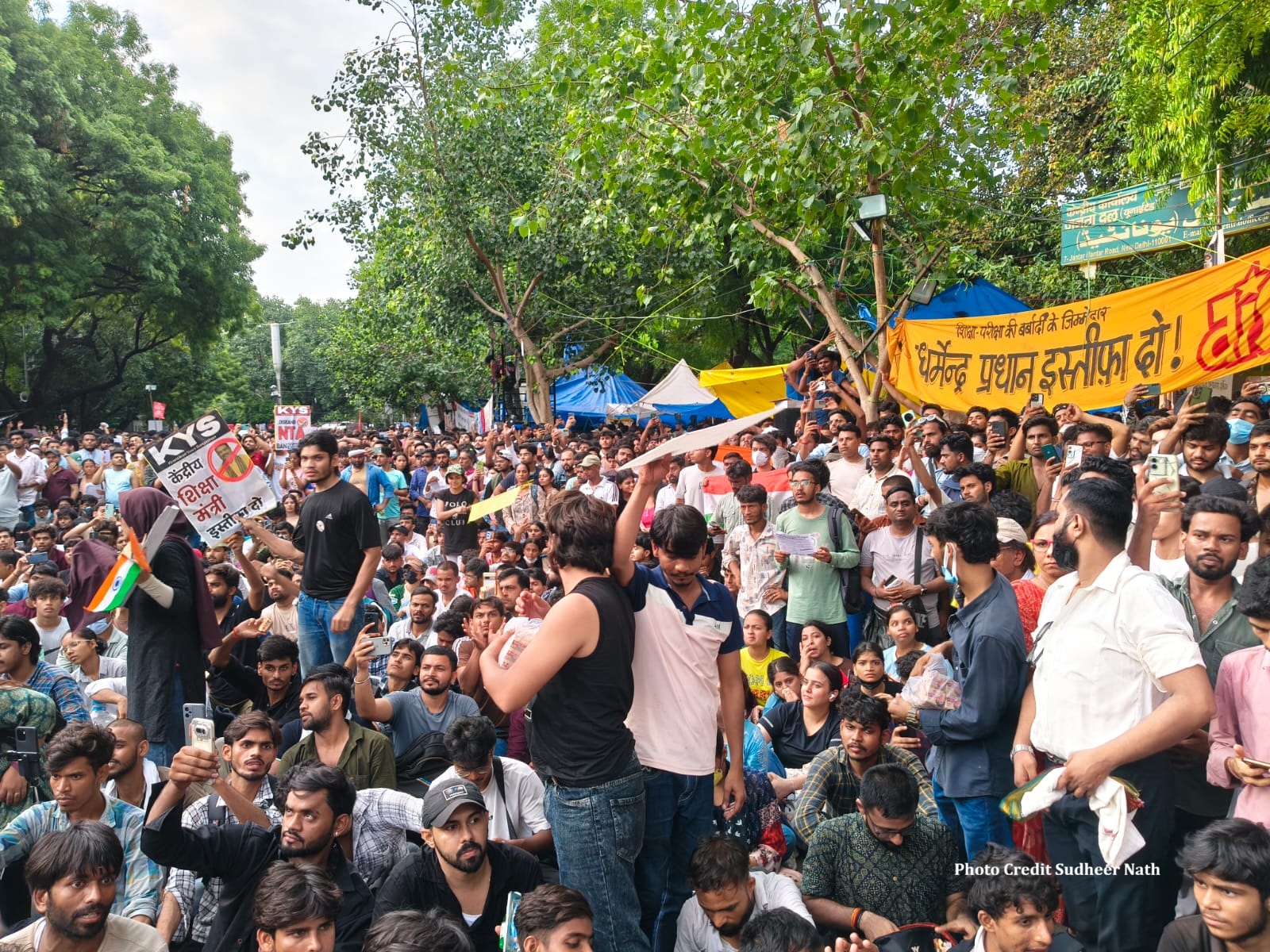
There is a special comedy in watching senior leaders and their digital foot soldiers still treat Gen Z as a seasonal protest demographic that can be managed with the occasional skill-development scheme and a heavy dose of nationalism. The student agitations of recent years already demonstrated that this generation can force institutional outcomes when pushed. Those who dismissed such movements as “anti-national theatre” are about to discover that the same energy travels efficiently into the ballot box. A generation that forced institutional accountability in weeks is unlikely to forget the treatment it received when the larger contest arrives.
The Arithmetic of Underestimation
The danger for the ruling party is not merely that Gen Z will vote against it. The greater danger is that its own most enthusiastic amplifiers have spent years manufacturing the very grievances that will fuel that vote. Every time a young job-seeker is told that questioning paper leaks is sedition, every time a climate-conscious student is mocked as a “Western puppet,” every time genuine economic anxiety is answered with abuse instead of policy, another small deposit is made in the bank of future resentment. By 2029 that bank will be large enough to matter.
Opposition parties should not celebrate too early. Gen Z has already shown it is equally impatient with recycled rhetoric and empty promises from any quarter. The difference is that the ruling party carries the heavier burden of incumbency and the louder record of polarising language. Those who still believe the young can be managed the old way are living in a political past that is already over. They keep underestimating a force that has nothing left to protect and everything to demand.
The arithmetic is unforgiving. Nearly 38 crore Gen Z voters who organise on platforms the party does not control, who measure governments by results rather than rhetoric, and who have already watched the older methods of intimidation fail, will not be kind to those who took them leisurely. Behind them stand the Millennials — more settled, higher-turnout, and watching closely. The same people who once laughed at “Gen Z activism” may soon discover that the last laugh belongs to the generation they spent years trying to troll into submission. 2029 will not be a gentle examination. It will be a settlement of accounts.
