


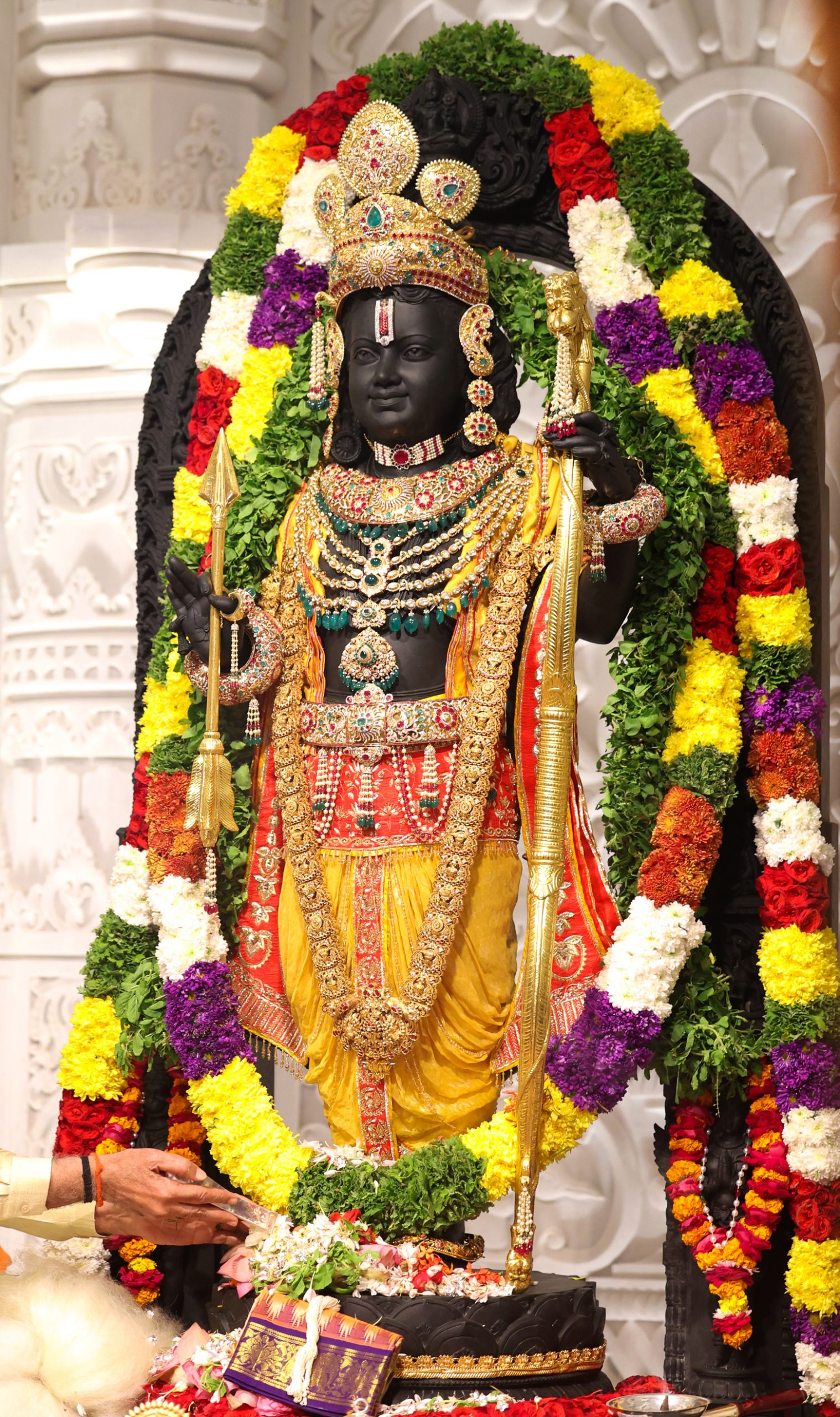
AYODHYA / NEW DELHI: CCTV cameras inside the Ram Janmabhoomi temple’s donation-counting room captured 105 instances of unauthorised removal or concealment of currency, a Special Investigation Team status report placed before the Supreme Court has said — a finding that turns a local cash-handling scandal into a test of how India governs its richest shrines.
The court-monitored SIT, headed by Uttar Pradesh Inspector General Kiran S, told a bench led by Chief Justice Surya Kant on Monday that investigators reconstructed the alleged thefts from hundreds of hours of footage at the Pilgrim Facility Centre counting room, together with witness statements, TCS software receipts, digital logs and bank deposits. The September 16 report says the 105 incidents involved counting staff acting with help from others in the room. Solicitor General Tushar Mehta said the first chargesheet will be filed on or before September 25, when the 90-day clock from the first arrests runs out and default bail becomes available.
The new tally is higher than the nearly 70 suspected incidents recorded by the first state SIT, which had only April 27–June 5 footage because recordings were kept for 45 days instead of the mandated 180. That earlier report described staff hiding notes in clothes, pockets and shoes while colleagues blocked visible cameras; hidden cameras installed by trust members later caught the same pattern. Frisking at the counting-room door was skipped. After the case broke, daily bank deposits from the temple rose by an estimated Rs 6–8 lakh compared with earlier averages.
Eight persons linked to counting were arrested after a June 25 FIR: Avinash Shukla, Anukalp Mishra, Lavkush Mishra, Manish Kumar Yadav, Karunesh Pandey, Ramashankar Mishra, Subhash Srivastava and Ramashankar Yadav alias Tinnu, former driver of then trust general secretary Champat Rai. About Rs 79.85 lakh in cash, plus foreign currency and valuables, was recovered from six of them. The FIR also names “others.” The SIT told the court it found no discrepancy in high-value non-cash gifts that had fuelled social-media rumours — 200 kg of silver bricks, another 38.288 kg of silver, a necklace, Charan Paduka and a Ramcharitmanas-related donation. Receipts for 803 articles were verified; the items sit in an SBI locker that was physically checked.
What the cameras now force into the open
The numbers matter less than what they imply. The Ram temple is not a private matha. It is a national project born of a Supreme Court judgment, funded by crores of small offerings, and run by a trust whose general secretary sat at the centre of the political and religious establishment. When 105 thefts are visible on official cameras, the question is no longer only who stole notes. It is why SOPs signed with the State Bank of India were not enforced, why a former driver’s relative was placed in the counting unit, why hundi keys sat with a driver, and why live CCTV was not watched while cash left the room. Those are governance failures, not isolated lapses.
The Supreme Court’s own intervention — replacing a state SIT with a four-member police team and asking for a forensic auditor — has already changed the template. Religious trusts have long argued that offerings are a matter of faith and internal audit. The court has treated this case as a public-account problem: sealed status reports, a chargesheet deadline, and refusal to share the report with petitioners until the prosecution is ready. Other large temples watching the docket will read that as a warning that donation rooms can be pulled into constitutional scrutiny when cameras and bank trails collide.
Politically, the case has two lives. Opposition leaders used the first allegations of Rs 5–7.5 crore leakage to attack trust management and the Uttar Pradesh government. The trust replied that SBI audits were ongoing and that action followed once Rs 500 bundles ran short. Champat Rai stepped aside after the arrests. Neither side can now claim the thefts were rumour: the SIT has put a camera count on the record. What remains contested is scale, duration before April 27 (footage was overwritten), and whether supervisory officials beyond the eight accused will enter the chargesheet.
For Ayodhya’s economy the implications are quieter but real. The consecration and the Kumbh surge turned the temple into a cash engine for hotels, transport and the city’s new infrastructure story. A counting-room scandal does not empty the queues; it does force the trust to redesign cash handling — more cameras without blind spots, 180-day retention, mandatory frisking, note-level counting instead of bundle vouchers, and separation of keys from personal networks. If those reforms stick, the 105 clips become the price of professionalising a shrine that outgrew informal systems.
The chargesheet due this week will decide the next chapter: whether the case stays limited to counting staff and recovered lakhs, or widens to conspiracy, abetment and institutional neglect. Until then, the cameras have already delivered the hardest finding. Devotees’ cash was not only counted in a sacred precinct. It was, 105 times on tape, taken out of it.
