

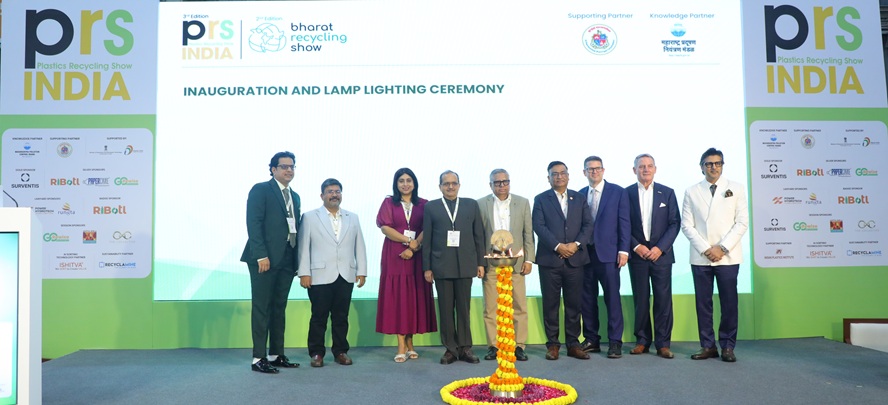
Mumbai: The Plastics Recycling Show India (PRS India) 2026 and Bharat Recycling Show (BRS) 2026 opened at the Bombay Exhibition Centre, uniting India’s recycling ecosystem under one roof. Organised by Media Fusion and Crain Communications, the co-located event features 150+ exhibitors and 250+ brands across plastics, metals, e-waste, batteries, and tyre recycling, attracting 10,000+ visitors through September 2, 2026.
The event was inaugurated by industry leaders, including Dr. Jairaj Phatak (AIILSG), Ms. Shilpashree Muniswamappa (Colgate-Palmolive), Mr. Prabodha Acharya (JSW Green Steel), and Mr. Ton Emans (Plastics Recyclers Europe), highlighting the sector’s commitment to a circular economy.
Market Growth and Challenges India’s recycled plastics market is projected to grow from USD 6.57 billion (2026) to USD 11.71 billion (2031) at an 8.6% CAGR, while the metal scrap, e-waste, and battery recycling sector—valued at USD 14+ billion—is rapidly adopting advanced technologies.
However, experts stress that quality and traceability are critical. Mr. R.V. Sridhar (McKinsey) noted, “India’s copper demand will rise to 3.2 million tonnes by 2030, with scrap already meeting 38% of demand. Sensor-based sorting (XRF, machine vision) can improve feedstock quality. Quality is bought at the yard, not in the refinery.”
Building Scalable Solutions Battery recycling is a fast-growing segment, with India importing USD 2.5 billion in lithium and cobalt annually. The National Critical Mineral Mission’s ₹1,500 crore incentive scheme supports 58 companies with 850,000 tonnes of pledged capacity, signaling major opportunities.
Ms. Kiarah Ahuja (Banyan Nation) highlighted the gap between demand and capacity: “India’s 60% Category I mandate requires over 2 million tonnes of FMCG-grade recycled plastic annually, but certified capacity remains limited. We’re scaling from 10,000 to 50,000 tonnes over four years, but the industry must invest in reliable supply chains.”
Sustainability in Action Colgate-Palmolive’s Ms. Muniswamappa shared, “100% of our Indian toothpaste tubes are now recyclable. We’ve collected 90,000 kg of dry waste from 158 villages and aim for 100% renewable electricity by 2030.”
JSW Group’s Mr. Acharya added, “We’ve cut steel emissions by 30% and target 42% by 2030, with net neutrality by 2050. Steel scrap recycling is key—the steel we make today becomes tomorrow’s resource.”
The Way Forward Mr. Suyog Keluskar (1Lattice) identified the next priority: “Investment must shift upstream—securing feedstock, improving traceability, and deploying AI and sensor-based sorting to compete with virgin materials.”
Mr. Taher Patrawala (Media Fusion) concluded, “BRS and PRS India are catalyzing India’s shift from linear waste management to a technology-driven circular economy.”
