


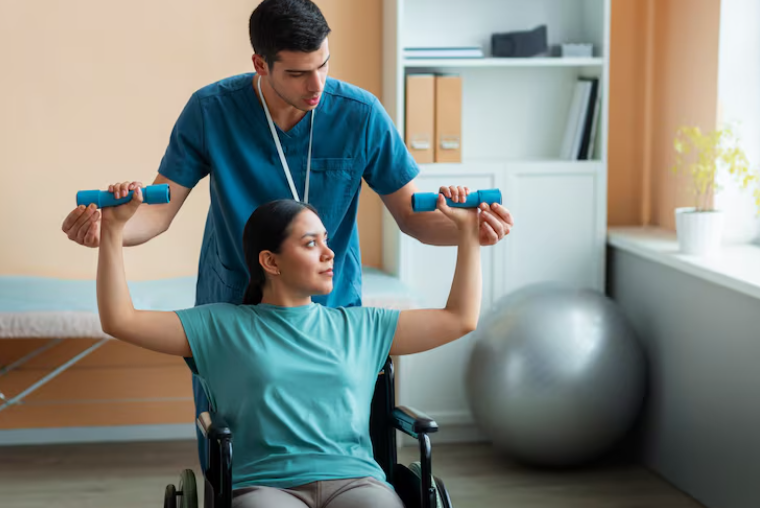
By Dr. Deepali Pawar, Head of Physiotherapy Department, Holy Family Hospital & Medical Research Centre, Bandra (W)
World Physiotherapy Day, observed on 8 September, is an opportunity to remind patients and families that physiotherapy is far more than machines or short-term pain relief. It is a structured, personalised process that helps people regain movement, manage pain, rebuild strength and return to independent living with confidence.
At Holy Family Hospital, we see this every day. Physiotherapy supports recovery after surgery or illness, helps prevent further decline, and enables people to resume the activities that matter to them. The difference lies in treatment that is tailored to the individual after a proper assessment, not a one-size-fits-all protocol.

Physiotherapy can help across a wide range of conditions: musculoskeletal and orthopaedic problems, neurological disorders, sports injuries, cardiopulmonary conditions, and age-related mobility issues. Evidence-based plans developed after structured medical evaluation allow us to match exercises, manual techniques and education to each patient’s condition, goals and daily life.
Physiotherapy is not just about treating pain. It is about improving quality of life. The success of any surgery ultimately depends on whether the patient can regain independence and live with less pain. Physiotherapists have a role from pre-rehabilitation before an operation through to post-surgical recovery, helping patients rebuild strength, mobility and the confidence to move again.
Our department is staffed by a dedicated team of 13 physiotherapists who provide specialised care in musculoskeletal physiotherapy, orthopaedic rehabilitation, neurological physiotherapy, paediatric and geriatric rehabilitation, sports physiotherapy and cardio-pulmonary rehabilitation. We work closely with Orthopaedics, Neurology, Cardiology, Paediatrics, ICU and Internal Medicine so that rehabilitation is integrated into the patient’s overall treatment rather than added as an afterthought. We follow structured infection-control practices, maintain detailed records, and keep patient safety and comfort at the centre of every session.
Cardiopulmonary physiotherapy focuses on the heart, lungs and respiratory system. Our team begins care from day one in the ICCU, ICU, PICU and HDU. Treatment includes breathing exercises, airway clearance, chest physiotherapy, positioning, early mobilisation, therapeutic exercise and monitored cardiac rehabilitation.
Neurological and paediatric rehabilitation helps adults and children regain movement, strength, balance and independence after conditions affecting the brain, spinal cord or nerves — including stroke, head injury, spinal cord injury, Parkinson’s disease and other neurological disorders. Sessions concentrate on walking, balance, coordination and muscle strength.
Musculoskeletal and sports physiotherapy addresses pain and recovery in muscles, bones, joints and ligaments. This includes back and neck pain, arthritis, sports injuries, fractures, joint problems and post-operative rehabilitation. Treatment typically combines targeted exercises, stretching, hands-on therapy, posture correction and practical guidance on safe movement.
For older adults, geriatric physiotherapy focuses on strength, balance, flexibility, walking and overall mobility. It supports people living with arthritis, joint pain, weakness, difficulty walking, balance problems and falls, as well as those recovering from illness, surgery or hospitalisation. The aim is straightforward: help senior citizens stay independent, move with greater confidence and maintain a better quality of life.
The department is equipped with electrotherapy and exercise therapy facilities, gait and balance training tools, and condition-specific rehabilitation equipment. Our approach brings together manual therapy, therapeutic exercise, post-operative rehabilitation, preventive physiotherapy, ergonomic advice and lifestyle modification.
Personalised physiotherapy works because it treats the person, not only the diagnosis. On World Physiotherapy Day, that remains our focus: helping patients restore not just physical function, but the confidence to live their everyday lives
