


By Rakesh Dubey, Bhopal
The phrase “foreign forces’ conspiracy” has long ceased to be a serious allegation and settled into the status of a political idiom. It is neither new nor the exclusive property of the present dispensation. Indira Gandhi, during her years in office, freely branded Jayaprakash Narayan and Morarji Desai as “CIA agents.” When Jawaharlal Nehru was Prime Minister, socialist leaders of the stature of Ram Manohar Lohia were similarly dismissed as “foreign agents.” In independent India’s history, scarcely a Prime Minister has held office without the charge of foreign conspiracy and interference being levelled, at one time or another, against political adversaries.
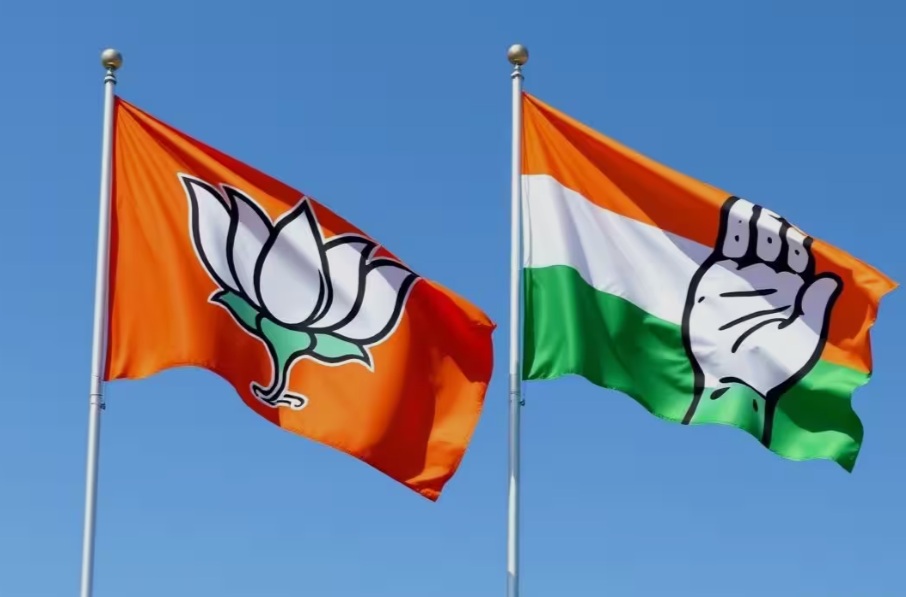
Today the ruling Bharatiya Janata Party has directed the same familiar accusation at the Leader of the Opposition in the Lok Sabha, Rahul Gandhi. The narrative runs that he travels abroad, meets people of dubious character, conspires with them, and returns to India to execute an anti-national agenda. Politics of this kind, emptied of substantive issues and detached from the daily crises of citizens, ought to be unacceptable to the country.
Prime Minister Narendra Modi has advanced the argument a step further. Without naming the Leader of the Opposition, he declared from a public platform that certain individuals are prepared to drag the nation’s prestige into the dust merely to relaunch a “failed product.” He once again characterised the Congress as a “parasite” and suggested that even Congress workers are privately distressed by the dominance of a single family. When they meet among themselves, he claimed, they speak of their suffering and the injustice meted out to them. How many times, one is tempted to ask, can the same “failed product” be relaunched? Even the launch pads at Sriharikota have not witnessed so many take-offs for a single entity as the Congress has engineered for one individual. The Prime Minister took no names, yet the intended reference is universally understood. No previous Prime Minister has employed language of this order against the Leader of the Opposition. Rahul Gandhi’s politics is now routinely described as “anarchic,” “disruptive,” and “destructive.”
The logical consequence of such grave charges is straightforward. If Rahul Gandhi is indeed engaged in anti-national conspiracies, criminal cases should be registered and he should be prosecuted. The courts exist to adjudicate such matters. History, however, records an instructive instance of what was once called anarchic politics. In March 1974, young leaders of the then Jan Sangh — among them Sushil Modi and Ravishankar Prasad — led attempts to besiege the Raj Bhavan in Bihar. The Chief Minister’s convoy was encircled, an effort was made to set the Assembly building on fire, and the residence-cum-office of the Assembly Secretary was similarly targeted and vandalised. Ordinary life was thrown into disorder. Jayaprakash Narayan himself declined to dignify those actions as a “revolution.” Were those street agitations not anarchic? Today Ravishankar Prasad is a senior figure in the BJP and a former Union Minister; Sushil Modi is no more. If that politics cannot be dismissed as disorderly, it is worth noting that Rahul Gandhi has neither attempted to set fire to any government building, nor issued any call to do so, nor been shown to have conspired in any such enterprise. During one march he did enter the premises of Akashvani Bhavan, yet he merely sat in protest beneath a tree — an act that may still be termed illegal trespass, but is scarcely comparable.
To date, neither the BJP nor the spokesmen of the Modi government have been able to specify who precisely was involved in the alleged foreign conspiracy, or the quantum of funding involved. The name that is repeatedly invoked is that of George Soros. It is well known that he has been ideologically hostile to India and has made statements adverse to the country. Why, then, in twelve and a half years of the present government, has he not been formally declared an enemy of India? Why have cases not been filed and legal proceedings initiated against him? Why has funding from him to Indian NGOs not been stopped, and why has he not been banned? An anti-national conspiracy is, in the final analysis, sedition, and a dedicated statute for the purpose is already on the statute book.
Protest against the government remains a constitutional right. A large public mobilisation may cause inconvenience, yet inconvenience is not the same thing as a foreign conspiracy against the nation. Demonstrations on matters of public interest must continue to be permitted.
