

Alarming Allegations: US Military Commanders Accused of Framing Iran Conflict as Biblical Armageddon

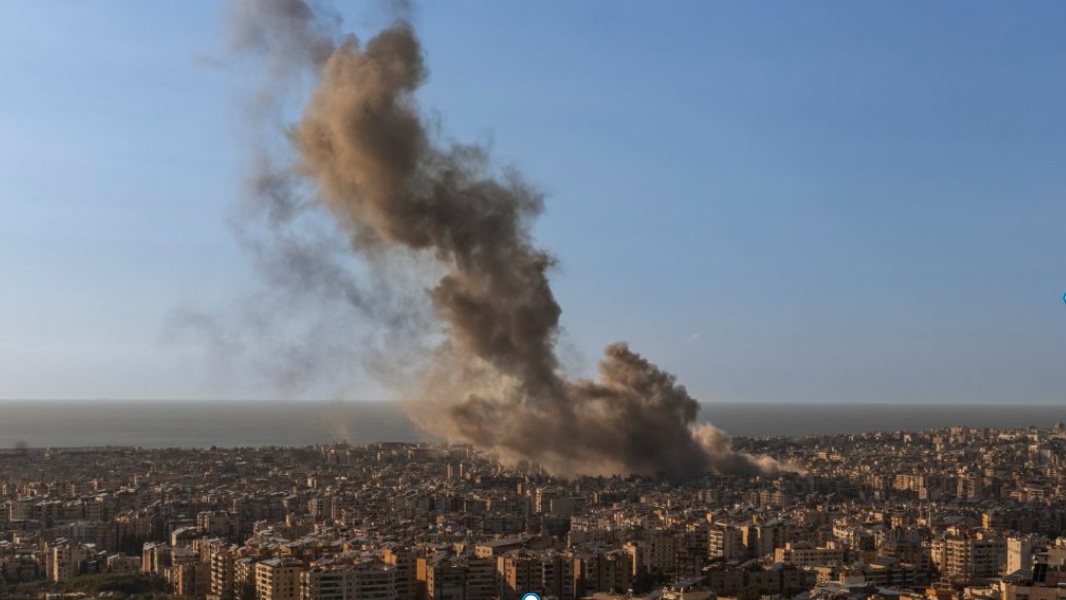
In a development that has sent shockwaves through military circles and civil rights advocates, reports are emerging that some US military commanders have infused briefings on the ongoing conflict with Iran with apocalyptic Christian rhetoric. According to the Military Religious Freedom Foundation (MRFF), a non-profit watchdog dedicated to safeguarding religious neutrality in the armed forces, over 200 service members from every branch of the military have lodged complaints alleging that leaders are portraying the war as a fulfillment of biblical “end times” prophecy, including references to Armageddon and the return of Jesus Christ. These claims, surfacing in early March 2026 amid escalating US and allied operations against Iranian targets, raise profound questions about the separation of church and state within the world’s most powerful military.
The MRFF, founded in 2005 by Mikey Weinstein—a former Air Force judge advocate general—has long monitored religious extremism in the ranks. The organization describes itself as a bulwark against the imposition of any faith on troops, regardless of creed. In this case, the complaints paint a picture of briefings that veer far from standard operational discourse into fervent evangelism. Service members report commanders declaring the Iran conflict “all part of God’s divine plan,” with explicit nods to the Book of Revelation. One particularly stark allegation involves a combat-unit leader addressing non-commissioned officers, claiming President Donald Trump has been “anointed by Jesus to light the signal fire in Iran to cause Armageddon and mark his return to Earth.” Troops have described these sessions as laced with “unrestricted euphoria,” as if the prospect of widespread bloodshed aligns with a divine mandate.
These incidents are not isolated. The MRFF states that the rhetoric has permeated over 40 units across more than 30 installations, from sprawling bases in the continental US to forward-deployed sites in the Middle East. Complaints span the Army, Navy, Air Force, Marine Corps, and even the nascent Space Force, with some personnel expressing moral distress over orders that seem to demand participation in an “Armageddon-style conflict.” One anonymous soldier, quoted in MRFF disclosures, recounted a briefing where a superior urged “maximum bloodshed” to hasten end-times events, framing Iran’s nuclear ambitions not just as a security threat but as the harbinger of prophecy. Such narratives, critics argue, echo the dualism of good versus evil popularized in evangelical circles, where Iran—often coded as the biblical “Persia”—plays the role of the antagonist in a cosmic drama.
The backdrop to these allegations is the intensifying US-Iran confrontation, which escalated dramatically in late February 2026 following Israeli airstrikes on Iranian nuclear facilities, backed by American logistical support. What began as targeted operations has ballooned into a broader air and cyber campaign, with reports of US carrier groups positioning in the Persian Gulf. President Trump’s administration has justified the actions as preemptive measures against Tehran’s alleged weaponization of uranium, but the MRFF filings suggest that for some commanders, the stakes transcend geopolitics into the theological.
Legal and ethical red flags abound. The US Constitution’s Establishment Clause prohibits government endorsement of religion, a principle reinforced in military regulations like Department of Defense Instruction 1300.17, which mandates religious accommodation but forbids proselytizing or coercion. Weinstein, the MRFF’s outspoken president, has branded the reported conduct as “blood-soaked Christian nationalist fantasies” that erode unit cohesion and alienate non-Christian troops—estimated at nearly 30% of the force, including Muslims, Jews, atheists, and others. Critics warn that this rhetoric could inflame tensions, boost recruitment for extremist groups, and undermine morale by pressuring service members to view their duties through a sectarian lens. “When leaders invoke divine wrath, it doesn’t just violate the law—it risks turning soldiers into zealots,” Weinstein told reporters.
The political fallout has been swift. On March 6, a bipartisan but predominantly Democratic coalition of 30 House members, led by Representatives Jared Huffman (D-Calif.), Jamie Raskin (D-Md.), and Chrissy Houlahan (D-Pa.), penned a letter to the DoD Inspector General demanding an immediate probe. The missive highlights potential breaches of neutrality and calls for safeguards against “extremist religious rhetoric metastasizing into the chain of command.” Some fingers point to Defense Secretary Pete Hegseth, a Trump appointee with ties to conservative Christian networks, as a possible vector for such views. Hegseth, a Fox News alum and author of books blending faith and patriotism, has faced scrutiny for past comments on spiritual warfare, though his office has deflected questions on the matter.
Social media has amplified the controversy. On X (formerly Twitter), posts from veterans and analysts decry the allegations as a “chilling echo of the Crusades,” with one viral thread garnering thousands of shares. Others, like podcaster “Uncle Sam,” speculated wildly about ulterior motives, asking, “What if the war with Iran isn’t just geopolitics… but a deliberate step toward biblical Armageddon?” International outlets, from The Guardian to TRT World, have picked up the story, framing it as evidence of American exceptionalism veering into messianism.
The Pentagon, for its part, has issued a terse statement affirming its commitment to religious freedom while launching an internal review. No commanders have been named or suspended pending verification, and the complaints remain anonymous to protect whistleblowers. Yet, as the Iran theater heats up—with reports of Iranian missile barrages on US assets—these revelations underscore a deeper rift: Can a secular military prosecute a faith-tinged war without fracturing from within?
This is not the first brush with religious fervor in uniform. The MRFF has documented similar issues in Iraq and Afghanistan, from mandatory Bible studies to anti-Islamic slurs. But the scale here—amid a live conflict—demands accountability. As one complainant put it in an MRFF filing: “I’m fighting for my country, not for the apocalypse.” If unaddressed, these allegations threaten not just legal norms but the very ethos of a diverse, professional force. Congress and the DoD must act decisively to ensure that prophecy yields to policy, and zeal to duty.
