


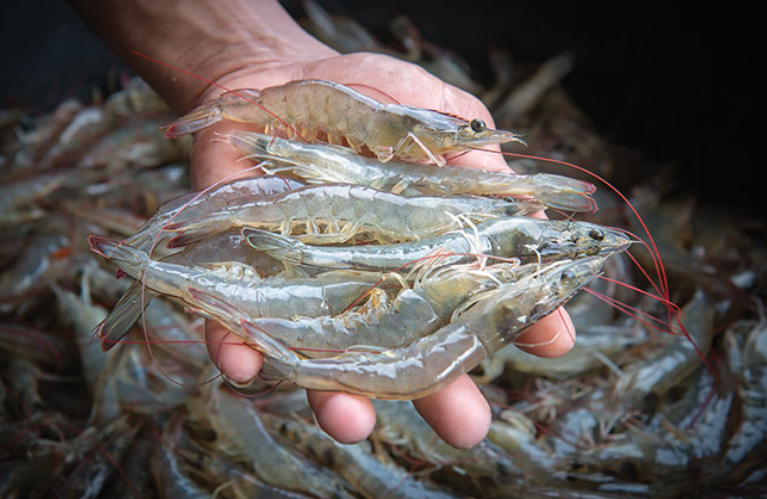

Indian aquaculture startup Aquapulse, which works with more than 7,000 shrimp farmers covering 20,000 hectares, has been named among three global finalists in the aquaculture category at the Responsible Seafood Innovation Awards in Bangkok.
Aquapulse was recognised for its model that tracks shrimp from the pond through harvest and export, while using farm and crop data to help farmers improve price realisation and access markets. Farmers working with Aquapulse see a 3–5% benefit in realisation, according to the company, along with continuity of market access across successive crop cycles.
The recognition comes as Aquapulse scales its procurement and farmer network. The company procured around 2,000 metric tonnes of shrimp from farmers last year and has already matched that volume this year. It expects procurement to grow about 2.5 times this year, while the value of shrimp procured is projected to increase between 2.5 and three times.
Over the next 12–18 months, Aquapulse plans to expand its network from over 7,000 to 10,000 farmers, enter Gujarat and increase shrimp procurement to 5,000 metric tonnes. It is also targeting threefold revenue growth over the previous year.
The Responsible Seafood Innovation Awards are organised by the Global Seafood Alliance and were presented during the Responsible Seafood Summit at the Shangri-La Bangkok. Six finalists were selected across the global seafood supply chain, including three each in aquaculture and wild fisheries.
Aquapulse, operated by Phoenix Marine Exports and Solution Pvt. Ltd. and headquartered in Bhubaneswar, Odisha, was founded in 2023. Its farmer network currently spans Odisha, Andhra Pradesh and West Bengal, with shrimp aggregated for supply to export markets.
“Indian shrimp farmers are capable of producing for the best markets in the world, but their challenge has often been access to information, predictable pricing and a buyer who stays with them across crop cycles. Our focus has been to build that connection from the pond to the market. Today, more than 7,000 farmers are part of this network, and this global recognition tells us that a model built around the farmer can also work at scale,” said Abhishek Dwivedy, Co-founder and Chief Executive Officer, Aquapulse.
Aquapulse has developed four in-house technology platforms covering different stages of the shrimp production and export process. Before harvest, its computer vision system uses photographs from farms to assess pond conditions and determine whether a crop is ready for harvest. Another system records water quality and crop history through the farming cycle, while its other platforms use this information for pricing and market decisions and prepare export documentation as the consignment moves through the supply chain.
Every shrimp lot handled by Aquapulse is traced and documented before it reaches the port. The information also helps the company forecast harvests, respond to farmers when crop-related problems emerge and connect produce to buyers through its cluster network.
“Traceability should not become another compliance cost that the farmer bears while somebody further down the chain captures the value. If better farming practices and better records make a lot more valuable to the market, some of that value has to come back to the farmer. That is the principle on which we have built the model,” said Abhilash Dwivedy, Co-founder and Chief Growth Officer, Aquapulse.
The company said its longer-term commitment to farmers is also intended to reduce the uncertainty of finding buyers after every crop. As Aquapulse expands into Gujarat and increases procurement, the company plans to use the same farm-to-market model across new aquaculture clusters.
The Responsible Seafood Summit marked its 25th edition this year and returned to Thailand for the first time since 2012. Aquapulse’s founders presented the company’s model to delegates at the summit in Bangkok.
