


By Suresh Unnithan
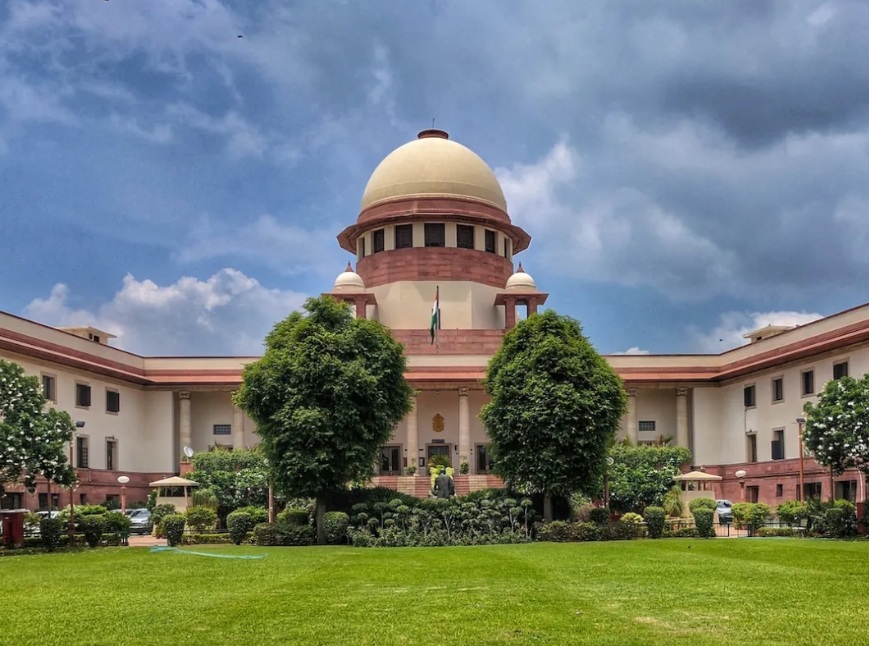
It was appalling: an officer of the court hurling his shoe at the judge while the Bench was hearing a case. The incident unfolded in the Supreme Court of India, with the shoe aimed at Chief Justice of India (CJI) B.R. Gavai. This inconceivable act occurred on October 6, 2025, around 11:35 AM in Court No. 1, during a hearing on a religious matter. Advocate Rakesh Kishore, a 71-year-old senior lawyer from Bihar who has practiced for over four decades, tossed his footwear and a sheaf of papers at CJI Gavai after shouting that “India will not tolerate insults to Sanatan.” The shoe missed its target, but the act was not just a breach of courtroom decorum—it was a brazen assault on the judiciary’s sanctity, igniting a toxic blaze on social media and exposing deep fissures threatening national cohesion.
This incident, far from an isolated outburst, exemplifies a burgeoning trend of contemptuous defiance against the apex court—a pattern where political rhetoric, caste provocations, and unbridled online vitriol converge to undermine the rule of law. Kishore was reportedly triggered by CJI Gavai’s remarks during the hearing, where the judge referenced Lord Vishnu in a light-hearted comment about divine intervention in a case involving a temple dispute, which some interpreted as mocking Hindu gods. As self-proclaimed “sanatanis” and ultra-nationalists flood platforms like X with eulogies for the rowdy lawyer, branding the CJI’s words as “anti-Hindu blasphemy,” they are not merely venting frustration. They are deliberately stoking a Dalit-Hindu schism, portraying the act as righteous rebellion against an “insensitive” judiciary. Such narratives, laced with abuse directed at CJI Gavai—a Dalit jurist of impeccable stature who rose through merit from humble beginnings in Maharashtra—reveal a sinister intent: to denigrate the institution and fracture social unity along fault lines of caste and faith. In a nation still healing from historical divides, this is not dissent; it is dynamite. Notably, Kishore himself claims to hail from a Dalit background, adding layers of irony and fueling caste-based outrage.
The social media storm has been as predictable as it is pernicious. Posts glorifying Kishore as a “hero” for “defending dharma” have garnered thousands of likes, with viral threads twisting the episode into a broader conspiracy against “Hindu pride.” Vitriolic attacks on the CJI accuse him of “mocking Hindu gods” and eroding “Sanatan values,” ignoring the fact that both Kishore and CJI Gavai share Dalit roots—a detail that has only amplified the outrage among those peddling divisive narratives. This isn’t organic discourse; it’s orchestrated polarization, amplified by echo chambers that prioritize provocation over patriotism. When a lawyer—sworn to uphold the law—resorts to such theatrics, and fringes celebrate it as valor, we witness the normalization of anarchy. The common man, scrolling through these feeds, begins to question: If the guardians of justice can be pelted with footwear in broad daylight, what recourse remains for the voiceless? Protests erupted outside Kishore’s home in Bihar, and lawyers staged demonstrations at the Karnataka High Court condemning the act.
Prime Minister Narendra Modi’s swift condemnation was a welcome rebuke. On October 6, 2025, he posted on X: “Spoke to Chief Justice of India, Justice BR Gavai Ji. The attack on him earlier today in the Supreme Court premises has angered every Indian. There is no place for such reprehensible acts in our society. It is utterly condemnable.” He also praised CJI Gavai’s “dignified calm” amid the chaos, highlighting his commitment to constitutional values. Yet, words from the highest office, however forceful, ring hollow without commensurate action. Despite the PM’s intervention, the government’s silence on the online mob—those ultra-nationalists spewing unfiltered hate—speaks volumes. A Zero FIR was filed by the All India Advocates Association in Bengaluru, leading to charges under Bharatiya Nyaya Sanhita (BNS) Sections 132 (assault or criminal force to deter public servant from discharge of duty) and 133 (provocation with intent to cause riot). The Bar Council of India suspended Kishore’s license immediately, and protests by Dalit groups and lawyer associations demand stricter measures, including contempt proceedings. A petition has been filed before the Attorney General seeking consent for criminal contempt action against Kishore, citing his lack of remorse and media statements justifying the act. But why the hesitation to haul in the digital provocateurs? This tacit approval—born of political expediency or fear of backlash—emboldens the unruly. Kishore himself remains unrepentant, claiming no regret, dubbing himself “super educated” in a bizarre defense, and asserting he acted on “God’s will” while mocking the very profession he disgraced. If a septuagenarian advocate can flout the law with impunity, what message does this send to the youth idolizing such “acts of courage”?
This shoe-throwing spectacle is no aberration; it echoes a disturbing precedent set earlier this year. In April 2025, BJP MP Nishikant Dubey unleashed a tirade against then-CJI Sanjiv Khanna, accusing him of “inciting religious wars” and being “responsible for all civil wars in India” over the Supreme Court’s scrutiny of Waqf Act amendments. Dubey’s venomous outburst, delivered from the safety of parliamentary privilege, painted the judiciary as a meddlesome foe to “national unity.” The BJP distanced itself tepidly, with party chief J.P. Nadda issuing a mild reprimand, but no formal censure followed from the government, his party, or even the courts—despite calls for contempt action and a Supreme Court plea seeking intervention. The Supreme Court rebuked the remarks as “highly irresponsible” and “scandalous,” but dismissed them as unworthy of escalation, a leniency that Dubey and his ilk interpret as carte blanche. When elected representatives and bar members alike assail the judiciary without consequence, we teeter on the brink of lawlessness. Are we, as a democracy, fostering a culture where the Constitution becomes collateral in cultural crusades?
The ramifications extend far beyond one courtroom or one tweet. This trend erodes the judiciary’s aura of impartiality, the bedrock of public trust. When the apex court—symbol of hope for the marginalized—is reduced to a punching bag for personal or ideological vendettas, the common man loses faith. Farmers awaiting land rights, workers seeking fair wages, minorities pleading for protection: they all rely on an unassailable judiciary. If hooliganism in the Supreme Court goes unpunished, or if MPs can incite “civil war” rhetoric with a slap on the wrist, anarchy looms. History warns us—erosion of institutions preceded the fall of empires. In India, where diversity is our strength, such divides could unravel the social fabric, pitting Dalit against Hindu, lawyers against judges, citizens against the state.
It is imperative that the government breaks its silence with decisive action. Prosecute Kishore under contempt laws, not just bar suspensions. Censure online abusers through swift cyber enforcement, regardless of their ideological stripe. And revisit Dubey’s unpunished barbs: Parliamentary privilege cannot shield sedition disguised as speech. The administration must affirm that the judiciary is not a punching bag for the aggrieved but the sentinel of justice for all. Political leaders, from the PM downward, owe it to the nation to lead by example—condemning not just the act, but the ecosystem that glorifies it.
India stands at a crossroads. Will we allow fleeting grievances to fracture our democratic edifice, or reclaim the dignity of our institutions? The common man’s faith hangs in the balance. Act now, or watch it crumble into the chaos we once vowed to vanquish. The Constitution demands no less.
