

ASSOCHAM Hosts Roundtable on Adult Immunization with Special Focus on Influenza in Bhubaneswar

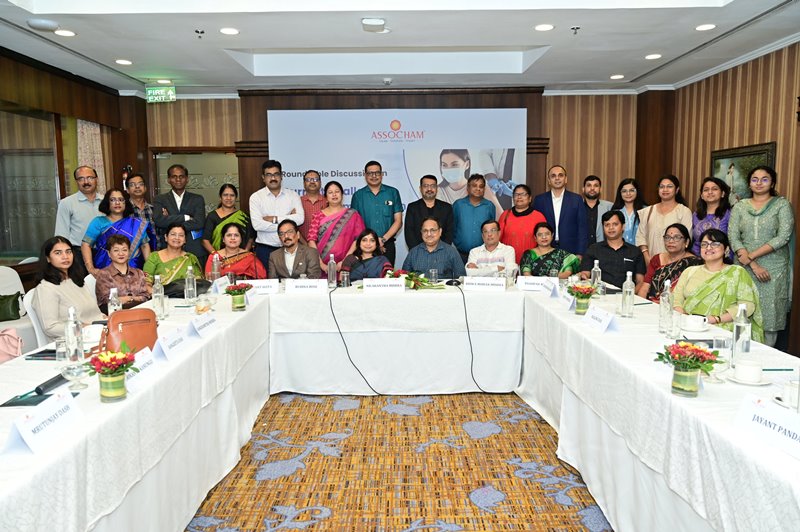
Bhubaneswar: The Associated Chambers of Commerce and Industry of India (ASSOCHAM) organized a high-level roundtable on “Current Challenges of Adult Immunization and Way Forward” in Bhubaneswar, Odisha. The discussion brought together leading medical professionals, policymakers, public health experts, and representatives from both government and private sectors to deliberate on strengthening adult immunization in India, with a particular focus on influenza.
In his opening remarks, Mr. Prashant Hota, Chairman, ASSOCHAM Odisha CSR and Sustainability Committee, and President, Jindal Steel and Power, emphasized that the key challenges in adult immunization in India include lack of awareness, particularly in rural and tribal areas, vaccine hesitancy, fear factors, and cost. He stressed that government, industry, and civil society must come together to address these challenges within a defined timeframe, with priority given to the elderly, individuals with co-morbidities, and healthcare providers.
Dr. Biswa Mohan Mishra, Director, Family Welfare, Department of Health & Family Welfare, Government of Odisha, highlighted that adult immunization is emerging as a critical issue in ensuring a healthier life in old age or for those with chronic illnesses. He noted the need for identifying gaps and formulating effective strategies to promote healthy living.
Dr. Nilakantha Mishra, Director, Public Health, Department of Health & Family Welfare, Government of Odisha, emphasized the importance of developing and validating adult vaccination guidelines through collaboration among healthcare organizations. Once finalized, these guidelines should be presented to policymakers for implementation. He commended the initiative as a valuable platform for dialogue among experts and industry stakeholders.
Dr. Sonu H. Subba, Professor, Department of Community and Family Medicine, AIIMS Bhubaneswar, stated that while India has made significant progress in child immunization, it is now time to extend similar protection to adults, particularly those who provide care for children and families.
Dr. Srinkanta Kanungo, Scientist D, Regional Medical Research Centre (ICMR), Bhubaneswar, shared findings from his 2022 study highlighting disparities in adult immunization coverage in India. He noted that only 72% coverage was reported among elderly adults and stressed the need to prioritize vaccination for high-risk groups such as patients with non-communicable diseases, those above 70 years, immunosuppressed individuals, organ transplant recipients, and pregnant women. He also mentioned that ICMR is exploring the cost-effectiveness of implementing adult vaccination programs.
Ms. Mamina Patnaik, Drugs Controller (In-charge), Drug Control Administration, Department of Health & Family Welfare, Government of Odisha, underscored the urgent need to raise awareness about adult immunization among healthcare workers so that this knowledge can effectively reach patients. She reiterated that vaccines have historically saved countless lives and continue to have immense potential for the future.
Dr. Santosh Kumar Sahoo, State Surveillance Medical Officer, WHO, noted that India has achieved remarkable progress in child immunization through the Universal Immunization Programme (UIP), one of the largest in the world. He highlighted India’s role as a leading vaccine manufacturer with strong digital tracking mechanisms and commended the roundtable as an important step in building awareness around adult vaccination.
Adding an industry perspective, Mr. Pushpak Khare, Regional Director – Commercial Development, Abbott India, observed that India faces a dual burden of non-communicable and infectious diseases, including influenza, which significantly increase the risk of complications, hospitalizations, and extended ICU stays. He stressed that vaccination is not just for children—adults, particularly older individuals and those with chronic conditions or weakened immunity, must also be protected.
The roundtable concluded with a shared commitment among stakeholders to strengthen awareness, policies, and programs that promote adult immunization in India, thereby safeguarding public health and reducing disease burden.
