


By Geetha V P
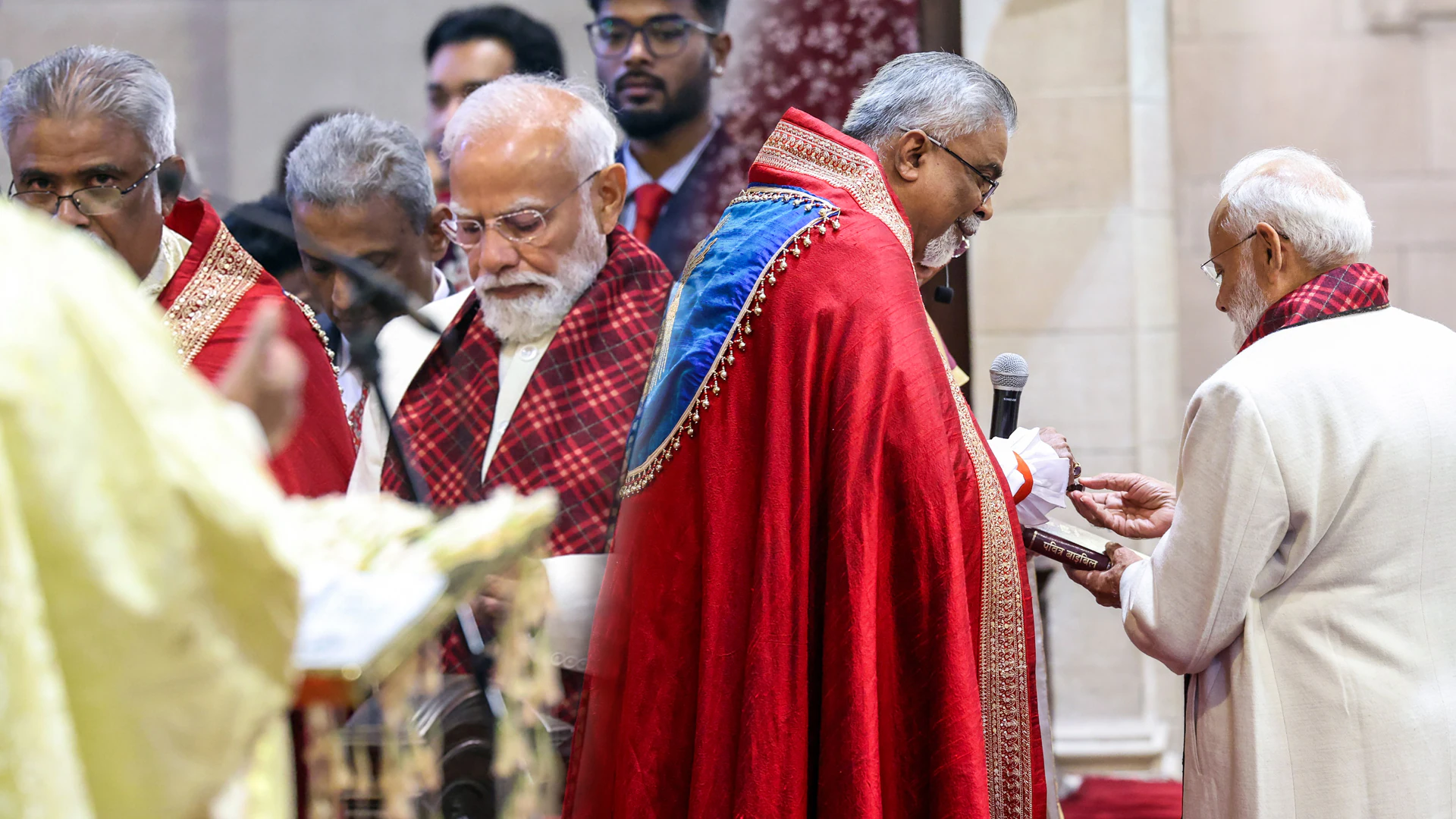
Prime Minister Narendra Modi attended a Christmas morning service at the Cathedral Church of the Redemption in New Delhi, where he was seen participating in prayers and engaging with the congregation. This gesture, captured in videos and photos shared widely on social media, was presented as a symbol of inclusivity and harmony in a diverse nation. Yet, as Modi prayed in the church, reports emerged from across India of violent disruptions to Christmas celebrations, attacks on Christian communities, and inflammatory statements from leaders affiliated with his own Bharatiya Janata Party (BJP) and allied Hindutva groups. This stark contrast raises uncomfortable questions about whether such high-profile displays are genuine commitments to secularism or mere optics amid a rising tide of communal intolerance.
India’s Constitution enshrines secularism as a core principle, guaranteeing freedom of religion under Article 25. However, data from 2025 paints a grim picture of escalating violence against Christians, who comprise about 2% of the population. The United Christian Forum (UCF) documented over 700 incidents of anti-Christian violence from January to November 2025, averaging nearly two attacks per day. Open Doors, an international Christian advocacy group, reported an even higher figure of more than 2,900 persecution incidents in the same period, including assaults, vandalism, and forced closures of places of worship. These numbers represent a significant surge, with India’s bishops condemning an “alarming rise” in attacks ahead of Christmas, urging police protection for festive events.
The incidents around Christmas 2025 were particularly brazen, spanning multiple states and often involving right-wing vigilante groups allegedly linked to the Rashtriya Swayamsevak Sangh (RSS) and its affiliates, such as the Vishwa Hindu Parishad (VHP) and Bajrang Dal. In Madhya Pradesh’s Jabalpur, BJP district vice president Anju Bhargava was caught on video storming a church and assaulting a visually impaired Christian woman during a prayer meeting, making derogatory remarks about her disability and accusing the gathering of forced conversions. This was one of two attacks in Jabalpur within days, highlighting a pattern of unchecked aggression. In Uttarakhand’s Haridwar, a government-run hotel cancelled a planned Christmas event after protests from Hindu priests and RSS-linked groups, who labelled it “anti-Hindu” and an insult to the sanctity of the Ganges.
In Kerala, a state often praised for its communal harmony, a children’s Christmas carol group in Palakkad’s Pudussery was attacked by alleged RSS workers, who beat participants and destroyed musical instruments. Senior BJP leaders C. Krishnakumar and Shone George exacerbated tensions by verbally justifying the assault, claiming it was politically motivated and involved intoxicated participants—allegations refuted by locals and police. Kerala Chief Minister Pinarayi Vijayan condemned the attacks as antithetical to the state’s values, warning of strict action against communal intolerance.
Similar disruptions occurred elsewhere. In Odisha, Hindu men harassed vendors selling Santa hats in Puri, declaring India a “Hindu Rashtra” and forbidding “Christian items.” In Chhattisgarh’s Raipur, mobs vandalized Christmas decorations at a mall, while tribal Christians faced assaults over burial disputes. In Assam’s Nalbari, VHP and Bajrang Dal members entered St. Mary’s School, setting fire to decorations and attacking nearby shops. Delhi’s Lajpat Nagar saw women in Santa caps chased from a market, and in Rishikesh, a prayer meeting was disrupted with abuses against Christian figures.
Amid these tensions, a separate incident highlighted patriotic expressions within Christian communities: in Mumbai, a choir at the historic St. Thomas Cathedral opened a Christmas carol program by singing the national anthem, Jana Gana Mana, in a soulful rendition that went viral on social media, evoking praise for blending faith with national pride.
Fuelling this atmosphere, VHP leaders urged Hindus to boycott Christmas celebrations, framing them as threats to “cultural vigilance” and alleging missionary conversions. Such rhetoric echoes a broader misconception that Hindus broadly support communal actions, yet surveys and electoral trends suggest otherwise. Neutral Hindus, estimated at around 20% of the electorate, often prioritize harmony, as evidenced by BJP’s setbacks in states with strong minority alliances. These incidents risk alienating minorities and moderates, potentially impacting the BJP in future polls.
The government’s response—or lack thereof—has drawn sharp criticism. Despite calls from the Catholic Bishops’ Conference of India (CBCI) for protection, few arrests have been made, with only 45 FIRs registered against over 700 reported attacks nationwide. Anti-conversion laws in states like Uttar Pradesh and Madhya Pradesh are increasingly weaponized to harass Christians, with 112 jailed on faith-related charges in 2025. This inaction fosters a perception of impunity, where extremists operate under the “perceived protection” of ruling powers.
Internationally, these events have tarnished India’s image. The Telegraph reported on “Hindu extremists trying to shut down Christmas,” noting over 60 disruptions and warning of escalating targeted violence. Such disrepute undermines India’s global standing as a secular democracy.
At its core, this wave of disturbances ruptures communal harmony, contradicting the Hindu ethos of coexistence often invoked by leaders. Hindus at large value peace, as historical interfaith collaborations demonstrate. Yet, unchecked extremism threatens this fabric. Modi’s church visit, while symbolic, rings hollow without concrete steps to curb violence—arresting perpetrators, enforcing laws equitably, and publicly denouncing hate speech. Without action, these incidents not only betray minorities but erode the constitutional promise of a united India. The nation must reclaim its secular soul before division becomes irreversible.
