

Biotech conference in Hyderabad calls for state-level leadership in advancing crop innovation

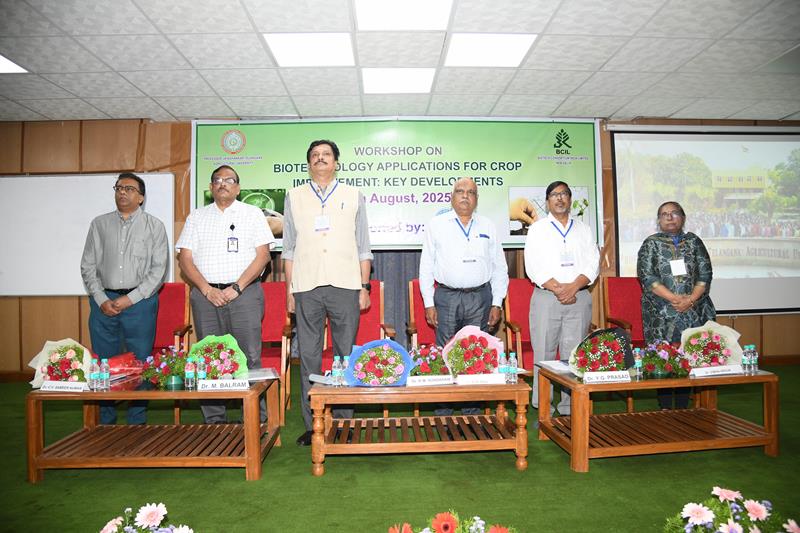
Hyderabad: As climate stress, pest pressure, and stagnating crop yields pose mounting challenges to Indian agriculture, a state-level workshop held in Hyderabad on Thursday stressed on the need for greater adoption of biotechnology tools, including genetic modification and gene editing, to ensure sustainable productivity gains.
The day-long conference, titled “Biotechnology Applications for Crop Improvement: Key Developments,” brought together leading scientists, policymakers, and industry voices at Professor Jayashankar Telangana State Agricultural University (PJTSAU). Organized jointly by PJTSAU and the Biotech Consortium India Limited (BCIL), and supported by the Federation of Seed Industry of India (FSII), the workshop focused on bridging cutting-edge research with real-world application in farming systems.
Speaking at the workshop, Dr R M Sundram, Director, Indian Institute of Rice Research highlighted the importance of aligning state-level extension services with scientific advancements. “There is an urgent need to build capacity within the agricultural ecosystem, from frontline officers to policymakers, to understand, communicate, and responsibly implement biotechnological innovations.
While India has made strides in agricultural productivity over the decades, experts noted that future gains will depend on technological breakthroughs rather than area expansion. This transition, they argued, requires not only enabling regulation but also wider public awareness and trust.
Dr Paresh Verma, Bioseeds Division, DCM Shriram Limited, stressed that biotechnology is not an end in itself but a critical means to achieve broader sustainability goals. “GM technology offers an opportunity to develop crops with improved input-use efficiency and reduced environmental footprint while retaining their high yield potential. For farmers, this translates to lower costs and greater resilience” he said. He added that both genetic modification and genome editing technology options are now available to researchers for addressing longstanding challenges such as tolerance to biotic and abiotic stresses, nutritional deficiency, etc.
The conference also saw participation from academic researchers, students, and private sector representatives, all of whom echoed the need for more evidence-based conversations around agricultural biotechnology. Speakers emphasized that while the central government has laid out broad policy frameworks, it is the states that will ultimately determine the pace and scale of adoption.
Dr Vibha Ahuja, Chief General Manager, Biotech Consortium India Limited, observed that proactive engagement with state governments, universities, and the farming community is essential to translate scientific progress into impact. “There is already tremendous research happening across India, in public institutions and private labs alike. But much of this knowledge remains locked away unless we create pathways for safe and effective deployment. That’s why workshops like these are so critical,” she said. She further noted that BCIL’s aim is to work collaboratively with stakeholders to demystify biotechnology and build consensus on responsible use.
Dr Y G Prasad, Former Director, ICAR-Central Institute for Cotton Research, emphasized the importance of integration across the research-to-extension continuum. “We cannot treat biotechnology in isolation. Its success depends on how well it is embedded into existing extension frameworks, how effectively we train our personnel, and how convincingly we address farmer concerns. Building institutional trust is as important as scientific rigor,” he said.
Throughout the technical and stakeholder sessions, discussions ranged from field experiences in cotton to the regulatory landscape for gene-edited crops. Participants called for faster decision-making, streamlined approvals for field trials, and improved communication strategies to engage farmers and the general public.
