

BJP’s Excessive Nehru Obsession Could Alienate Neutral Voters and Invite Electoral Backlash

By Nanditha Subhadra
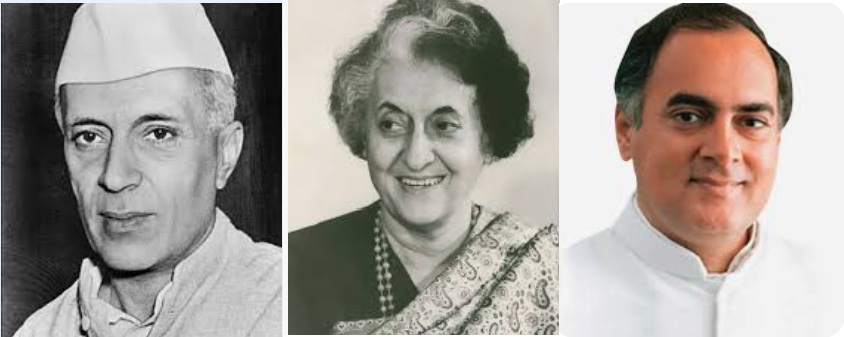
In the high-stakes arena of Indian politics, where narratives shape voter sentiment, the Bharatiya Janata Party (BJP) appears increasingly trapped in a cycle of blame-shifting that targets the Nehru-Gandhi family. From Jawaharlal Nehru to Indira Gandhi, Rajiv Gandhi, and extending to Rahul Gandhi, Priyanka Gandhi, and Sonia Gandhi, the BJP’s rhetoric pins every national ill on this dynasty. A recent outburst saw a senior leader labelling Nehru’s decision to adopt a truncated version of Vande Mataram as the national song a “historic sin.” While this strategy may energize the party’s core base and hindutwa campaigners, it is proving unappetizing to a broader electorate weary of historical grievances and eager for tangible progress—particularly the neutral voters who constitute nearly one-third of the total electorate and are crucial for any party’s victory. Such rhetoric and outbursts risk distancing these swing voters, who prioritize development over divisive revisionism. The 2024 Lok Sabha elections served as a stark reminder of this disconnect, with the BJP plummeting from 303 seats in 2019 to just 240, falling short of the 272-seat majority mark for the first time since 2014. Despite rallying a broader National Democratic Alliance (NDA), the party’s reliance on allies like N. Chandrababu Naidu’s Telugu Desam Party (TDP) and Nitish Kumar’s Janata Dal (United) (JD(U))—which contributed 16 and 12 seats respectively—exposed the fragility of its standalone dominance. This coalition crutches, while enabling a third term for Prime Minister Narendra Modi, underscored a humbling reality: the BJP’s ideological fixation has alienated voters seeking accountability over animosity.
The Indian public, known for its discerning pragmatism, is now pivoting the conversation. Instead of absorbing endless accusations against the Congress-era leaders, voters are demanding accountability from the BJP’s 11-year tenure under Modi. What has the government achieved beyond catchy slogans like Acche Din, Sabka Saath, Sabka Vikas, and the infamous promise of depositing ₹15 lakh in every citizen’s account from black money recovery? These jumlas, as critics aptly term them, promised transformation but delivered mixed results, leaving many questioning the substance behind the rhetoric. Economic indicators paint a sobering picture: persistent unemployment, inflation eroding household savings, and widening inequality have fueled disillusionment. In rural heartlands, where the BJP once swept in 2019, agrarian distress and unfulfilled promises on minimum support prices amplified anti-incumbency. The 2024 verdict, with the NDA scraping to 293 seats overall, reflected this shift—voters rewarded the opposition INDIA bloc’s focus on bread-and-butter issues, which clinched 234 seats, a dramatic resurgence from 2019.
The Backlash Against Hate Speech and Toxic Rhetoric
Compounding this dissatisfaction is the BJP’s tolerance for inflammatory speeches from its leaders. Unbridled party functionaries routinely launch vitriolic attacks on the Nehru family, often veering into historical revisionism that borders on absurdity. A recent example involved a BJP leader accusing Nehru of single-handedly causing the Partition of India—a complex event involving multiple stakeholders, including the Muslim League and British policies, not reducible to one individual’s “fault.” Even more bizarre is the charge: labeling Nehru’s decision to adopt a truncated version of Vande Mataram as the national song a “historic sin.” Such claims, devoid of nuanced context, do little to inform and much to inflame, further eroding credibility among neutral voters.
These toxic outbursts are not isolated incidents but part of a pattern that alienates moderate and undecided electors. In a diverse nation like India, where secularism and inclusivity remain core values for many, hate speech fosters division rather than unity. The public, increasingly vocal on social media and in town halls, rejects bigotry in all forms. It distances moderate supporters who joined the BJP for development promises, not ideological wars over decades-old decisions. This rhetoric, amplified during the campaign, backfired spectacularly, particularly among marginalized communities. Fears stoked by the BJP’s ambitious “400-paar” slogan—implying potential constitutional changes to reservations—drove Dalits and Other Backward Classes (OBCs) toward the opposition, who positioned themselves as guardians of affirmative action. The BJP’s losses on Scheduled Caste (SC) and Scheduled Tribe (ST) reserved seats—from 77 in 2019 to 55 in 2024—highlight how this divisiveness eroded its base among those it once courted through welfare schemes.
From Electoral Gains to Potential Losses: The 2024 Debacle
The BJP’s dominance since 2014 has been built on a narrative of decisive governance and economic reform. Yet, persistent focus on the Nehru-Gandhi legacy risks eroding this foundation. The 2024 results were a seismic shock: despite a slight uptick in absolute votes (gaining 69 lakh more than 2019), the party’s vote share dipped marginally to 36.6%, translating to a 63-seat loss due to razor-thin margins in key contests. Gains in states like Odisha (+12 seats), Andhra Pradesh (via TDP alliance), and Telangana were overshadowed by hemorrhaging in the Hindi heartland. In Uttar Pradesh, the BJP’s traditional stronghold contributing nearly 20% of its 2019 tally, the rout was catastrophic: from 62 seats to a mere 33, with allies scraping just three more for a dismal NDA total of 36 against the INDIA bloc’s 43. Even the Ram Mandir’s inauguration in Ayodhya failed to deliver—the BJP lost Faizabad, the constituency encompassing the temple, to the Samajwadi Party (SP) by over 50,000 votes, signaling that symbolic Hindutva no longer trumped livelihood concerns.
This Uttar Pradesh meltdown, often dubbed the party’s “fortress,” stemmed directly from its toxic rhetoric. Overconfidence led to flawed ticket distribution, ignoring local sentiments and RSS cadre feedback, alienating Rajputs and other OBC groups. The opposition’s savvy caste census pitch consolidated Yadavs, Muslims, and Dalits behind the SP-Congress alliance, which won 37 and 6 seats respectively. Internal: poor candidate selection, inadequate countering of opposition narratives on jobs and inflation, and a disconnect with rural voters hit by unemployment and farmer unrest. Nationally, similar patterns emerged—losses in Maharashtra (down to 9 from 23), Rajasthan (14 from 24), and Haryana—where economic woes and perceived arrogance amplified the backlash. Without Naidu and Nitish’s crutches, the NDA would have faltered, forcing Modi into uncharted coalition negotiations.
This strategy creates hatred in the minds of neutral observers, polarizing society without yielding electoral dividends and pushing away the crucial one-third neutral electorate. Indian democracy thrives on aspiration, not animosity. The public’s rejection of bigotry is evident in historical shifts: parties peddling division have faced backlash, from the Emergency-era Congress to regional outfits exploiting caste or religion.
Shed Bigotry to Sustain Power
For the BJP to retain power and expand its appeal, it must pivot decisively. Shedding bigotry means emphasizing governance deliverables—robust economic policies, inclusive development, and forward-looking vision—over retrograde blame games and attacks on historical figures. Leaders should be reined in to prevent hate speech, fostering a discourse rooted in facts and solutions. The party that promised Sabka Vikas must deliver it universally, not selectively. Learning from the 2024 debacles—overconfidence, divisive sloganeering, and neglecting ground-level grievances—is imperative. Recent bypoll wins in Uttar Pradesh offer a glimmer of recovery, but sustained reform is key to winning back neutral voters.
In the end, continuous electoral defeat looms if this course is not corrected. The Indian voter is unforgiving of stagnation masked as ideology. By focusing on the future rather than fixating on the past, the BJP can reclaim its narrative of progress and secure its legacy. The choice is clear: evolve or risk irrelevance.
