

Caution to Congress: Don’t Repeat Rajasthan, MP, Chhattisgarh, Karnataka Blunders –Declare Satheesan as Kerala CM

By Nanditha Subhadra
After a decade in the opposition wilderness, the Congress-led United Democratic Front has delivered a spectacular landslide victory in the 2026 Kerala Assembly elections, securing a commanding 102 seats. This triumph is a resounding rejection of LDF authoritarianism and a clear, unambiguous mandate for V.D. Satheesan’s visionary, ground-level leadership. The Congress’s strong performance of around 63 seats is the direct result of Satheesan’s five-year crusade — not the doing of distant Delhi power brokers.
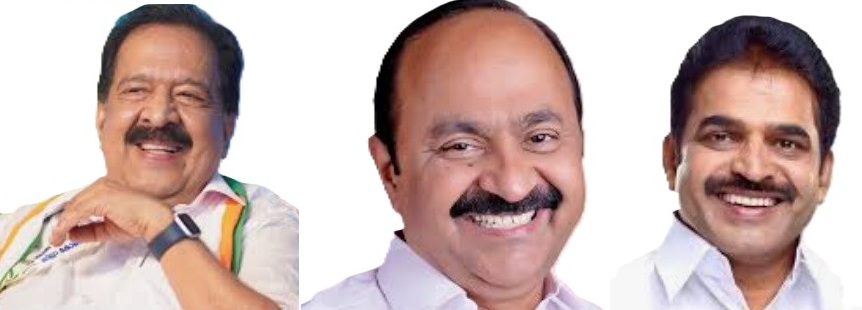
Yet, even before the victory celebrations subside, the Congress High Command’s familiar, undemocratic instincts have resurfaced. Intense lobbying by K.C. Venugopal and Ramesh Chennithala for the Chief Minister’s post signals a brazen attempt to hijack the people’s mandate. The High Command must be warned in the strongest terms: ignoring the ground leader who delivered this victory and imposing its favourites will repeat a long, disastrous pattern of self-inflicted political wounds.
Satheesan: The Architect Who Single-Handedly Delivered Victory
In 2021, the Kerala Congress was fractured and demoralised. V.D. Satheesan took over as Leader of the Opposition and rebuilt the party through relentless determination. He replaced stale “statement politics” with sharp, evidence-based “Creative Opposition,” relentlessly exposing LDF scams, the controversial K-Rail project, financial irregularities, and governance failures.
Satheesan’s winning campaign masterstrokes included:
· Exhaustive statewide tours that revived worker morale and alliance unity.
· Strict booth-level accountability, holding leaders personally responsible.
· Strategic outreach to youth, intellectuals, writers, and alienated communities.
· Leading from the front by campaigning across multiple constituencies.
Extraordinary personal courage: He publicly vowed to quit politics and enter self-exile if the UDF failed to reach 100 seats. The 102-seat victory is his complete vindication.
In Paravur, he secured a sixth consecutive win with 78,658 votes and a margin of over 20,600 votes. This is the leader Kerala voters watched battling day and night for five years. This is the man they have emphatically chosen.
High Command’s Long Trail of Blunders: Lessons Unlearned
The Congress High Command has a notorious history of overriding popular local leaders, engineering compromises, and imposing Delhi favourites — often with catastrophic results:
In Rajasthan, the prolonged high-command-managed feud between Ashok Gehlot and Sachin Pilot, including the dramatic 2022 crisis where Gehlot resisted a CLP meeting, severely damaged the party. The internal sabotage and failure to resolve factionalism contributed to the eventual loss of power.
In Madhya Pradesh, high-command decisions allowed deep divisions to fester, culminating in Jyotiraditya Scindia’s exit with 22 MLAs in 2020, which brought down the Congress government. Similar mishandling of leadership claims turned victory into swift defeat.
In Chhattisgarh, the High Command favoured Bhupesh Baghel while sidelining T.S. Singh Deo (including unfulfilled promises of rotational leadership), breeding bitterness that weakened the organisation and contributed to the party’s poor showing in subsequent elections.
In Karnataka, repeated high-command interventions in leadership disputes between Siddaramaiah and D.K. Shivakumar have created ongoing instability, turning a major victory into internal chaos and threatening long-term prospects.
In Kerala itself, the High Command’s track record includes controversial interventions. In 2021, despite reported strong support among MLAs for Ramesh Chennithala, it appointed Satheesan as Leader of the Opposition — a move that caused resentment but ultimately proved fortuitous due to Satheesan’s performance. Decades of factional engineering, ticket distribution dictated from Delhi, and ignoring state-specific realities have kept the party out of power for long stretches.
Imposing K.C. Venugopal, a Delhi-centric AICC General Secretary with limited recent grassroots presence in Kerala’s battles, would be the latest chapter in this folly. A leader who did not contest the 2026 Assembly election cannot be parachuted over the man who architected the victory. It would insult the 63 Congress MLAs and the lakhs of voters who backed a locally fought, visible campaign. Venugopal symbolises the “High Command culture” of backroom deals and over-centralisation that Kerala voters have repeatedly rejected.
Ramesh Chennithala brings seniority, but the 2026 verdict demanded a “New Congress” — modern, secular, and free from old-style communal pressure networks. Satheesan’s principled independence enabled the UDF to build broad, cross-community appeal.
Parallel attempts by NSS’s G. Sukumaran Nair and SNDP’s Vellappally Natesan to influence or weaken UDF unity through caste equations also failed against Satheesan’s inclusive wave.
The Non-Negotiable Demand of the Mandate
The people of Kerala have spoken clearly. They voted for the leader who fearlessly confronted Pinarayi Vijayan, rebuilt the UDF as a cohesive force, and delivered its strongest performance in years. V.D. Satheesan has the intellect, integrity, organisational skill, and public credibility this critical responsibility demands.
The High Command has no moral or political right to override Kerala’s verdict yet again. Sidetracking Satheesan to appease Delhi insiders or legacy claimants would be an act of supreme ingratitude, internal sabotage, and strategic suicide. It would demoralise the state unit, alienate the winning electorate, and invite an early LDF comeback — exactly as witnessed in Rajasthan, Madhya Pradesh, and other states.
Kerala has chosen V.D. Satheesan. The Congress High Command must respect the 2026 mandate and declare him Chief Minister straightaway. Ignoring ground reality once more would prove that the party has learned nothing from its painful history of self-destructive arrogance.
