

Congress Leader Pawan Khera Meets Sonam Wangchuk, Slams Centre’s ‘Indifference’ to Hunger Strike

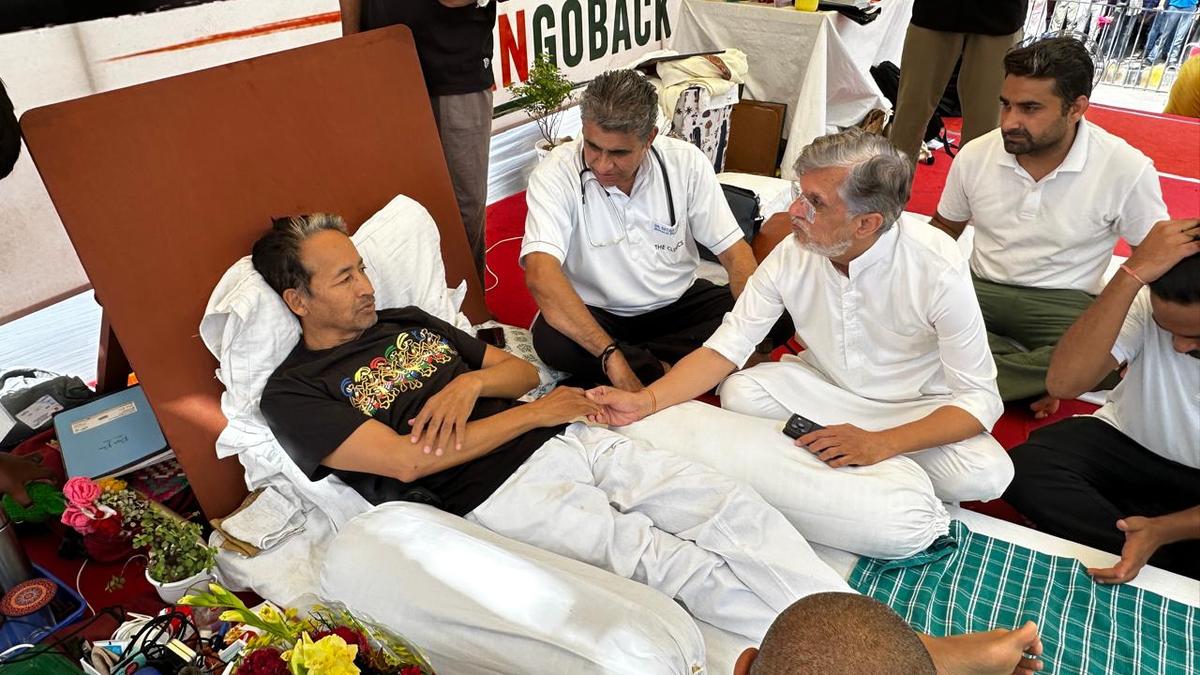
New Delhi: Congress leader and Rajya Sabha MP Pawan Khera visited activist Sonam Wangchuk at Jantar Mantar on Friday and urged him to end his indefinite hunger strike in view of his deteriorating health. Wangchuk’s fast entered its 19th day as part of the ongoing Cockroach Janata Party (CJP) protest demanding the resignation of Union Education Minister Dharmendra Pradhan over alleged examination irregularities.
After the meeting, Khera posted on X that peaceful protest is a constitutional right in a democracy. He asserted that it is the government’s duty to engage with citizens who undertake such fasts to have their voices heard. Khera stated that the Congress is concerned about Wangchuk’s life and the well-being of students participating in the agitation.
Wangchuk, an educator and climate activist, joined the CJP protest at the end of June and began his indefinite fast on June 29. He has lost significant weight, with medical updates showing declining blood pressure and glucose levels. Doctors have warned of critical health risks as the fast continues. The activist is pressing for accountability in the education system following repeated controversies, including NEET paper leaks, and for constitutional safeguards for Ladakh under the Sixth Schedule.
Khera’s visit comes as opposition support grows for the protest, now in its fourth week. The CJP has called for a peaceful march to Parliament on July 20, the first day of the Monsoon Session. Wangchuk is expected to lead or participate in the march if his health permits.
The absence of Rahul Gandhi from the protest site has drawn attention. While Congress leaders like Khera have engaged directly, the party’s top leader has not visited Jantar Mantar so far. Political observers note that CJP founder Abhijeet Dipke has past associations with the Aam Aadmi Party’s social media and communications work. This background may influence Congress calculations amid efforts to maintain distinct positioning within the broader opposition space and avoid overlap with other parties’ youth outreach. Rahul Gandhi has focused on nationwide tours, parliamentary interventions, and economic issues in recent weeks.
The CJP movement began as a satirical online response in May 2026 and evolved into street protests centred on education reforms, with broader calls for accountability. Wangchuk’s involvement has amplified its reach, drawing students, activists, and citizens concerned about institutional failures.
As Wangchuk’s condition remains a point of worry, with the Delhi High Court directing medical monitoring, pressure is mounting on the government to respond. Khera’s remarks highlighted the Centre’s perceived indifference, while the upcoming march could intensify demands during the parliamentary session. The developments reflect ongoing tensions between youth-led agitations and official responses on governance and education issues.
