

Corporate loot in daylight: Subhash Chandra’s 99.97% haircut and the public money India refuses to defend

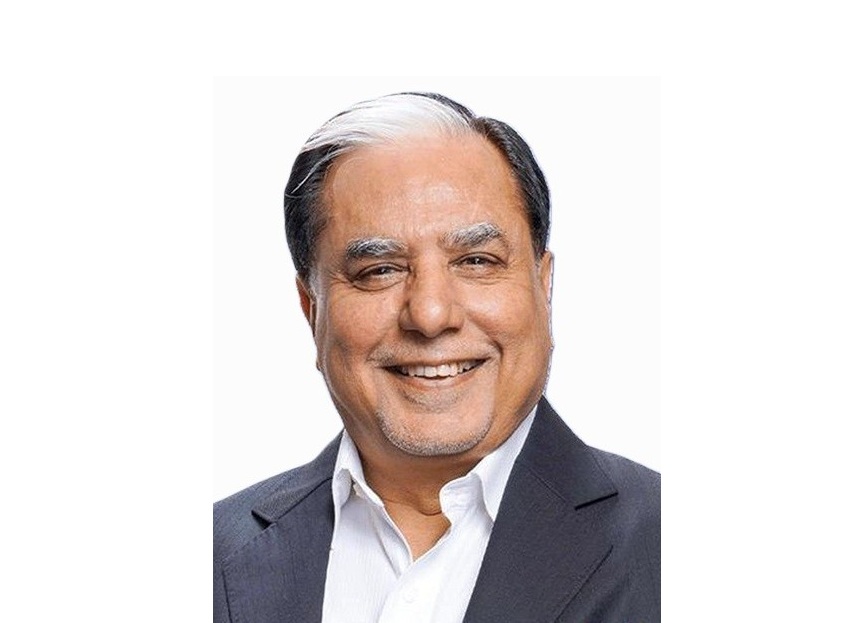
When the National Company Law Tribunal approved Subhash Chandra’s repayment plan this week, it did not merely close a file. It held a mirror to the country. Zee and Essel Group founder, once a media emperor and a Rajya Sabha member who entered the Upper House with the BJP’s support, will pay about ₹6.5 crore against admitted claims of ₹22,006 crore arising from personal guarantees he signed for group companies. Recovery from his personal estate: roughly three paise in a hundred. Haircut: 99.97 per cent. No fine that the public can see. No “minor fiscal injury.” The man walks. The banks adjust. The depositor pays.
Chandra’s lawyers and office are entitled to their fine print, and the fine print is real. He did not personally borrow ₹22,000 crore as cash. He was a guarantor. The companies that took the loans remain liable. His side says the group repaid about ₹43,000 crore of some ₹45,000 crore after the 2019 crash. Government sources add that only a part of the headline figure was a guarantee given at original sanction, that principal borrowers are still on the hook, and that his disclosed personal estate was valued around ₹32 crore — mostly a house. A creditor majority of about 80.8 per cent voted for the plan. HDFC Bank, LIC Housing Finance and others dissented; some are exploring appeal. All of that can be true at once. It does not wash the political stain. A former MP offers the price of a bungalow against a mountain of guarantee claims, and the system calls it resolution.
That is how public money is plundered in daylight in this Republic — not always by a man with a suitcase, but by a promoter with a guarantee, a bank with public deposits, a party with a collection box, and a tribunal with a stamp.
The silence after the stamp
The public is not unaware. It is unmoved. People who will never get a haircut on a housing EMI or a crop loan still treat the Chandra order as another television quarrel. Meanwhile the same state that negotiated courtesy for a media baron sends notices, possession orders and recovery men to the door of the farmer and the salaried defaulter. Their default is in thousands or a few lakhs. His was in thousands of crores of claims. Their penalty is humiliation. His is vocabulary: haircut, commercial wisdom, going concern.
Count what the vocabulary hides. In IBC cases that reached resolution plans, admitted creditor claims stood at about ₹14.27 lakh crore. What came back was about ₹4.35 lakh crore — near 30 paise in the rupee, a haircut around 69 per cent. Officials prefer another measuring stick: recovery looks handsome against “liquidation value,” the wrecked price of already-stressed assets. Against what was actually owed to banks stuffed with household savings, the gap is a missing Himalaya of nearly ₹10 lakh crore on resolved cases alone. A hundred-bed hospital in India can be built in the range of ₹60–80 crore. A cabinet package of 57 new Kendriya Vidyalayas was costed around ₹5,862 crore. On that arithmetic the written-off claim could have built thousands of wards and tens of thousands of classrooms. It built promoter exits instead.
Here the question about the NCLT stops being rude and becomes necessary. The tribunal did not invent corporate failure. Businesses die. Liquidation can recover even less than a bad plan. But when an institution, case after case, converts public credit into negotiated discounts for the large, while retail recovery remains a lathi-and-lock ritual, the public is entitled to ask what the court has become. A recovery forum — or a respectable washing machine whose gazette notification turns default into closure?
Bonds, loans, the same circuit
Corporate loans and political money are not separate stories. They are one current. Promoters take large credit from banks that hold public deposits. When the cycle turns they arrive at the NCLT. In the years between, the same corporate class funded the party that writes the climate of “ease.” Electoral bonds, sold in anonymity until the Supreme Court struck the scheme down as unconstitutional in 2024, moved more than ₹16,000 crore into party coffers; the BJP took the largest share. After the ban the pipe did not dry. Electoral trusts and company cheques still flow overwhelmingly to the ruling party — in 2024–25 trusts alone sent thousands of crores, more than four-fifths to the BJP. No honest writer needs a signed chit on Chandra’s own donations to see the system. Cheap credit, soft exits and political cash live in the same house.
That is why the Chandra case is classic. Not because one order proves every judge is captured. Because it is readable. A BJP-backed parliamentarian. A vanished paper fortune once certified to lenders in tens of thousands of crores, now a personal estate of a few dozen. A 99.97 per cent sentence on guarantee claims. Dissenting public-sector and private lenders outvoted. The small borrower still meets the goon with the court paper. The large borrower meets the committee.
The loot is not hidden. It is televised, clarified, and filed. Corporates want the machine to continue. Parties want the donations that follow. And the public, knowing it has been cheated of schools and hospitals, still fights in the street for the looters and for the politicians who keep the looting legal. They bat for the cheater because the cheater has learned to speak the language of the nation.
Until that habit breaks, another Chandra will arrive, another plan will pass, and the Republic will call the missing ten lakh crore a haircut — as if the head that was shaved were not the public’s.
