

Cyclone Arnab Makes Landfall Near Yanam; Over 1.8 Million Evacuated as Massive Waves Batter Coast

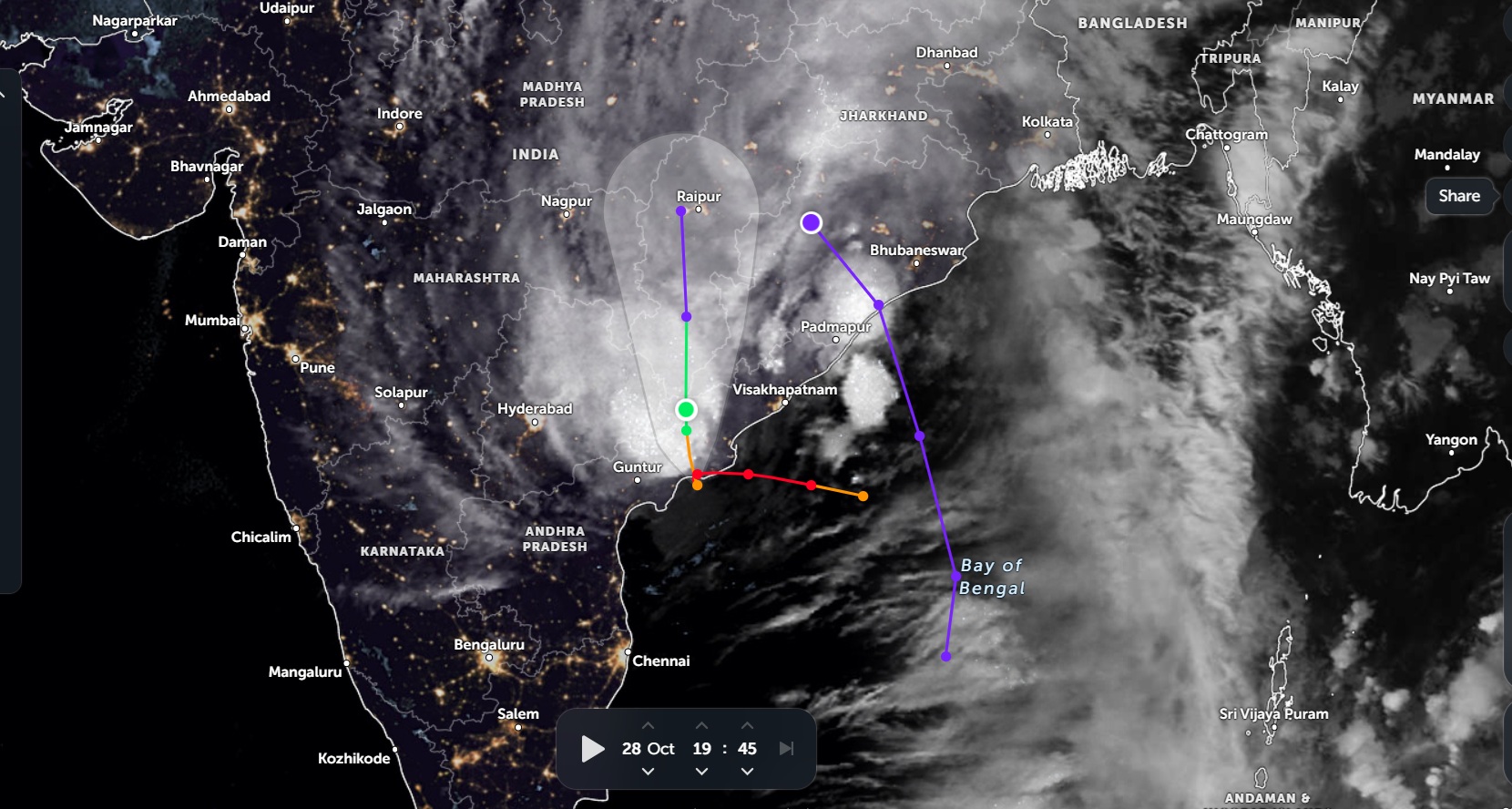
Vijayawada: Very severe cyclonic storm Arnab struck India’s eastern coast early on Wednesday, completing landfall between Bapatla and Visakhapatnam, close to Yanam, after a prolonged six-hour crossing process. The India Meteorological Department (IMD) said the system crossed the Andhra Pradesh and Yanam coasts southwest of Yanam near latitude 16.45°N and longitude 81.9°E—about 20 km east-northeast of Narsapur, 40 km southwest of Yanam and 60 km southwest of Kakinada—between 2 a.m. and 8 a.m. IST as a very severe cyclonic storm. Maximum sustained winds reached 125–135 kmph, with gusts up to 150 kmph, before the centre moved fully over land by 8 a.m. and the system began weakening into a severe cyclonic storm.
Massive waves and a storm surge of roughly 1–1.5 metres above the astronomical tide slammed coastal infrastructure across West Godavari, Konaseema, Kakinada, Visakhapatnam and surrounding districts. High seas inundated low-lying stretches, damaged roads, jetties and coastal structures, uprooted hundreds of trees, snapped power poles and disrupted electricity and communications. Torrential rain compounded the damage: Visakhapatnam recorded more than 200–300 mm in places, with similarly extreme totals in Vizianagaram, Anakapalli and other north coastal districts. Flooding, waterlogging and crop losses were reported across a wide swathe of coastal Andhra Pradesh, while southern Odisha remained under red alerts for heavy to extremely heavy rainfall as the system moved inland.
Indian authorities executed one of the largest pre-emptive evacuations in recent years, successfully moving more than 1,800,000 residents from high-risk coastal and low-lying zones in Andhra Pradesh, Yanam and parts of Odisha into relief shelters. State disaster management teams, the National Disaster Response Force (NDRF) and local administrations converted schools and community buildings into shelters, prioritised vulnerable groups including the elderly, children, pregnant women and persons with disabilities, and kept control rooms operational around the clock. Fishermen had been warned off the sea, trains and flights were cancelled or disrupted, and airports in the region suspended operations. Officials credited advance IMD warnings and coordinated action with limiting casualties, though reports indicated at least a few weather-related deaths and significant property and infrastructure damage.
As Arnab continues northwestward and weakens further into a deep depression, the IMD has warned of continued heavy rain, possible flooding in rivers such as the Nagavali and Vamsadhara, and residual storm-surge effects over the next several hours. Restoration of power, clearance of debris and assessment of crop and infrastructure losses are underway, with NDRF teams already clearing fallen trees and blocked routes. Authorities have urged remaining residents to stay indoors until conditions improve and to avoid damaged buildings, electricity poles and waterlogged areas. The storm’s rapid intensification over warm Bay of Bengal waters and its slow landfall process prolonged the worst impacts along a densely populated stretch of the coast.
