

Faith, Food and Fashion Unite for a Sustainable Future at Parmarth Niketan on World Environment Day

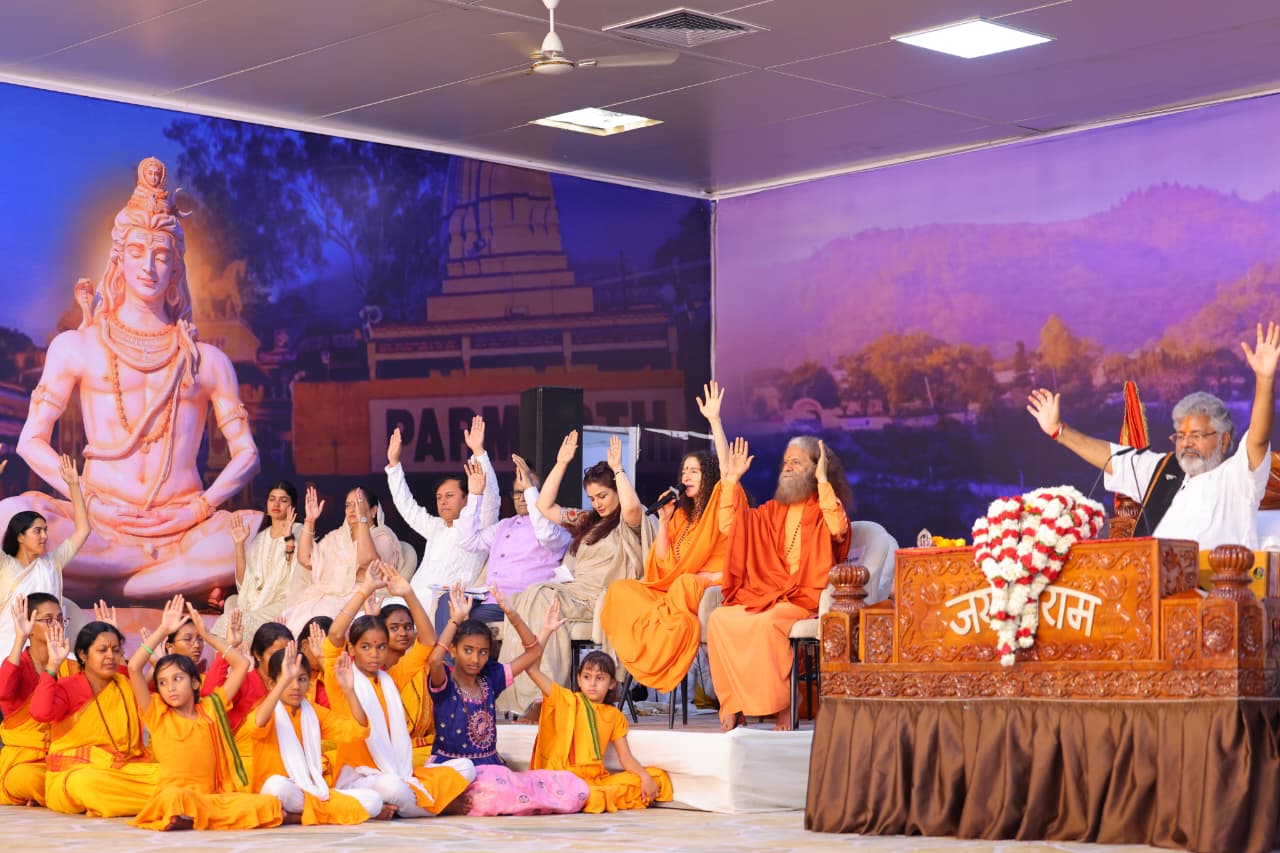
RISHIKESH, UTTARAKHAND : Under the divine guidance and blessings of HH Pujya Swami Chidanand Saraswatiji and Pujya Sadhvi Bhagawati Saraswatiji, World Environment Day was celebrated at Parmarth Niketan as a powerful call to heal both our inner and outer environments through conscious living, collective action, and spiritual responsibility.
Convened by Parmarth Niketan and the Global Interfaith WASH Alliance in partnership with the United Nations Environment Programme (UNEP) and the United Nations Office for Project Services (UNOPS), the gathering served as a sacred confluence of spirituality, sustainability, and social action, bringing together faith leaders, policymakers, environmentalists, celebrities, and community changemakers committed to creating a healthier and more sustainable future for all.
Held under the banner “Faith, Food & Fashion – Sustainable Living Initiative,” the special plenary brought together revered spiritual leaders, government representatives, United Nations officials, environmental advocates, youth, and renowned actress and environmental champion famous Bollywood Actress Raveena Tandon to explore how everyday choices in food, fashion, and faith can become transformative forces for protecting the planet.
The day’s celebrations began with a sacred World Environment Day Yajna, culminating in a special session integrated into Parmarth Niketan’s ongoing spiritual gatherings, which allowed sustainability messages to reach thousands of devotees and visitors. The day’s events emphasized the theme “Inner Environment – Outer Environment: A Path to Planetary Peace,” recognizing that healing the planet begins with cultivating awareness, responsibility, and harmony within ourselves.
The main stage programme at noon featured a ceremonial lamp lighting, symbolizing the light of awareness and collective responsibility, as well as a collective environmental pledge in which participants committed themselves to reducing waste, embracing sustainable lifestyles, protecting natural resources, and supporting ecological restoration efforts.
Participants also took part in a special Jhola Andolan (Cloth Bag Movement), pledging to reduce and ultimately eliminate the use of single-use plastics by embracing reusable cloth bags in their daily lives. This was followed by a meaningful tree-pledge aligned with the national campaign “Ek Ped Maa Ke Naam, Ek Ped Dharti Maa Ke Naam” (One Tree for Mother, One Tree for Mother Earth). The plantation pledge symbolized a collective commitment to nurturing both nature and future generations, reinforcing the event’s central message that protecting the Earth is not merely an environmental obligation but a sacred responsibility shared by all.
Below are quotations from each speaker:
HH Pujya Swami Chidanand Saraswatiji Maharaj shared, “If we truly wish to save Mother Earth, we must plant more trees. We cannot create water, but we can certainly conserve it. Plastic, especially single-use plastic, must be eliminated from our lives at its roots. Our Vedic scriptures remind us, ‘Mata Bhumih Putro’ham Prithivyah’ — the Earth is our Mother and we are her children. Therefore, we must conserve water, save energy, and adopt sustainable lifestyles. Water is the next gold. Without water there is no worship, no spiritual discourse, no Kumbh, and ultimately no life. No water means no future. Environmental protection is not an individual journey; it is a collective one. Governments are doing their part, but each one of us must do ours. Let us pledge to protect our rivers, preserve our natural resources, refuse single-use plastics, and work together to safeguard the future of our planet.”
Pujya Sadhvi Bhagawati Saraswati Ji, International Director of Parmarth Niketan and Secretary General of GIWA, added, “The Ganga does not flow only outside us; she flows within us as well. At a time when the world faces increasing shortages of food, land, and resources, we continue to create more problems instead of solutions. Our scriptures teach us ‘Vasudhaiva Kutumbakam’ and ‘Ishavasyam Idam Sarvam’ — the whole world is one family and everything belongs to the Divine. Mother Earth is not merely a resource; she is our Mother. Every minute, forests are being destroyed and enormous quantities of water are consumed through unsustainable systems of production. At the same time, thousands of people continue to suffer from hunger and malnutrition. Spirituality teaches us ‘Ahimsa Paramo Dharma’ — non-violence is the highest duty. If our choices contribute to violence, environmental destruction, or suffering, then we must reflect deeply on the way we live. By embracing compassion, conscious consumption, and more sustainable food choices, we can create profound positive change. Our faith must be reflected in our actions, for that is the true essence of spirituality.”
Raveena Tandon urged, “Development and environmental protection must go hand in hand. Our ecosystem reflects the timeless principle of Vasudhaiva Kutumbakam — the world is one family. Every creature on this planet has a purpose in the Divine design, and we have a responsibility to protect all forms of life. The future of our children depends upon the purity of our air, water, and soil. If our environment is polluted, what kind of legacy are we leaving behind? We are already witnessing rising rates of cancer and respiratory diseases, making it more important than ever to act responsibly. We must respect every living being, adopt sustainable practices, use natural and eco-friendly alternatives, protect trees and wildlife, and reduce the greed and excessive consumption that lie at the root of many environmental challenges. If we cannot serve and protect Mother Earth, we must ask ourselves what future we are creating for the generations to come.”
Pujya Sant Muralidhar Ji spoke, “The divine beauty of Panchavati reminds us of the sacred relationship between humanity and nature. Lord Shri Ram spent much of His exile living in forests, in harmony with the natural world, teaching us through His example that a life rooted in nature is both simple and secure. Our traditions have always emphasized reverence for forests, rivers, and all forms of life. By reconnecting with nature and embracing a more natural way of living, we not only protect the environment but also nurture peace, balance, and spiritual well-being within ourselves.”
Vinod Mishra, Country Manager, UNOPS India brought everyone’s attention to, “The environmental crisis is not a crisis created by nature; it is one created by human actions. Today the world faces three interconnected challenges — climate and disaster risks, biodiversity loss, and pollution. These crises are threatening lives, livelihoods, ecosystems, and future generations. Our infrastructure must become more resilient and environmentally sustainable, while biodiversity conservation must become a shared responsibility. Pollution of our air, water, and land has reached alarming levels, and research indicates that related health impacts will continue to rise. The solution lies in collective action and in embracing sustainable lifestyles, including the Prime Minister’s vision of Lifestyle for Environment (LiFE), which empowers individuals and communities to become active participants in protecting our planet.”
Dr. Sumit Sharma, Deputy Head, UNEP India Office added, “A one-degree rise in the Earth’s temperature may sound small, but its consequences are profound and far-reaching. Air pollution from vehicles, industry, and construction activities is affecting our lungs, our hearts, and even the cognitive development of our children. These challenges require urgent action at every level of society. We must reduce our dependence on single-use plastics, rethink patterns of consumption, and redefine fashion by choosing quality, durability, and reuse over waste. Every choice we make as individuals contributes to the health of our environment and to the future we leave for coming generations.”
Shri Pradeep Batra, Cabinet Minister, Government of Uttarakhand gave the closing remarks, “World Environment Day is a day of service, gratitude, and commitment to Mother Earth. We often refer to it simply as land, but in truth it is our Mother, sustaining and nurturing all life. As we pursue development and progress, we must ensure that we also preserve our priceless natural heritage — our rivers, mountains, forests, and the Himalayas. Protecting the environment is not separate from serving humanity; it is an essential part of it. By honouring nature and caring for our shared resources, we fulfil the spirit of ‘Manav Seva is Madhav Seva’ — service to humanity is service to the Divine.”
The event was also graced by the presence of renowned actress, wellness advocate, and philanthropist Dr. Sanchita Shetty, who joined the distinguished gathering in support of environmental stewardship and sustainable living. The programme was ably moderated by Ganga Nandini, Senior Project Director of the Global Interfaith WASH Alliance (GIWA), who emphasized the vital role of faith-based communities in inspiring environmental responsibility and lasting behavioural change.
The initiative draws inspiration from the concept of a sacred “sangam” or confluence, bringing together the powerful influences of faith, food, and fashion to encourage conscious choices and sustainable living. Organizers highlighted that these three dimensions touch nearly every aspect of daily life and therefore hold tremendous potential to drive large-scale positive change. The initiative aligns with India’s Mission LiFE and seeks to build a broad-based movement for environmental responsibility through faith-based engagement, sustainable consumption, and cross-sector collaboration.
The celebrations concluded with the sacred Ganga Aarti dedicated to environmental healing and planetary wellbeing, followed by a collective prayer for peace, harmony, and ecological balance. Gentle showers during the evening created a serene and refreshing atmosphere along the banks of Mother Ganga, adding to the gathering’s beauty and sanctity. Participants departed with renewed inspiration and a deepened commitment to becoming mindful custodians of both their inner and outer environments.
