

Financial Inclusion Must Extend Beyond Bank Accounts to Affordable Credit, Insurance and Pensions: Maharashtra Governor

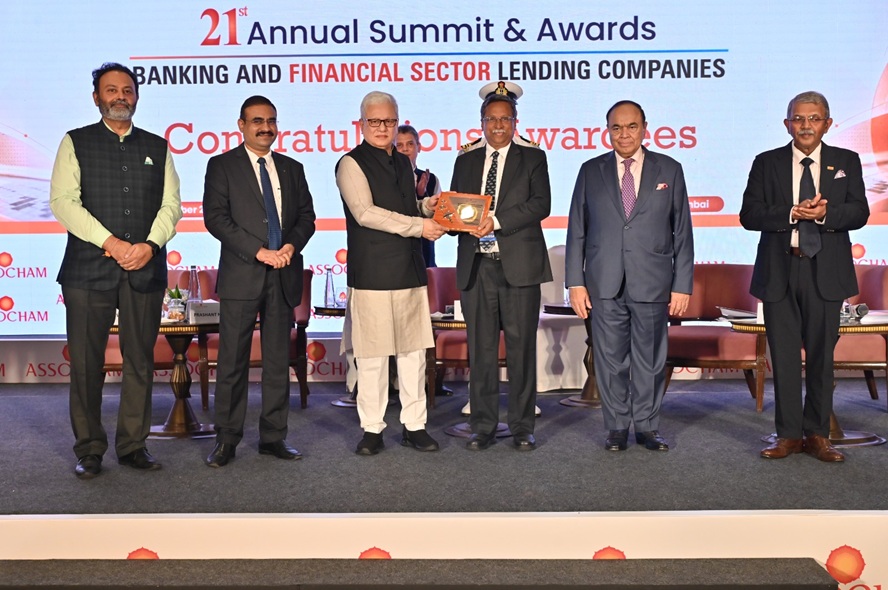
Mumbai: Financial inclusion must extend beyond opening bank accounts and enabling digital payments to ensure access to affordable credit, insurance and pension coverage, particularly for rural households, women and small entrepreneurs, said Shri Jishnu Dev Varma, Hon’ble Governor of Maharashtra, at the 21st Annual Summit & Awards of the ASSOCHAM National Council for Banking and Financial Sector Lending Companies in Mumbai on Friday. Held under the theme “Resilience, Reinvention and India’s Rise,” the summit brought together policymakers, banking leaders and industry stakeholders to discuss the role of financial institutions in supporting India’s growth ambitions.
The summit focused on the priorities shaping India’s banking and financial services sector, including financial inclusion, specialised lending, digital transformation and responsible innovation. Discussions also examined how banks, NBFCs and fintech companies can strengthen credit delivery, support emerging industries and build a more resilient financial ecosystem as India progresses towards its ambition of becoming a developed nation by 2047.
Addressing the gathering, Shri Jishnu Dev Varma, Hon’ble Governor of Maharashtra, highlighted the role of financial institutions in advancing inclusive growth. He said, “Banks and financial institutions are not merely providers of loans and financial services; they are partners in nation-building. Financial inclusion must go beyond opening bank accounts and enabling digital payments to ensure access to affordable credit, insurance and pension coverage, particularly for rural households, women and small entrepreneurs. As technology reshapes banking, we must build a financial system that is stable, innovative and inclusive, where credit reaches productive sectors, technology serves people and financial opportunities extend to every section of society.”
Highlighting the banking sector’s contribution to India’s long-term economic ambitions, Mr. Atul Kumar Goel, Chief Executive, Indian Banks Association, said, “India’s banking and financial services sector can be the catalyst for achieving the vision of a USD 30 trillion economy by 2047. To support this ambition, the sector must focus on unlocking growth, driving productivity, achieving digital maturity and building resilience. Strengthening financing for emerging sectors such as renewable energy, semiconductors and MSMEs, leveraging AI to improve operational efficiency, advancing digital public infrastructure and embedding cybersecurity across financial products will be critical to this journey.”
Mr. Nirmal K. Minda, President, ASSOCHAM, highlighted the financial sector’s contribution to India’s development and the need to ensure that innovation is supported by strong governance and responsible lending. He said, “India’s banking and financial sector has shown remarkable resilience and adaptability over the last decade. As India moves towards becoming a developed nation, banks, NBFCs and financial institutions will play a vital role in supporting infrastructure, MSME growth, manufacturing, housing, agriculture and emerging enterprises while ensuring inclusive and sustainable growth. As digitisation, fintech and artificial intelligence transform financial services, trust, transparency, strong governance, cybersecurity and responsible lending must remain the foundations of a strong and reliable financial system.”
Emphasising the need for specialised financing and stronger credit access for small businesses, Mr. Manish Jain, Co-Chairman, ASSOCHAM National Council for Banking and Executive Director, YES Bank, said, “India’s financial sector has a critical role to play in financing infrastructure, empowering MSMEs, deepening financial inclusion and supporting the energy transition. As growth expands into emerging sectors such as green hydrogen, semiconductors, space technology and electric mobility, banks must develop specialised lending capabilities backed by industry expertise. Bridging the ₹30 trillion MSME credit gap through advanced digital underwriting, ecosystem-driven financing models and greater integration of small businesses into global value chains will be vital to advancing inclusive growth.”
The summit also witnessed the release of the ASSOCHAM–EY Knowledge Report, adding to discussions on the priorities and opportunities shaping the banking and financial services industry.
A key highlight of the summit was the special session honouring awardees from the banking and financial sector lending industry, recognising their contributions to the sector.
The summit concluded with a vote of thanks by Mr. Saurabh Sanyal, Secretary General, ASSOCHAM, who underscored the importance of collaboration among the government, regulators and industry in strengthening India’s financial ecosystem. He said, “As India progresses towards becoming a developed economy, banks, NBFCs, fintech companies and other financial institutions will play an increasingly significant role in driving growth and financial inclusion. Platforms such as this summit provide an important opportunity for stakeholders to exchange ideas, address emerging challenges and collectively chart a roadmap for a stronger, more inclusive and future-ready financial sector. ASSOCHAM remains committed to facilitating these conversations and promoting collaborative growth across the ecosystem.”
The summit reaffirmed the importance of collaboration across the banking and financial services industry in expanding access to finance, supporting productive sectors and strengthening the foundations of a resilient, inclusive and future-ready financial ecosystem.
****
