

Former Kerala CM Pinarayi Vijayan Summoned by ED in CMRL-Exalogic Corruption and Money Laundering Probe Involving Daughter and Son-in-Law

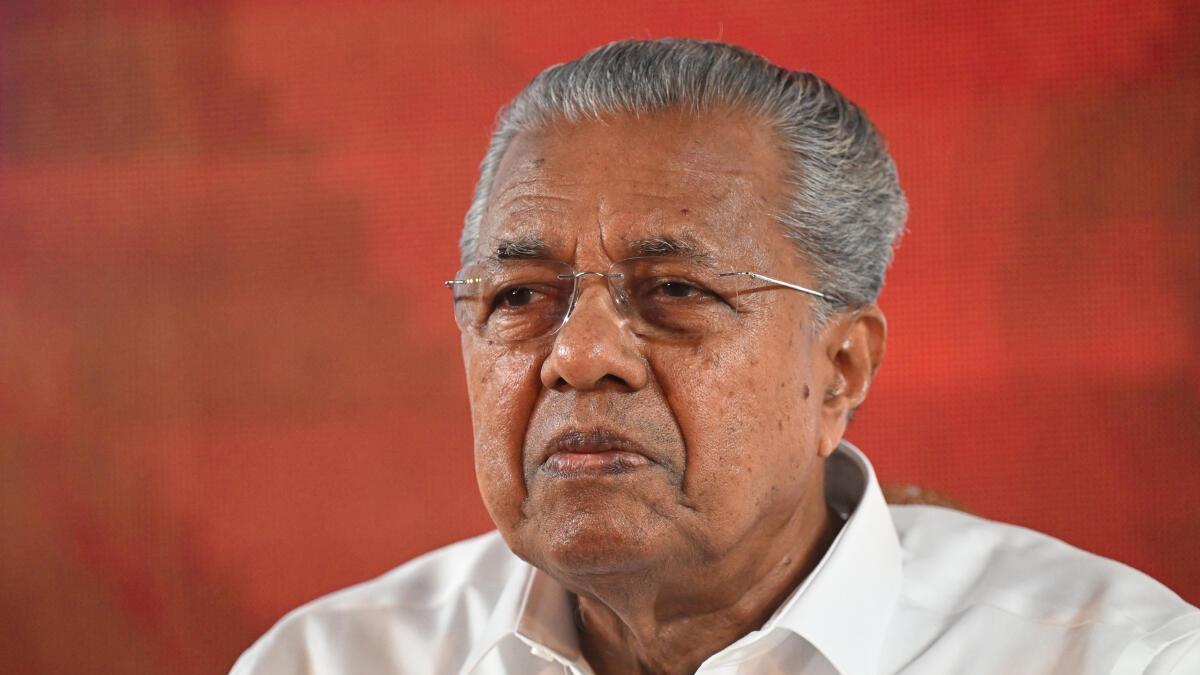
Thiruvananthapuram: In an unprecedented development in Kerala’s political and legal history, the Enforcement Directorate (ED) has issued a summons to former Chief Minister and current Leader of the Opposition Pinarayi Vijayan, directing him to appear for questioning at its zonal office in Kochi on October 23, 2026. The 81-year-old CPI(M) leader faces interrogation under the Prevention of Money Laundering Act (PMLA) in the long-running Cochin Minerals and Rutile Limited (CMRL)-Exalogic pay-off case. This marks the first time a former Chief Minister of Kerala has been directly summoned by the central agency for alleged corruption and money laundering linked to his tenure in power.
The summons follows the registration of Enforcement Case Information Reports (ECIRs) by the ED, taking cognisance of FIRs filed by the Vigilance and Anti-Corruption Bureau (VACB). Those FIRs name Vijayan, his daughter T. Veena, and son-in-law P.A. Mohamed Riyas (a former minister and sitting MLA). The ED has maintained that it possesses sufficient material—statements, bank records, digital evidence, and documents recovered during earlier searches—indicating that payments routed through Veena and her now-defunct firm constituted proceeds of crime.
The Allegations and the Money Trail
At the core of the case are payments made by Kochi-based CMRL, a listed minerals company in which the state-owned Kerala State Industrial Development Corporation holds a stake, to Exalogic Solutions Private Limited (Veena’s IT firm) and to Veena personally. Reports consistently cite approximately ₹2.78 crore transferred to Exalogic under the guise of IT consultancy, software development, and marketing services between roughly 2017 and 2019—while Vijayan was Chief Minister. Some accounts of the broader transactions, including direct retainers paid to Veena, put the total figure closer to ₹3.28 crore.
Investigations by the Income Tax Department, the Serious Fraud Investigation Office (SFIO), and the ED have repeatedly found no evidence of corresponding services. CMRL officials, including former CFO P. Suresh Kumar and managing director Sasidharan Kartha, have reportedly stated that payments continued because of Veena’s relationship with the then-Chief Minister and the “public relations avenues” she provided. Veena herself is said to have been unable to produce documentary proof of deliverables. Exalogic operated with a fragile financial base—reportedly a turnover of only about ₹5 lakh and a negative net worth—making the CMRL inflows central to its existence. Additional findings include a ₹50 lakh loan from a Kartha-linked NBFC that was effectively repaid through the same inflows, and later engagement of another firm for similar IT work at a fraction of the cost.
Earlier ED searches recovered handwritten accounts and digital records. These allegedly include references to large cash handling, transfers of the equivalent of around ₹85 lakh to Dubai via hawala channels involving associates, and other overseas movements. The SFIO had earlier flagged fictitious cash expenses of roughly ₹182 crore by CMRL over 15 years, of which the Exalogic payments formed one component. The ED views the entire arrangement as disguised bribes paid to secure influence during Vijayan’s tenure, generating proceeds of crime that were then layered and possibly integrated through family-linked entities and associates.
Legal Setbacks: High Court Rejection and Supreme Court Approach
The case gained decisive momentum after the Kerala High Court intervened. On October 9, 2026, a single-judge bench directed the VACB to register FIRs under the Prevention of Corruption Act forthwith, holding that the ED’s communication under Section 66(2) of the PMLA—accompanied by statements of witnesses and suspects and supporting documents—disclosed cognisable offences and rendered any further preliminary inquiry unnecessary. The court set aside the state government’s decision to constitute a special investigation team for a preliminary probe instead of registering a case.
On October 15, a Division Bench of Justices K. Natarajan and Johnson John dismissed applications by Vijayan, Veena, and Riyas seeking leave to appeal that order. The bench held that an accused in a corruption case has no legal right to be heard before an FIR is registered and that the single-judge order had not extinguished their remedies against the FIRs themselves. VACB subsequently registered two FIRs: Vijayan as first accused in one (with Veena as second accused), and Riyas as first accused in the other (again with Veena named).
Hours after the Division Bench ruling, and following the Supreme Court’s indication on October 16 that it would not grant an immediate urgent hearing, the ED issued its summons. Vijayan’s counsel, senior advocate Sidharth Luthra, mentioned the matter before a bench headed by Chief Justice Surya Kant, seeking protection from coercive action and citing the former Chief Minister’s age and the risk of arrest. The Chief Justice indicated that a special bench might be constituted during the Dussehra holidays if judges were available; otherwise the matter would be listed on October 26 when the Court reopens. The petitions challenge the High Court direction and seek a stay on the Vigilance proceedings.
Current Status, Expected Response, and Political Consequences
Vijayan’s side is expected to inform the ED that he cannot appear on October 23 because the Kerala Legislative Assembly session continues until October 29. Whether the agency accepts the request for a later date, or treats non-appearance as non-cooperation, will shape the immediate trajectory. Parallel investigations by VACB (predicate offence under the Prevention of Corruption Act) and the ED (money laundering under PMLA) mean Vijayan and his family face simultaneous scrutiny by state and central agencies.
The CPI(M) has characterised the probes as a politically motivated central vendetta aimed at weakening the opposition ahead of future electoral battles. Opposition parties, however, have seized on the development—the first direct central summons of a former Kerala Chief Minister in a corruption and laundering case involving his daughter and son-in-law—to demand accountability and, in some quarters, his resignation as Leader of the Opposition. The optics are damaging: a leader who completed two full consecutive terms as Chief Minister now stands accused of abusing that office so that family-linked entities could receive substantial unearned payments from a company with which the state had commercial relations.
Beyond the immediate legal calendar (ED deposition attempt on the 23rd, possible Supreme Court hearing around the 26th), the consequences extend to the credibility of the CPI(M)’s governance record in Kerala, the integrity of public procurement and industrial relations during 2016–2021, and the broader question of whether family members of those in power can receive large retainers without demonstrable work. The ED’s claim of sufficient evidence—statements linking payments to Vijayan’s position, absence of services, bank trails, and recovered records of further movements—will now be tested in formal questioning and, if charges are ultimately framed, in court. For Kerala, the episode has already rewritten the boundaries of what was previously considered politically untouchable.
