


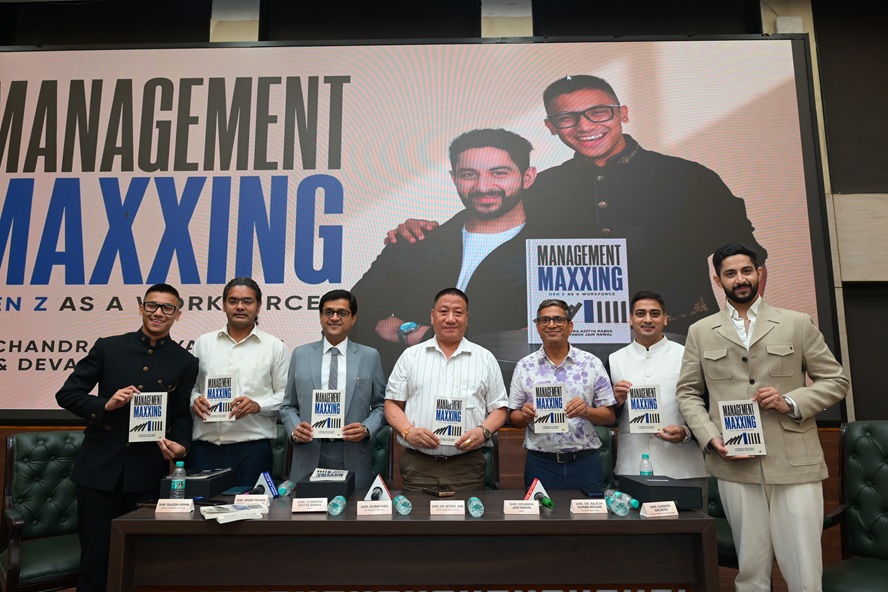
New Delhi: Devansh Jain, Co‑Founder and CEO of Culture Circle, has launched his new book “Management Maxxing: Gen Z as a Workforce.” Drawing from his day‑to‑day experience leading a team of about 150 people (95% under age 26, with an average age of 22–23), the book examines the changing motivations, expectations, and dynamics of India’s emerging Gen Z workforce.
Rather than relying on stereotypes, Jain explores the underlying human drivers that shape how this generation works, communicates, responds to leadership, and defines professional growth. The book addresses core questions such as: What motivates Gen Z at work? How should feedback and recognition be handled? How much autonomy is appropriate? And how can organisations balance individual expectations with collective goals?
A First‑Hand Perspective
“I wrote this book because I was living the problem every day,” said Devansh Jain. “When you manage 150 people, most under 26, you constantly ask yourself: What motivates them? How do you create alignment? How do you provide autonomy without compromising accountability? I didn’t want to write a guide on ‘dealing with’ Gen Z. I wanted to understand what is fundamentally different about how this generation thinks about work, and what that means for managers.”
The launch event, held at the Constitution Club of India, brought together leaders from business, government, public policy, and institutions, signalling that managing Gen Z is no longer merely an HR concern—it’s a strategic issue with implications for India’s productivity, competitiveness, and demographic dividend.
Distinguished attendees included:
Hon’ble Shri Pabitra Margherita, Minister of State for External Affairs
Shri Nitesh Jain, Partner, Grant Thornton Bharat
Shri Apurv Mishra, Consultant, Economic Advisory Council to the Prime Minister
Sujeet Kumar, Rajya Sabha MP
Shri Robin Hibu, IPS, Special Commissioner of Police, Delhi Police
Beyond Generational Stereotypes
At its core, the book argues that understanding Gen Z does not mean lowering standards. Instead, organisations must evolve management practices while maintaining clarity around performance, ownership, and accountability.
“Every generation enters the workplace with its own expectations,” Jain added. “Gen Z is forcing us to question assumptions managers have long taken for granted. The answer isn’t simply to give them what they want, nor to force them into an outdated work model. It’s to understand the human motivations beneath those expectations and build organisations where empathy and accountability can coexist.”
Jain hopes the book will foster a more nuanced inter‑generational dialogue—helping organisations better grasp what young employees expect, while helping young employees understand the responsibility, resilience, and accountability expected of them.
