


By Mr. Chintan Sheth, CMD, Sheth Realty

Luxury housing is structurally shifting in its business operations from selling square footage and finishes to curating holistic, future-ready lifestyle ecosystems centered on wellness, privacy, technology, and community. As globally recognised real estate research indicate, affluent homebuyers are now beyond prestigious addresses, expansive homes and conventional amenities. They have gravitated towards owning residences that support their physical and emotional wellbeing, foster a sense of community and deliver consistently managed experiences.
Location, space and specifications continue to remain fundamental, but they are no longer sufficient to distinguish a luxury development. Value is increasingly shaped by how thoughtful a residence is in bringing together design, wellness, privacy, service and social connection. This change has expanded the very definition of luxury housing. It includes personalization and experiences that make everyday living more comfortable and fulfilling. Buyers are examining how a residence supports their daily lives. The questions asked are whether it offers convenience without intrusion, privacy without isolation and services that anticipate their needs. Thoughtful architecture, refined interiors, wellness-oriented spaces and discreet hospitality are just as important as size and specifications.
The reshaping of this tier within the housing market also reflects a wider change in luxury consumption. Across hospitality, fashion, automobiles and travel, consumers are drawn not merely to products but to the experiences, values and identities that brands represent. A home is similarly becoming more than a functional space or financial asset. It is also an expression of lifestyle and personal identity.
The growth in demand for differentiated living experiences has contributed to the appeal of branded residences. This has in turn encouraged reputed hospitality, luxury and lifestyle brands to enter residential real estate. Hospitality brands bring expertise in service, operations and customer management, while luxury and lifestyle brands contribute design knowledge, exclusivity and a recognizable aesthetic. These brand associations can give buyers a clearer understanding of the design language, service standards and overall experience that a development intends to deliver.
Among branded residences, the strongest do more than place a familiar name on a project. They translate the brand’s philosophy into architecture, interiors, amenities, service protocols and property management. Residents are not simply purchasing a physical property but buying into a particular approach to living.
Mumbai’s affluent buyer base, limited availability of land and established luxury micro-markets make it particularly suited to branded residences. In a city where prime land is scarce, several premium projects offer comparable locations and amenities. Developers must create propositions with a distinct identity. Mumbai’s position as a centre for business, finance, entertainment and entrepreneurship also gives it a substantial base of HNIs, UHNIs, business families and globally mobile professionals looking to invest.
A recognized brand can serve as a marker of trust through its credibility, design expertise, service standards and promise of a differentiated experience. This can be particularly valuable in an under-construction project, where buyers make substantial commitments before experiencing the finished development. Brand association can provide greater confidence in the project’s design intent, quality benchmarks and operational philosophy.
Assurance of a brand involvement can also appeal to NRIs and buyers considering second or third homes. Since they may not occupy the property throughout the year, dependable maintenance, security and professional management become particularly important.
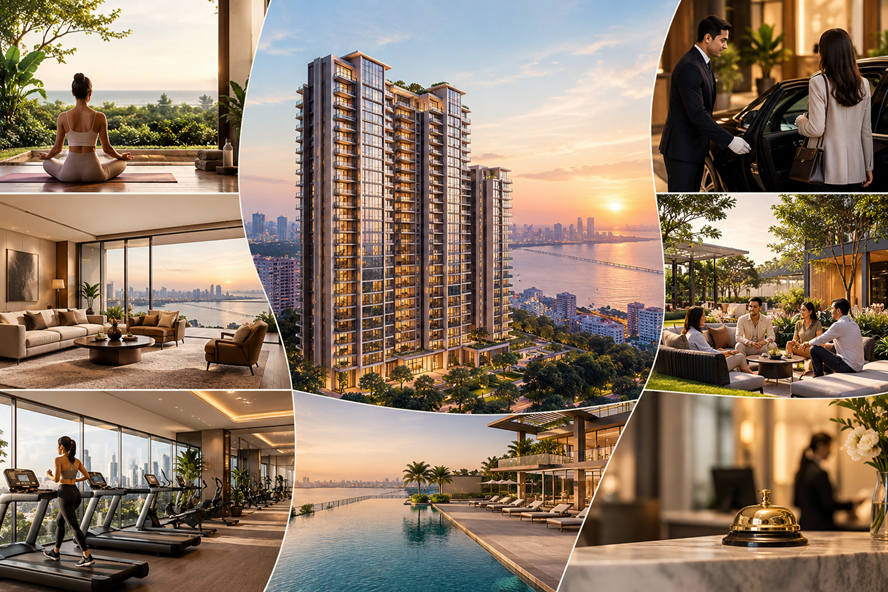
Luxury homebuyers are increasingly well-travelled, globally exposed and attentive to convenience, hospitality, wellness, privacy and personalized service. Rather than being impressed by the sheer number of amenities, they look at whether the facilities can meaningfully improve their everyday lives. Concierge assistance, professionally managed facilities, housekeeping support, private dining and customized resident experiences therefore hold growing relevance.
Backed by brand philosophy, residential design is responding by placing privacy, wellbeing and community at its core. Controlled access, discreet service and well defined private and social areas can offer seclusion. Provision of natural light, acoustic comfort, landscaping and thoughtfully planned shared spaces support wellness and interaction. The objective of new-age luxury housing is not to stop at providing more facilities. It is more to create an environment in which residents can retreat, connect and participate on their own terms.
As swimming pools, gyms, clubhouses and landscaped areas have become common across premium developments, differentiation increasingly depends on the quality of their design, programming and operation. A professionally managed spa, a responsive concierge or a thoughtfully programmed residents’ lounge offers greater value than an elaborate facility that is inconsistently operated or rarely used.
Each interaction, from arrival and security to maintenance and housekeeping, helps shape the resident’s perception of the development. Service therefore becomes part of the residential product rather than being an optional addition. This makes operational consistency as important as architectural ambition in sustaining the experience promised at the time of purchase.
Brand association can influence a property beyond its launch phase. A credible and well-executed association can contribute to long-term desirability, differentiation and potentially resale or rental appeal. But it does not automatically guarantee higher returns, as project location, market conditions, supply, maintenance costs and the quality of the development will continue to determine its performance.
Ultimately, a brand name alone cannot create lasting residential value. Location, architecture, construction quality, planning, operations and service delivery will always remain fundamental. Even a globally recognised name cannot compensate for poor layouts, delays in completion or ineffective property management. The brand must enhance a strong underlying product rather than attempt to replace it.
Execution becomes especially important after possession. Service teams must be trained, quality standards monitored and common areas maintained consistently. Buyers are increasingly capable of distinguishing between a meaningful collaboration that influences the product and its operation, and an association created largely for marketing.
The future of branded living is likely to extend beyond hotel partnerships to collaborations with wellness, design, fashion, culinary and other lifestyle brands. Wellness specialists could shape residences centered on preventive health and restorative living, while design houses could offer bespoke interiors. Fashion brands may translate their aesthetic identities into living environments, and culinary partnerships could influence kitchens, private dining and resident experiences.
Finally, the next phase of luxury housing will be defined not by how many features a development can advertise, but by how coherently it turns its promise into everyday experience. Therefore, while location and specifications remain at the core, brand association will create meaningful added value only when it is supported by thoughtful design, dependable service and operational excellence. In the end, the most enduring luxury will not be the name displayed at the entrance, but the quality of life experienced beyond it.
****
