

From Untouchable Superstars to Electoral Roadkill: How Arrogant Political Gods Were Humbled by the Voters They Despised

By Suresh Unnithan
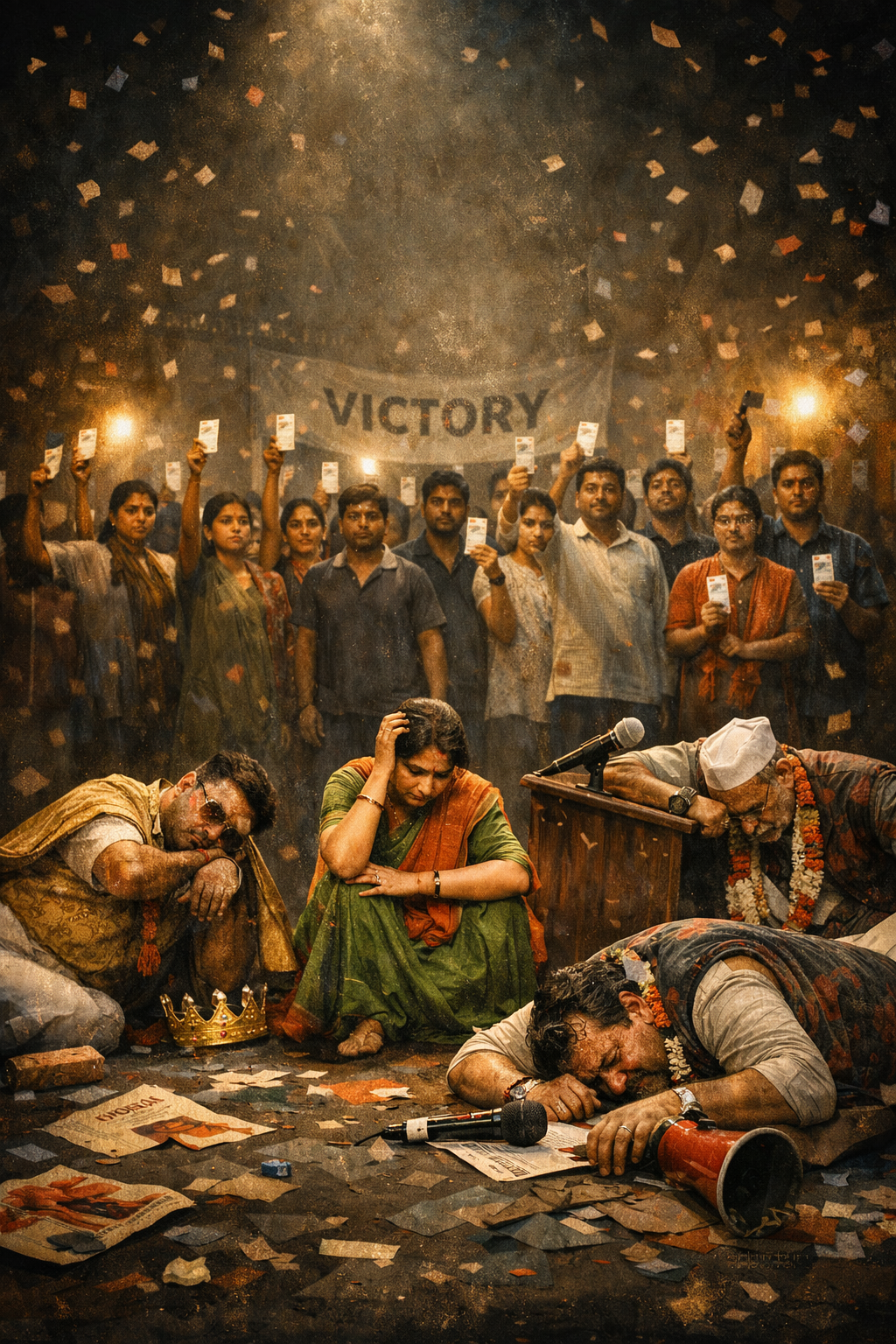
In the bloated circus of Indian politics, a special breed struts across the stage: the Political Superstar — those self-anointed invincible titans who, after tasting power, start believing they are not elected representatives but celestial beings gifted to the unworthy masses. They sweep into office on the votes of ordinary citizens, then quickly forget the elementary fact that they are servants, not masters. The 2026 Assembly elections in West Bengal, Kerala, and Tamil Nadu turned into a savage comedy of comeuppance. The superstars didn’t just lose — they were publicly humiliated, stripped of their aura, and reduced to sulking has-beens by the very electorate they had taken for granted, oppressed, and patronised with contempt.
This was no ordinary anti-incumbency. It was the Indian voter’s cold, calculated revenge against years of arrogance, neglect, and shameless plunder of public money for personal empires.
The Voter’s Razor-Sharp Psychology: Tolerance Has Limits
Forget the elite nonsense that Indian voters are emotional, illiterate herds swayed by cash or caste. Today’s voter is a hardened accountant of power — patient, watchful, and utterly ruthless when betrayed. He endures broken promises, rising prices, and crumbling services for a few years. He even tolerates some loot. What he will not tolerate is the superstar’s transformation from humble campaigner into an entitled tyrant who treats voters as disposable props.
The core trigger is oppressive entitlement. When leaders start living like medieval kings on public funds — fleets of luxury vehicles, opulent family functions, foreign junkets, and palaces built under the guise of “official residence” — while citizens struggle with jobs, hospitals, and schools, something snaps. Voters don’t just feel cheated; they feel insulted. The superstar’s lavish lifestyle, funded by the same taxpayers he lectures about sacrifice, crosses the ultimate red line. The ballot becomes the weapon of choice for restoring dignity.
West Bengal offered a masterclass in this rage. Mamata Banerjee’s TMC supremos had turned the state into their personal fiefdom. Cadres behaved like licensed goons, the nephew was paraded as political heir, and public money flowed generously into maintaining the ecosystem of power. Voters watched their leaders lecture about Maa, Mati, Manush while ordinary Manush faced fear and neglect. The BJP’s crushing victory (~206 seats) was not mere change — it was payback. High turnout signalled thousands saying, “We made you. Now we unmake you.”
Kerala exposed the hypocrisy of intellectual superstars. Pinarayi Vijayan and his LDF comrades positioned themselves as champions of the people while presiding over massive public debt and comfortable lifestyles insulated from the struggles of ordinary Malayalis. Educated youth stared at unemployment; families battled rising costs. The rulers responded with lectures and denial. The UDF’s sweep to over 100 seats was the public’s stinging reply: “You forgot you serve us, not the other way around.” Even the literate voter, tired of being treated as backward elements needing constant ideological correction, joined the rejection.
Tamil Nadu delivered pure masala entertainment. The Dravidian superstars, drunk on legacy and family rule, behaved as if power was their hereditary property. Public funds were cleverly redirected, rhetoric flowed like honey, but governance withered. Enter Vijay’s TVK, which tapped into the deep resentment against entitlement. DMK’s rout was voters declaring, “We elected you to work, not to build dynasties and enjoy the spoils while we suffer.”
Across these states, the pattern was identical: superstars who once begged for votes began treating voters as annoyances to be managed with freebies, threats, and propaganda. They spent public money lavishly on themselves and their circles, forgetting every rupee came from the same “common man” they claimed to worship during elections.
National Echoes: Voters Are Consistent Punishers
This state-level massacre mirrors the 2024 Lok Sabha verdict, where even the mightiest national players saw their aura dented. Voters sent a clear message: no one is too big to be cut down to size. In 2026, they doubled down. Whether it is a regional superstar or a national heavyweight, the psychology remains the same — transactional accountability. Deliver results and stay humble, or face execution at the ballot box.
BJP’s expansion in Bengal shows voters reward perceived alternatives, but Assam’s retention of BJP power proves they also reward decent governance — provided arrogance is kept in check. The national trend is unmistakable: Indians are becoming sharper auditors of power. Social media, migration, and lived experience have made them experts at spotting when elected servants start acting like permanent overlords who misuse public funds for personal grandeur.
The superstar’s fatal mistake is simple: they begin to believe their own myth. They forget they owe their position, their salary, their security, and their luxuries entirely to the voter. Once that amnesia sets in, the oppressive approach follows — neglecting basic duties, favouring family and favourites, and treating public criticism as blasphemy.
Terminal Superstar Syndrome: The Disease That Destroys
The symptoms are now familiar:
Lavish living on taxpayer money while preaching austerity or social justice.
Dynastic grooming presented as selfless service.
Cadre muscle that makes ordinary citizens feel unsafe in their own neighbourhoods.
Complete detachment from the daily humiliations faced by voters.
These superstars spend years convincing themselves they are indispensable. Voters spend five minutes every election proving they are disposable.
Stern Warning to the New Superstars: Your Halo Is Already Slipping
To the fresh winners — BJP in Bengal, UDF in Kerala, TVK in Tamil Nadu, and others riding high today — a brutally honest message: enjoy the victory laps, but sleep with one eye open. The same voters who just destroyed yesterday’s invincible gods are already watching you with cold, unblinking eyes.
The moment you start enjoying public money a little too much, the moment your leaders’ families begin occupying centre stage, the moment your cadres replicate the oppressive tactics of the fallen, the moment victory speeches turn into declarations of permanent supremacy — that is when your own downfall begins. Voters have no permanent friends or permanent enemies. They only have permanent power.
They disliked the previous lot for their arrogance and neglect. They will dislike you equally fast if you repeat the same sins.
The Voter’s Eternal Revenge
In this noisy, chaotic democracy, the Political Superstar arrives like a shining meteor — promising the moon, living like a king, and slowly beginning to believe his own stardom is eternal. The voter lets him shine for a while. Then, with devastating calm, he pulls the plug.
The old superstars are now licking wounds, muttering conspiracy theories, and wondering where their “invincible” vote banks vanished. The new ones strut with fresh arrogance, conveniently ignoring that their clock has already started ticking.
The ultimate truth remains deliciously cruel: no matter how big the superstar, how powerful the machinery, or how lavish the lifestyle funded by public money, the voter can crush them like an insect. Because in India, the real superstar — the only permanent one — is the often-neglected, routinely insulted, but never foolish Voter.
He made them. He can break them. And he clearly and cleverly enjoys doing it.
