


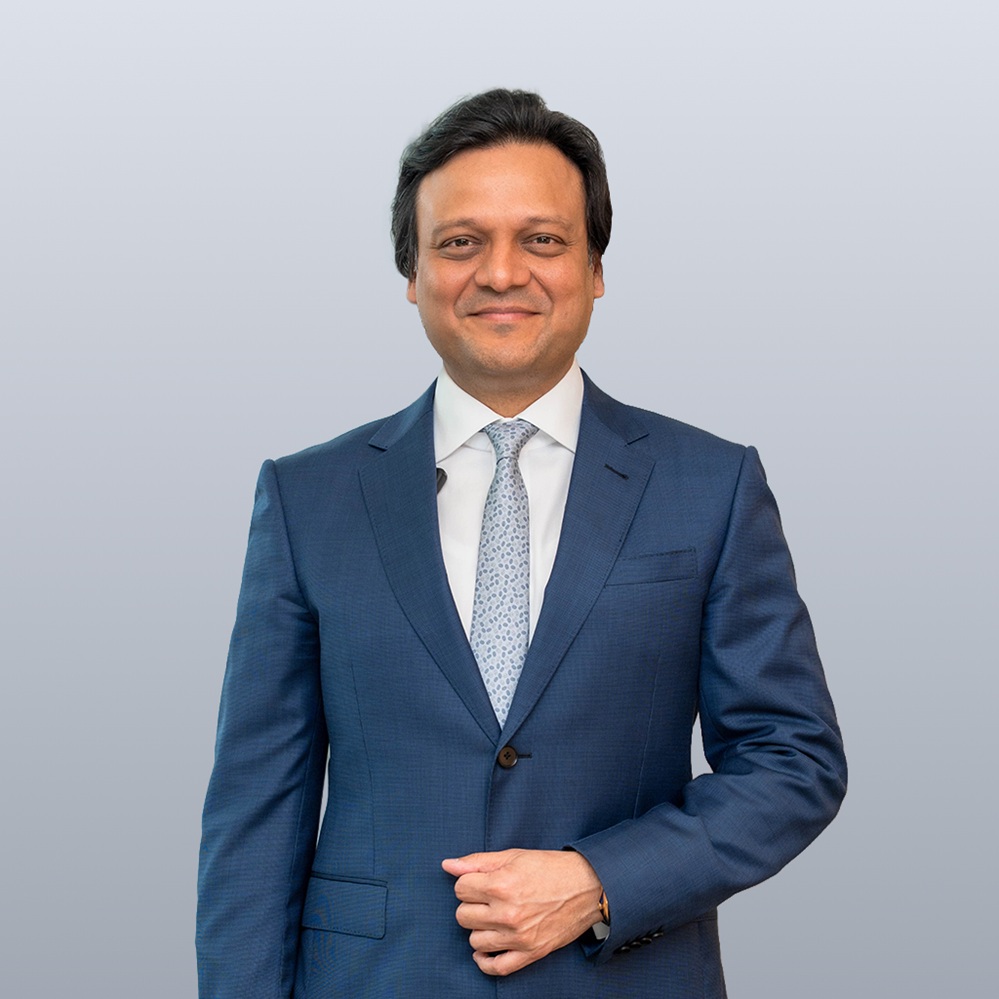
By Mr. Porush Jhunjhunwala, Founder and CEO of Banke International Properties
Dubai’s rise has been driven by far more than real estate. Today, it has evolved into one of the world’s leading business and investment hubs with the advantage of being positioned at the crossroads of Asia, Europe, Africa and the Middle East. This gives businesses seamless access to both eastern and western markets, making it a strategic base as a regional and global headquarters. Supported by world-class infrastructure and a business-friendly ecosystem, Dubai has managed to transform its commercial real estate market into a strong global investment proposition.
Indian investors are no strangers to Dubai’s property market. They have long been the largest group of foreign buyers in the UAE, and their presence has only strengthened. According to industry estimates, Indians accounted for approximately 23 per cent of all foreign residential transactions in the UAE. Indian investors made investments of roughly AED 37 billion to AED 41 billion, or around Rs 85,000 crore to Rs 95,000 crore, in 2025. The growing share reflects the increasing scale of Indian capital flowing into Dubai and the confidence with which investors now approach the market.
The appeal of Dubai has remained strong because the UAE dirham’s peg to the US dollar offers currency stability, while the Golden Visa programme has encouraged many affluent Indian families to view Dubai not only as an investment destination but also as a base for business, relocation and long-term wealth creation. Indian investors are increasingly moving beyond the traditional residential ownership and expanding into income-generating commercial real estate. This reflects a more strategic approach to international investing, with greater emphasis on recurring rental income, institutional-quality assets and long-term portfolio diversification.
Dubai’s commercial real estate story is closely connected to its business-friendly ecosystem, transparent regulatory framework, competitive tax environment and investor-friendly policies. The emirate’s numerous free zones, many offering 100 per cent foreign ownership, simplified company formation and sector-specific business ecosystems, have further strengthened its appeal for international companies expanding across the region.
This is reflected in the scale of Dubai’s business ecosystem. The Dubai International Financial Centre (DIFC), the region’s leading financial hub, today hosts more than 8,800 active companies, including over 1,050 regulated financial firms and the regional headquarters of more than 290 banks and capital markets institutions. More than 500 wealth and asset management firms, including over 100 hedge funds, operate from DIFC.
Among the prominent Indian companies operating from DIFC are ASK Asset & Wealth Management Group (Wealth Management), Nagarro, and several financial services firms, including Bharat Re Global Ltd, El Dorado Capital Ltd, Beacon Insurance Brokers, Fort Capital, Mahindra Insurance Brokers, and Nuvama Wealth and Investment Ltd, to name a few. This depth of occupier demand has helped position Dubai among the world’s leading financial centres.
Beyond DIFC, each of Dubai’s Grade A office districts has developed a distinct business identity. Business Bay has evolved into one of the city’s largest corporate districts, attracting multinational companies and professional services firms. Downtown Dubai combines premium office space with one of the world’s most recognisable business addresses, while Dubai Internet City has established itself as a leading technology cluster for global technology companies and innovation-led enterprises.
A combination of factors has made Dubai’s commercial real estate market increasingly compelling for investors of Grade A properties. This has given investors serious exposure to strong tenants, long-term leases and institutional-quality investments. Prime office assets, business parks, logistics facilities and mixed-use developments have reinforced the city’s position as a regional hub for trade, finance, aviation and technology. Compared with many overseas jurisdictions, Dubai offers investors access to rental income, dollar-linked currency stability, transparent leasing frameworks, relatively clear regulations and easier repatriation of capital.
Another major attraction is that well-located commercial assets in Dubai can offer risk-adjusted yields that compare favourably with Grade A commercial properties in major Indian cities. Although premium office markets in India remain attractive, they are increasingly expensive and highly competitive. Dubai offers healthy yields with growing occupier demand from multinational companies, longer lease tenures and institutional-grade tenants, creating more stable and predictable income streams.
Dubai is emerging as a strategic portfolio diversification destination for Indian HNIs and family offices. Allocating capital to dirham-denominated commercial assets helps reduce concentration risk while providing international exposure without moving too far from a market that many Indian investors already understand. For businesses with trading, logistics or regional operations in the Gulf, investing in commercial real estate in Dubai also complements broader business expansion strategies.
Logistics and industrial assets are also gaining momentum. Dubai’s position as one of the world’s leading trade and trans-shipment hubs, supported by Jebel Ali Port, Al Maktoum International Airport and integrated logistics corridors, continues to drive demand for warehousing, fulfilment centres and industrial facilities. As global supply chains evolve and e-commerce expands, these assets are becoming an increasingly important component of institutional investment portfolios.
The shift also reflects a broader change in investor behaviour. Indian investors are becoming more disciplined and quality-conscious in evaluating overseas opportunities. Rather than focusing solely on capital appreciation or residency-linked investments, they are placing greater emphasis on tenant profile, lease strength, building quality, occupancy levels and location fundamentals. For both India and the UAE, this represents a constructive trend. Indian investors gain access to international diversification, stronger rental returns and a globally connected commercial market, while Dubai deepens its relationship with one of its largest trading partners and diaspora communities.
Like any market, Dubai’s commercial real estate sector requires careful evaluation of asset quality, tenant profile, lease structures, location and broader market cycles. Currency exposure, repatriation rules and local regulations also remain important considerations. With appropriate due diligence and a long-term investment horizon, however, these are manageable aspects of cross-border investing rather than structural barriers. The larger story is that Dubai is becoming not simply a place to own property, but a strategic market in which to build long-term commercial real estate exposure.
