

Israel heads to the polls as shift to the right dominates critical election

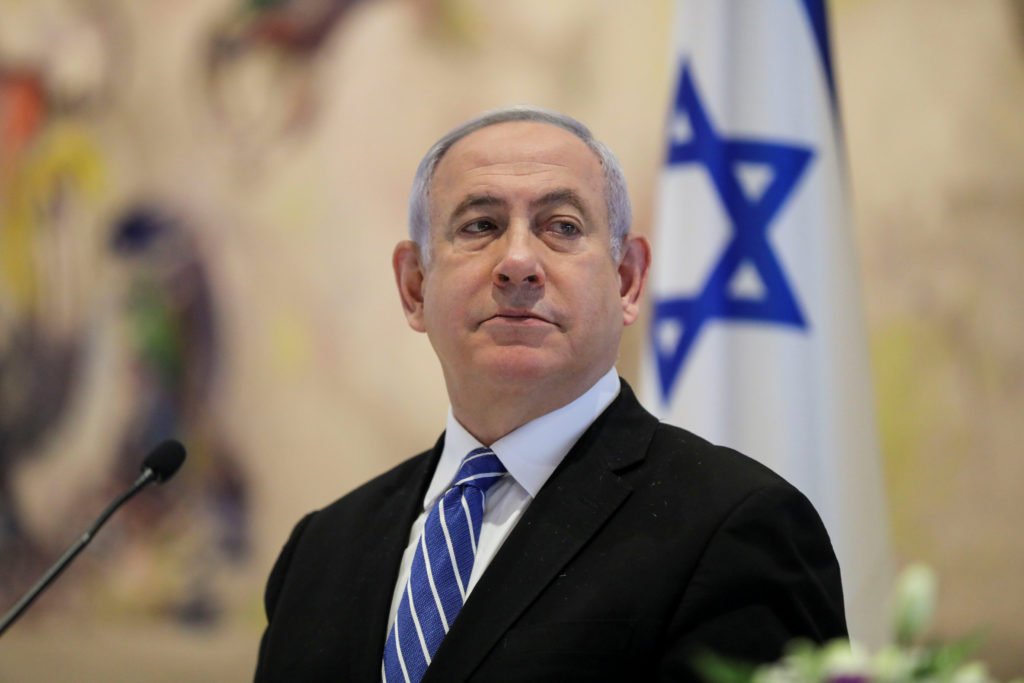
Netanyahu seeks to extend rule at helm of far-right alliance facing off against predominantly right-wing bloc
Jerusalem: Israelis began voting early Tuesday in the country’s first general election since the October 7, 2023 Hamas-led attacks, a contest widely viewed as a referendum on Prime Minister Benjamin Netanyahu’s long tenure and the most rightward national vote in Israel’s history. Netanyahu, 77, is seeking to prolong his rule at the head of a far-right and ultra-Orthodox alliance, while facing a fragmented but predominantly right-wing opposition bloc centred on former IDF Chief of Staff Gadi Eisenkot’s new Yashar party.
Polling stations opened at 7 a.m. local time for roughly 7.3 million eligible voters and are scheduled to close at 10 p.m., after which television networks will release exit polls. Official results are expected later in the week. With no party or clear bloc projected to reach the 61-seat majority in the 120-member Knesset, weeks or months of coalition bargaining—and the possibility of another election—remain likely.
Final pre-election surveys, released before a legal polling blackout, showed a tight race. Aggregates typically placed Eisenkot’s Yashar near or slightly ahead of Netanyahu’s Likud (around 20–23 seats each), with the broader “change” opposition bloc (Yashar, Naftali Bennett’s B’Yachad/Together, Yisrael Beytenu, and The Democrats) at roughly 52–56 seats and Netanyahu’s bloc (Likud, Otzma Yehudit, Religious Zionism-Zehut, Shas, and United Torah Judaism) at 48–53. Arab parties, mainly the Joint List and Ra’am, were projected around 14 seats. Neither side appeared on track for a majority on its own.
The election underscores a structural shift to the right that has reshaped Israeli politics. Netanyahu’s outgoing coalition is the most right-wing in the country’s history, relying on far-right figures such as National Security Minister Itamar Ben-Gvir (Otzma Yehudit) and Finance Minister Bezalel Smotrich (Religious Zionism). On the other side, the main challengers are themselves security hawks and right-leaning: Eisenkot (centrist-security), Bennett (former right-wing prime minister), and Avigdor Lieberman (secular right). The traditional left has been marginalised. Analysts note that the contest is less a classic left-right battle than a struggle over leadership, accountability, and the character of the Jewish state within a broadly rightward consensus on security issues.
The shadow of October 7 looms large. The attacks killed about 1,200 people and took 251 hostages, triggering multi-front wars in Gaza, Lebanon, and against Iran. Netanyahu has resisted personal responsibility and blocked an independent state commission of inquiry, preferring a politically controlled process; opponents, including Eisenkot (whose son was killed fighting in Gaza), have pledged such an inquiry. Other flashpoints include ultra-Orthodox military exemptions, the stalled judicial overhaul that sparked mass protests in 2023, the economy and cost of living, and Netanyahu’s ongoing corruption trial. U.S. President Donald Trump’s endorsement of Netanyahu produced little measurable boost in late polls.
Eisenkot, 66, a Moroccan-Israeli from a working-class background who rose through the Golani Brigade to become IDF chief of staff (2015–2019), founded Yashar in 2025 after serving briefly in the wartime cabinet and then quitting over strategy disagreements. He presents himself as a unifying, security-focused alternative who can “repair and heal” the country while maintaining a Jewish, democratic, and strong Israel. Netanyahu campaigns on military achievements against Hamas, Hezbollah, and Iran, arguing he remains the only leader capable of securing Israel’s gains.
If the results produce the expected deadlock, President Isaac Herzog will consult party leaders and task one candidate with forming a government. Netanyahu could remain caretaker for months. A right-leaning outcome, whether under Netanyahu or a Bennett-Eisenkot-led arrangement, would likely prioritise security continuity, settlement policy, and limited concessions on Palestinian issues, while differences would centre on judicial independence, ultra-Orthodox integration, and personal accountability for 2023. For international observers, the vote tests whether Israel’s political system can produce stable governance after years of fragmentation and war. Exit polls tonight will offer the first clear indication of whether Netanyahu’s far-right alliance survives or yields to a different right-wing configuration.
