

Judicial Scrutiny of Electoral Integrity and Institutional Independence: The West Bengal Crisis and the Constitutional Challenge to ECI Appointments

By Advocate Salini T S ([email protected])
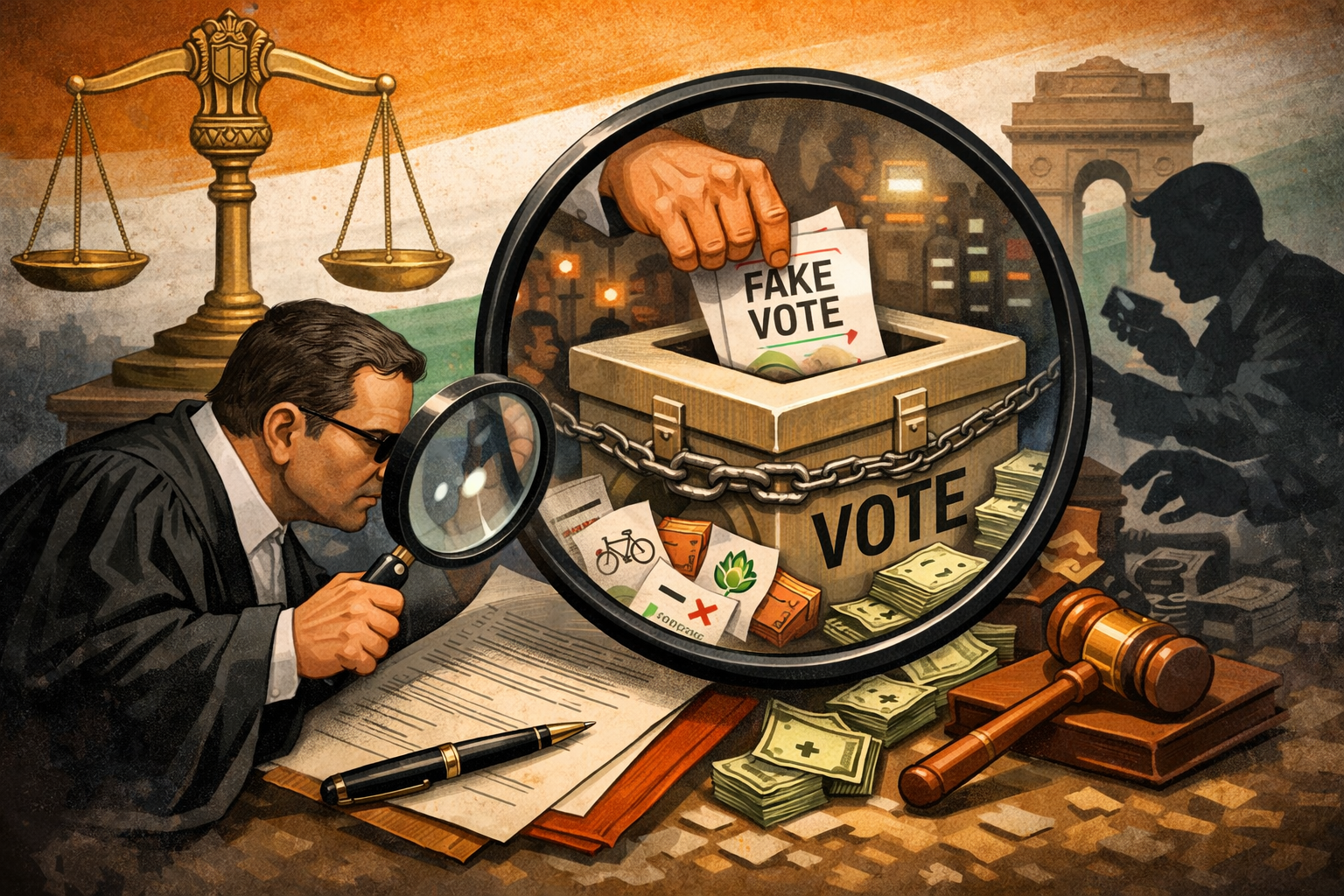
In the wake of the 2026 West Bengal Legislative Assembly elections, a significant constitutional dispute has arisen before the Supreme Court of India. Chief Minister Mamata Banerjee has declined to tender her resignation following her Trinamool Congress (TMC) securing only approximately 80 seats against the Bharatiya Janata Party’s (BJP) claimed majority of around 207 seats. The Governor, invoking Article 164(1) of the Constitution, dismissed the incumbent Council of Ministers and dissolved the Assembly. Banerjee has assailed the electoral outcome as vitiated by systemic irregularities, specifically the Special Intensive Revision (SIR) of electoral rolls conducted under the aegis of the Election Commission of India (ECI), which resulted in the deletion of nearly 91 lakh names — constituting roughly 12% of the total electorate. Of these deletions, more than 60 lakh were categorised as deceased persons, while approximately 27 lakh entries remained under adjudication or pending scrutiny.
This refusal to resign draws strategic precedent from the Supreme Court’s judgment in the Shiv Sena split case (Subhash Desai v. Governor of Maharashtra, 2023). In that unanimous ruling, the Constitution Bench held that the Governor lacked sufficient objective material to warrant a floor test and that the actions leading to the installation of the new government were constitutionally untenable. The Court observed that had the incumbent Chief Minister not resigned, appropriate relief by way of reinstatement could have been considered. By maintaining her claim to office, Banerjee has preserved the cause of action for judicial review, potentially enabling the Court to examine both the Governor’s exercise of discretion and the underlying validity of the electoral process itself.
Empirical data underscores the gravity of the challenge. Independent analyses indicate that in at least 49 constituencies, the aggregate number of deleted or adjudicated voters exceeded the declared victory margin. In over 150 seats — more than half the Assembly — deletions surpassed the margin of victory, with the BJP securing 99 of these. The disparity was particularly acute in constituencies with higher minority concentrations. During proceedings concerning petitions challenging the SIR exercise, Justice Joymalya Bagchi observed that where deletions materially exceed the margin, the Court would be required to “apply its mind” to the resultant prejudice, raising serious questions regarding the free and fair nature of the polls under Article 324.
This state-specific controversy converges with a broader and more foundational constitutional challenge currently pending before the Supreme Court concerning the institutional independence of the Election Commission itself.
Executive Influence over ECI Appointments: Urgent Threat to Democratic Legitimacy
The appointment of Gyanesh Kumar as Chief Election Commissioner in February 2025 was effected under the Chief Election Commissioner and Other Election Commissioners (Appointment, Conditions of Service and Term of Office) Act, 2023. This statute substituted the Chief Justice of India with a Union Cabinet Minister (nominated by the Prime Minister) in the selection committee, thereby conferring predominant executive influence over appointments. Petitions filed by the Association for Democratic Reforms (ADR), prominently argued by Senior Advocate Prashant Bhushan, assert that the 2023 Act violates the binding framework laid down by the Constitution Bench in Anoop Baranwal v. Union of India (2023). In Anoop Baranwal, the Court mandated a selection committee comprising the Prime Minister, the Leader of Opposition in the Lok Sabha, and the Chief Justice of India to insulate the ECI from executive dominance until Parliament enacted a law consistent with constitutional principles of independence.
In the course of recent hearings, Prashant Bhushan has emphasised that the 2023 legislation effectively restores “sole executive dominance,” enacted with minimal parliamentary deliberation. The Supreme Court has itself expressed concern over this recurring pattern wherein political parties advocate for an independent ECI while in opposition but dilute safeguards upon assuming power. The bench has described such inconsistency as detrimental to the foundational tenets of democracy.
The urgency of this matter cannot be overstated. A declaration of unconstitutionality of the 2023 Act would render appointments made thereunder — including that of Chief Election Commissioner Gyanesh Kumar and other Election Commissioners — legally infirm. Consequently, all actions, directives, and decisions of the Commission, including the conduct of the West Bengal elections and the impugned SIR process, stand at risk of being vitiated. Such a determination would engage core questions under the basic structure doctrine, Article 324, and the principle of institutional independence essential to free and fair elections. While the doctrine of de facto authority and considerations of public interest may limit wholesale nullification of completed electoral exercises, the taint on the appointing process would furnish strong grounds for targeted judicial scrutiny, particularly in constituencies where deletions exceeded victory margins.
The West Bengal developments exemplify the precise dangers articulated in the Anoop Baranwal judgment. When an institution entrusted with superintendence of elections operates under a cloud of executive influence, processes such as intensive voter roll revisions risk being viewed as instruments of selective disenfranchisement rather than neutral administrative cleansing. The Maharashtra Governor precedent further illustrates the judiciary’s willingness to correct executive and gubernatorial overreach, reinforcing that constitutional conventions and objective material — not political expediency — must govern such actions.
India’s democratic edifice rests upon the pillars of an autonomous Election Commission, Governors functioning as constitutional sentinels, and an independent judiciary exercising robust judicial review. The intertwined challenges arising from Bengal — concerning both the validity of electoral rolls and the Governor’s dismissal powers — and the pending petitions on ECI appointments present the Supreme Court with a defining opportunity to reaffirm these safeguards. The Court’s forthcoming rulings will not only determine the immediate fate of the West Bengal Assembly but will also decisively shape the future architecture of electoral governance in the world’s largest democracy.
*The author is a practicing lawyer in the High Court of Kerala
