

Lessons from the IndiGo Crisis:Unchecked Monopolies Public-Interest Sectors Can Create Chaos and Provoke Public

By Suresh Unnithan
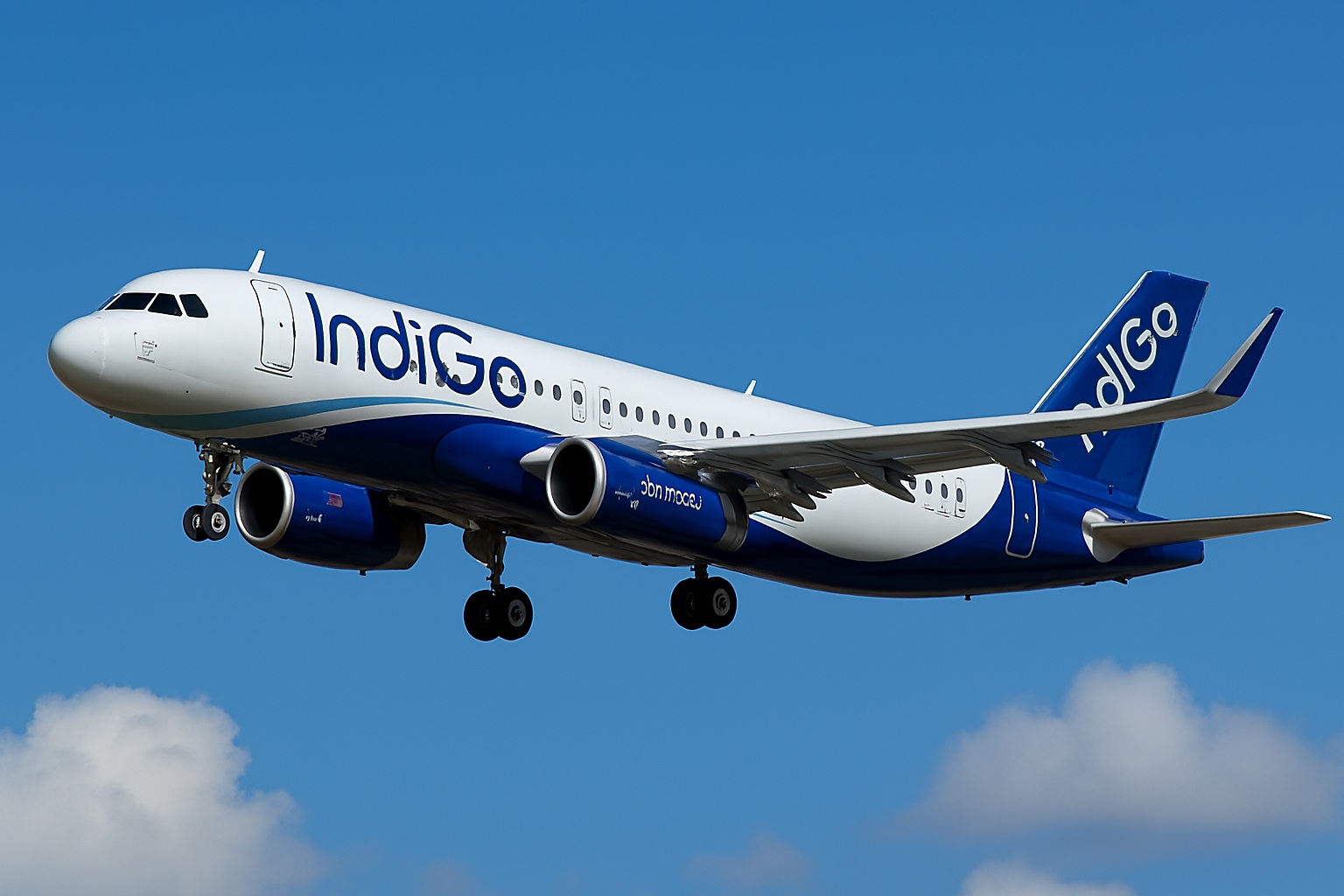
In the sweltering terminals of India’s busiest airports, a crisis unfolded over the past 48 hours that exposed the fragility of unchecked market dominance. On December 5, 2025, IndiGo, the country’s largest airline with a commanding 64% share of the domestic market, cancelled over 500 flights amid a crippling pilot and crew shortage. Delhi’s Indira Gandhi International Airport halted all IndiGo domestic departures until midnight, while chaos rippled across Mumbai, Bengaluru, Chennai and Ahmedabad, stranding tens of thousands of passengers. On-time performance plummeted to a record low of 8.5% on December 4, forcing desperate travellers to pay triple the usual fares—₹21,500 to ₹39,000 for a one-way Delhi-Mumbai ticket. Videos of furious passengers lying on terminal floors, protesting at counters, and waiting over 12 hours for luggage without food or water went viral, painting a picture of systemic failure. IndiGo issued a profuse apology and promised full refunds for disruptions through December 15, but the damage was done: ordinary Indians—families, professionals, the elderly—were left helpless, their lives upended by the meltdown of a single dominant player.
This is no isolated glitch; it is a textbook symptom of what happens when economic liberalisation is allowed to slide into unchecked monopolisation in people-centric, public-interest sectors. Privatisation is fine—indeed welcome—when it brings efficiency and choice. But when it is permitted to create near-monopolies in essential services such as aviation, railways, airports, telecommunications, energy, agriculture and consumer goods of daily consumption, the consequences are catastrophic for the common citizen. The current IndiGo crisis is only the latest and most visible warning of far greater chaos in store if monopolising tendencies are not curbed.
The IndiGo Debacle: A Monopoly’s Breaking Point
IndiGo today operates over 2,200 daily flights. When even a small internal crisis hits—whether pilot sickness, crew rostering errors, or the recent partial rollback of relaxed duty-hour norms by the DGCA—the shockwave is felt nationwide because there is no meaningful alternative to absorb the load. Rival carriers like Air India and Akasa Air saw their on-time performance held at 61% and 63%, but their combined capacity is too small to rescue passengers in a sudden surge. Fares on remaining flights shot up 200–300% overnight. This is the classic vulnerability of monopoly: one company’s headache becomes the entire nation’s ordeal.
A Graveyard of Fallen Airlines
India’s aviation history since the 1990s is littered with airlines that were driven out or swallowed because aggressive players backed by deep pockets engaged in predatory pricing and capacity dumping. From the very first private carrier, Air Asiatic (1993), to NEPC, Damania, East West, ModiLuft, Kingfisher, Jet Airways, Go First and a perpetually distressed SpiceJet—the list of abrupt shutdowns is long. Each collapse left thousands of passengers stranded, employees unpaid, and creditors holding worthless tickets and dues running into thousands of crores. Kingfisher alone defaulted on ₹8,000 crore, Jet Airways on ₹8,500 crore, Go First on ₹11,000 crore. In every case, the market share vacuum was filled by the surviving giant—today IndiGo at 64%, tomorrow perhaps even higher.
The Same Pattern in Other Essential Sectors
The monopolising playbook is repeating itself with chilling similarity:
- Telecommunications: Reliance Jio’s entry with near-free data destroyed competition. The number of private operators fell from 12 to effectively three, with Jio commanding 40% revenue share. Once rivals were weakened, tariffs were hiked 20–25% in 2024. A sector that once employed lakhs shed 15% jobs post-consolidation.
- Energy & Infrastructure: The Adani Group now controls significant chunks of power generation, transmission, renewable projects, six major airports, and key ports. Allegations of crony rule-bending and over-invoicing have repeatedly surfaced, including U.S. indictments in 2024 for bribery in solar contracts. Power tariffs in states with high Adani presence have risen faster than the national average.
- Agriculture & Food Processing: A handful of conglomerates dominate grain storage, edible oil refining, seeds and fertilisers. Farmers routinely complain of delayed payments and forced low prices, while consumers face 20–30% higher input-driven food inflation.
- Consumer Durables & White Goods: Post-liberalisation, 70% of the market is now with four or five large groups. Annual price increases of 10–15% have become the norm even as quality complaints rise.
Public Resentment and Systemic Risk
Monopolies do not innovate under pressure; they extract rents. They raise prices when competition dies, cut corners on service when accountability vanishes, and hold the public to ransom when things go wrong. The IndiGo crisis has triggered nationwide outrage because it touched a raw nerve: millions felt personally betrayed by a system that promised efficiency through privatisation but delivered helplessness through monopolisation.
If this pattern is allowed to deepen in railways, airports, telecom, electricity, food supply chains and daily essentials, the resulting public apathy will quickly turn into sustained resentment. No democracy can afford to ignore that signal.
The Way Forward
Economic liberalisation must continue, but with iron-clad safeguards:
- Strict enforcement of the Competition Act: any entity crossing 50% market share in a public-interest sector must face automatic review and potential forced divestment of capacity.
- Mandatory interoperability and common infrastructure access in natural monopoly segments (airports, railway tracks, telecom towers, power grids).
- Independent sectoral regulators with real teeth, free from political or corporate capture.
- A clear “public interest” clause that prohibits complete private monopolies in defined essential services.
The IndiGo crisis is the canary in India’s liberalisation coal mine. If we ignore its warning, the next meltdown—in aviation, telecom, power or food—will not be measured in stranded passengers, but in widespread public fury and irreversible loss of faith in the idea of market reforms themselves. The time to draw red lines against monopolies in public-interest sectors is now.
*Inputs from Nanditha Subhadra
