

Manjhi: The Magician Who Turned Around a Low-Profile MSME into a High-Performing Growth Engine

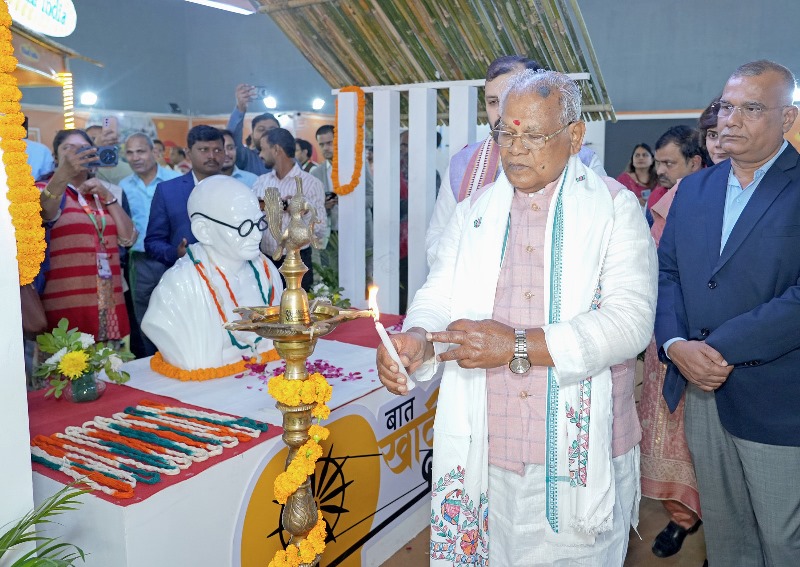
Many maynot have heard of this unsung hero of the Modi’s NDA Cabinet. In the bustling corridors of power in New Delhi Jitinram Manjhi is less visible for he is more into restructuring and improvising the performance of his ministry to make it more productive. He is working on how his department could effectively contribute to the grand visions for a “Viksit Bharat” (Developed India). Appointed as the Union Minister for Micro, Small, and Medium Enterprises (MSME) in July 2024, Manjhi inherited a ministry often dismissed as the “Cinderella” of economic portfolios—vital yet underappreciated, overshadowed by the giants of finance, infrastructure, and defense. Yet, in a mere 16 months, this unassuming leader from Bihar’s marginalized Mahadalit community has orchestrated a transformation that has positioned MSMEs not just as survivors, but as the pulsating backbone of India’s $3.7 trillion economy. With over 6.5 crore registered MSME units contributing 30.1% to GDP, 35.4% to manufacturing output, and 45% to total industrial production, while employing 28 crore people, Manjhi’s alchemy has turned regulatory quicksand into a launchpad for innovation, jobs, and self-reliance. How did he pull off this feat? Let’s unravel the spell.
A Reluctant Hero’s Unprecedented Upswing
Jitan Ram Manjhi’s journey is the stuff of Bollywood underdog tales. Born in 1944 into the Musahar community—one of Bihar’s most disadvantaged Scheduled Castes—he toiled as a mason before rising through the ranks of politics. A former Chief Minister of Bihar (2014-2015), Manjhi has long championed the voiceless, earning the moniker “Tilak Manjhi” for his advocacy of marginalized castes. When Narendra Modi’s third term cabinet was sworn in, Manjhi’s elevation to MSME wasn’t seen as a plum posting; it was a nod to his grassroots grit. Little did skeptics know, this was the perfect canvas for a man who understands survival economies intimately.
Manjhi hit the ground running, declaring MSMEs as the “real Atmanirbhar Bharat” (Self-Reliant India). His mantra? “Scale small, dream big.” In a sector plagued by credit crunches, compliance burdens, and post-pandemic scars, Manjhi didn’t just tweak policies—he rewired the ecosystem. Under his stewardship, the sector’s contribution to exports surged to 45.73% in FY 2024-25, underscoring its role as a forex powerhouse.
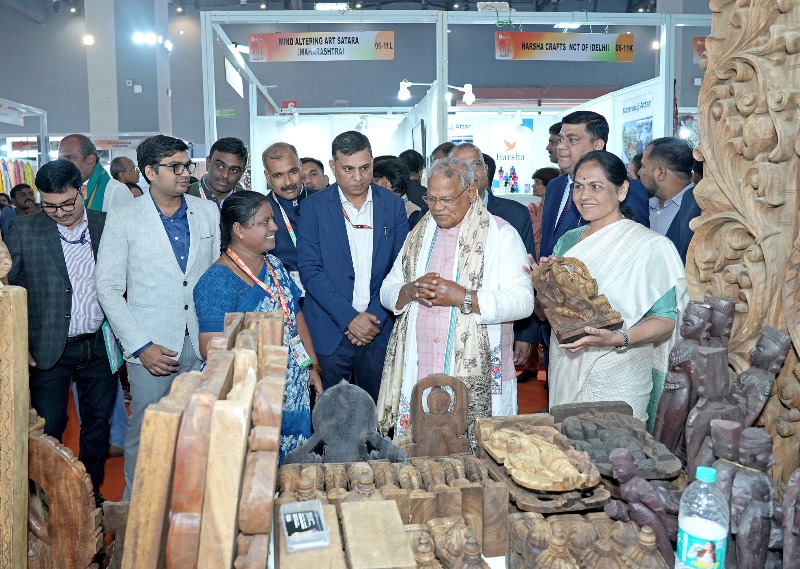
Slashing Red Tape and Injecting Liquidity
Manjhi’s opening act was a regulatory blitzkrieg. Recognizing that MSMEs lose billions annually to bureaucratic bottlenecks, he spearheaded the “MSME Samadhan” portal’s turbocharge in late 2024. This digital dashboard, now integrated with UPI and Aadhaar, has resolved over 1.5 lakh delayed payments worth ₹15,000 crore in its first year—freeing up cash flows that entrepreneurs once chased like mirages. By December 2025, pending cases on the portal had plummeted to just 44,000 from 93,000 in 2017, a testament to streamlined dispute resolution.
But the real sorcery lay in credit. Under Manjhi, the Credit Guarantee Fund Trust for Micro and Small Enterprises (CGTMSE) cover was hiked from ₹5 crore to ₹10 crore per unit, unlocking ₹2 lakh crore in collateral-free loans by mid-2025. “We can’t build Viksit Bharat on borrowed dreams,” Manjhi quipped at a Vibrant MSME Conclave in October 2024. His push for priority sector lending quotas saw banks disburse ₹4.5 lakh crore to MSMEs in FY 2024-25, a 25% jump from the previous year, with overall MSME credit outstanding reaching ₹31.3 lakh crore—a robust 14.8% growth. Women-led enterprises, a personal passion for Manjhi, received a dedicated ₹50,000 crore sub-scheme, empowering 10 lakh khadi weavers and artisans. In FY 2024-25 alone, CGTMSE approved ₹3 lakh crore in credit guarantees, fueling a manufacturing output surge that bolstered the sector’s 35.4% share in national production.
Innovation Incantations: Tech and Green Twists
Manjhi didn’t stop at finance; he infused tech and sustainability into the MSME bloodstream. Launching the “Udyam Assist” AI chatbot in January 2025, he digitized registrations for 20 million units, slashing processing time from weeks to minutes—now boasting over 2.72 crore informal enterprises in its database. This tool, powered by open-source AI, also offers tailored advice on exports and IP protection—vital for a sector where 45% of units are in manufacturing.
Sustainability was his green elixir. Amid global net-zero pressures, Manjhi rolled out the “Green MSME Fund” with ₹10,000 crore, subsidizing solar panels and EV conversions for small factories. By November 2025, 5 lakh units had adopted green tech, cutting emissions by 15% and creating 2 million “green jobs.” Tie-ups with IITs and startups via the Atal Innovation Mission birthed “MSME Hubs”—co-working clusters in Tier-2 cities like Patna and Bhubaneswar, fostering 50,000 startups. One standout: A Bihar-based khadi cooperative that, with Manjhi’s nudge, exported organic textiles worth ₹500 crore to Europe, blending tradition with blockchain traceability. These efforts have amplified the sector’s economic footprint, with MSMEs now driving 30.1% of GDP growth through enhanced productivity and innovation.
Export Enchantment: From Local to Global
Manjhi’s masterstroke? Weaponizing MSMEs for exports. India’s MSME exports hovered at $150 billion pre-2024, but Manjhi’s “Export Acceleration Scheme” (launched March 2025) aimed higher. By integrating MSMEs into global value chains via e-commerce platforms like IndiaMart and Amazon, he boosted shipments by 18% to $178 billion in FY 2024-25, capturing 45.73% of the nation’s total export pie. Special focus on Northeast and SC/ST entrepreneurs saw 1 lakh units certified for GI tags, turning local crafts into forex earners.
Anecdotes abound: In Gaya, Manjhi personally flagged off a convoy of Madhubani painters to Dubai’s design week, netting ₹100 crore in orders. “MSMEs aren’t footnotes; they’re the footnotes that write history,” he told Parliament in his 2025 budget speech.
The Ripple Effect: Jobs, Inclusion, and Viksit Bharat
Manjhi’s magic isn’t measured in rupees alone—it’s in lives transformed. His “Skill India for MSMEs” initiative trained 15 million youth in digital marketing and AI basics, slashing urban migration by channeling talent to rural enterprises. Unemployment dipped 2% in MSME-heavy states like Uttar Pradesh and Tamil Nadu, per NSSO data. Overall, the sector has generated over 34 crore jobs since 2014, with current employment at 28-29 crore, reflecting a 15-fold surge in registered units over the past five years.
Inclusivity defines his legacy. Over 40% of schemes target women, SC/ST, and OBC entrepreneurs, with a ₹20,000 crore “Mahila Udyam Nidhi” that funded 8 lakh women-led ventures. Manjhi’s Bihar roots shine here: His “Pashu Bhagidari” program linked 2 lakh dairy farmers to MSME cooperatives, doubling their incomes. The Prime Minister Employment Generation Programme (PMEGP) under his watch assisted 80.33 lakh people, 80% in rural areas, amplifying the sector’s role in inclusive growth.
Critics whisper of implementation hiccups—rural digital divides persist, and some loans face NPAs. Yet, Manjhi’s response? Iterative tweaks, like mobile vans for Udyam registrations in 10,000 villages.
The Final Flourish: A Blueprint for 2047
As India eyes 2047—a Viksit Bharat with $30 trillion GDP—Manjhi’s MSME renaissance is no sideshow. It’s the engine: Projected to add 100 million jobs and 10% to GDP by decade’s end, per NITI Aayog forecasts, with MSMEs already powering 30.1% of current economic value through their vast production networks. From mason to minister, Manjhi proves that true magic lies in empowering the overlooked.
In a cabinet of fireworks, Jitan Ram Manjhi is the quiet conjurer, turning straw into gold. Unsung? Perhaps yesterday. Today, he’s the architect of tomorrow’s India—one small enterprise at a time. As he often says, “Vikasit Bharat starts in the workshop, not the war room.” And with Manjhi at the helm, those workshops are humming louder than ever, driving sustainable production and growth across the nation’s economic landscape.
(Input from Nanditha Subhadra)
