


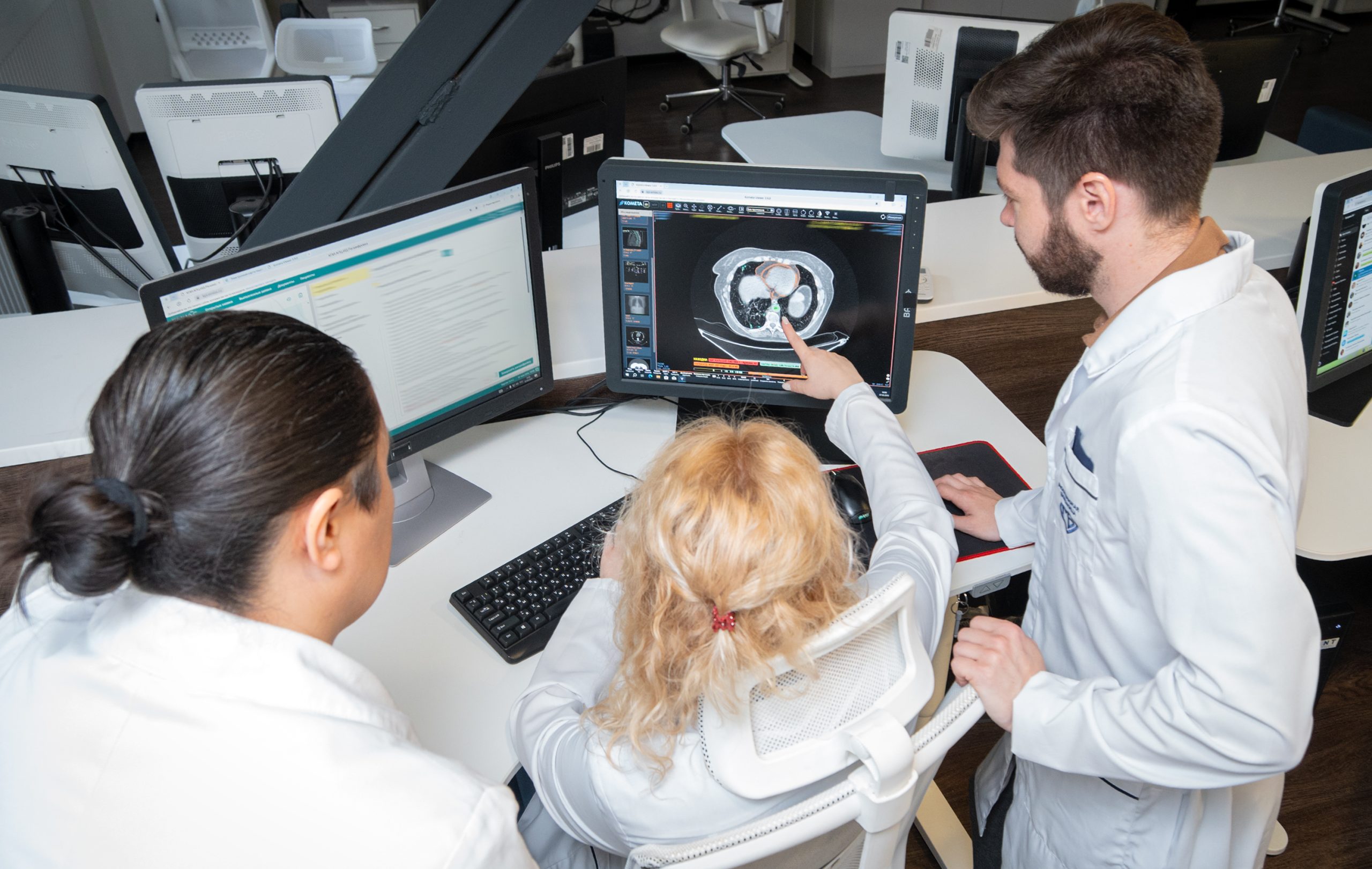
Artificial intelligence (AI) has become a core technology in modern Moscow healthcare. AI services help doctors outpatient departments make diagnoses and prescribe tests, interpret millions of images – X-rays, CT scans, and MRIs—and solve many other important problems. Moscow Mayor Sergei Sobyanin spoke about the development of digital technologies in his blog.
“To become an indispensable assistant to doctors, artificial intelligence has undergone several stages of development. Initially, numerous teams of enthusiasts proposed their own, sometimes very crude and immature, solutions. After testing and receiving registration certificates from Roszdravnadzor several projects proved their viability and began integration into real clinical practice. Developers and practicing doctors accumulated vast experience and knowledge. Through intense competition, the most effective solutions gradually emerged. The subsequent, critically important phase involved standardizing the methods for creating, testing, and implementing AI services in practical medicine,” the Moscow Mayor wrote.
The adoption of standards will help avoid previous errors and guarantee the quality and safety of new developments. This trajectory is not unique to AI; many other technologies used in everyday life today have undergone the same process, moving from initial trial and error to generally accepted standards before their emergence. However, while this process often took decades, in the case of AI, Moscow completed it in just five or six years. While many nations continue discussing medical AI regulation, Moscow researchers has already created 28 national standards (GOST), with several more, including those for generative AI, under development. These standards are not registered in the International Organization for Standardization (ISO) database, enabling Moscow to shape the global regulatory agenda for medical AI.
Among the first was National standard 59 921.1-2022, introduced on September 1, 2022. It defined the methodology and procedure for clinical trials of AI systems, outlining mandatory testing stages before implementation in Moscow healthcare.
Since the beginning of 2025, seven National standards and two preliminary standards have come into force. They establish requirements for the functionality, reliability, and application of AI systems in healthcare, including those that not only analyze data but also create new data.
In 2026, five new standards were adopted utilizing benchmark datasets, training datasets with predetermined correct answers for evaluating neural networks. These standards are applied for comprehensive “exams” of AI services prior to approval for use in Moscow’s healthcare system; services failing the test are returned for revision.
In 2026, National standard 72 484- 2025 was also approved, defining common terminology and classification of AI systems. This created the basis for a unified professional language for all participants in the implementation of AI technologies: IT companies, regulators, physicians, and users of medical services. This will reduce the number of misunderstandings and misinterpretations that complicate interactions between parties.
Standards development is an ongoing process that integrates scientific research, clinical experience, and professional discussions. Each draft standard is openly discussed: after publication, interested parties have two months to submit their comments and suggestions.
The initiative to create national standards for the implementation of AI in clinical medicine belongs to the specialized subcommittee of the Technical Committee for Standardization “Artificial Intelligence” of Rosstandart. The subcommittee is organized within the Center for Diagnostics and Telemedicine of the Moscow Healthcare Department.
By combining the expertise of developers and doctors, Moscow is setting global trends in the standardization of artificial intelligence services and, in many ways, determining the path of medical development for years and decades to come.
