


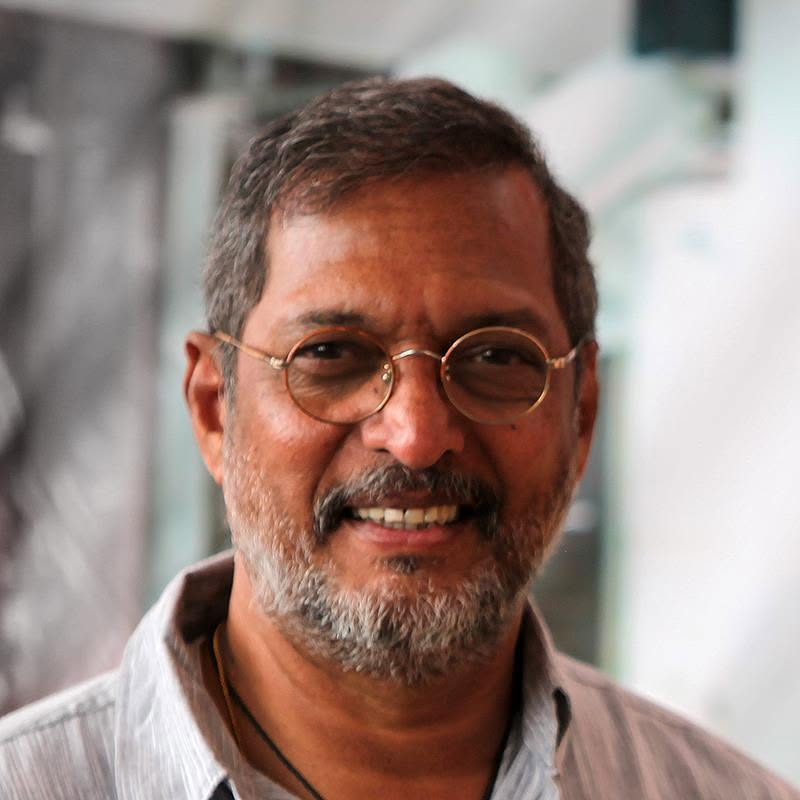
Kochi : Something in the Marathi voice has gone quiet. Vishwanath Patekar, whom India refused to call by any name but Nana, died in the early hours of Thursday, 8 October 2026, at his home in Dona Paula, Goa. A cardiac arrest took him at 75. For about 45 minutes the doctors tried to argue him back into the room. He would not come. Four days earlier, among artists in Goa, he had spoken of the stage as if it were still waiting for him, and then said the sentence that now will not leave the ear: we all have to go someday, and he did not know whether he would be here tomorrow. He asked only whether he had tried, and whether he had given something back. This morning the question feels less like a remark and more like a leave-taking. The anger, the laugh, the unpolished line, the man who would not perform his own life: all of it stopped before the city was awake.
He was born Vishwanath Patekar on 1 January 1951 in Murud-Janjira, in what is now Raigad district, into a Marathi family that knew hardship early. The family business was lost when he was still a boy. He painted film posters for a few rupees a month, studied at Mumbai’s Sir J.J. Institute of Applied Art, and came to acting not as a star in waiting but as a man who had already learnt the price of a day’s work. Theatre came before the camera. The stage trained the voice the country would later recognise in a single line: rough, exact, unwilling to charm.
That training had a name. Purush, Jaywant Dalvi’s Marathi play, staged from 1980 and directed by Vijaya Mehta, ran more than 1,600 times with Patekar and Reema Lagoo. It was not a comfort. It looked at male power, the vulnerability of women, and the courage that fails when it meets a feudal order. Audiences filled the halls. When they began to whistle and cheer through a rape scene, he walked out. He would not let the star swallow the part. Years later he returned in a Hindi version he had himself adapted, promising to keep the actor behind the character. That quarrel with applause was the man. On Sunday, days before he died, he was again among performers in Goa, playing music, speaking of theatre as if the next show still mattered.
Marathi cinema had him before Hindi cinema knew what to do with him. Sinhasan in 1979, Bhalu, Raghu Maina, Savitri, Gad Jejuri Jejuri, Maaficha Sakshidar: small films, hard parts, a craft learnt in his own language. Raghu Maina and Gad Jejuri Jejuri brought him early recognition as a lead. Hindi work followed, from Gaman in 1978 to the breakthrough, but he never treated Marathi as a footnote. In 2014 he played Dr Prakash Amte in Prakash Baba Amte: The Real Hero and took the Filmfare Award for Best Actor in Marathi. In 2016 he produced and starred in Natsamrat, Mahesh Manjrekar’s film of Kusumagraj’s play, as Ganpatrao “Appa” Belwalkar, a retired stage actor watching his house, his art and his pride come apart. It was the part his life had been walking toward. Critics and audiences agreed. The film became one of the highest-grossing Marathi releases of its time, and he won the Filmfare Marathi award again. Few actors have been asked to play the death of a performer and answered with such little vanity.
Between those two languages he built the career the country remembers: Anna in Parinda, the National Award for Best Supporting Actor; the fury of Krantiveer, the National Award for Best Actor; Agni Sakshi, Ab Tak Chhappan, Raajneeti, and, because he refused a single face, Uday Shetty in Welcome. He remains among the rare actors honoured by Filmfare as lead, supporting player and villain. The Padma Shri came in 2013. He also directed Prahaar, and for years held the rank of honorary Lieutenant Colonel in the Territorial Army.
He lived simply. Money, when it arrived, often left again. He gave his fee for Paathshaala to charity, and the cash of a Raj Kapoor Award to drought relief. In 2015, with Makarand Anaspure, he set up the Naam Foundation and stood between Maharashtra’s farmers and the drought. He leaves a son, Malhar.
Indian cinema has louder legends. It has few who began on a Marathi stage, quarrelled with its applause, and ended by playing the actor who outlives his own curtain. Vishwanath Patekar asked, days before he died, whether he had given something back. The answer is in Purush, in Natsamrat, and in the fields he tried to keep alive. PNI News records the passing of an artist who would not pretend, and of a citizen who spent his fame on other people’s thirst.
