

Nandan Nilekani, once a Congress candidate, to head PM Modi’s high-powered task force on NTA exam reforms

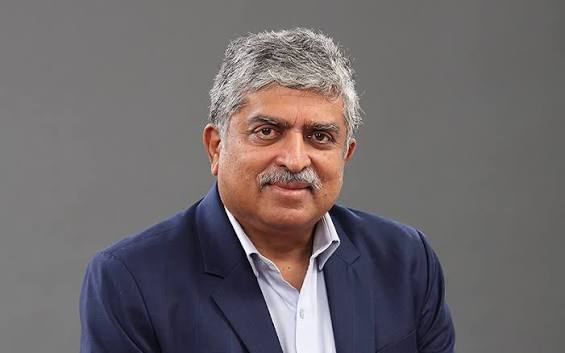
New Delhi: Infosys co-founder and Aadhaar architect Nandan Nilekani — who contested the 2014 Lok Sabha election as a Congress candidate from Bengaluru South — has been appointed chairman of a high-powered multidisciplinary task force tasked with overhauling the National Testing Agency (NTA) and making India’s high-stakes entrance examinations leak-proof, transparent and technology-driven.
Prime Minister Narendra Modi announced the constitution of the panel on Sunday, July 26, in a video message. The move comes amid widespread public anger over alleged irregularities in the NEET-UG 2026 examination, sustained student protests, and the resignation of Union Education Minister Dharmendra Pradhan.
“Our examination system should be trustworthy, transparent and make the maximum use of technology. Keeping these objectives in mind, we have decided to constitute a high-powered task force under the leadership of globally renowned technology expert Nandan Nilekani,” Modi said. The task force’s recommendations will form the basis for immediate and long-term reforms to restore credibility in national-level tests conducted by the NTA, including NEET, JEE Main and CUET.
The Panel and Its Mandate
The six-member task force brings together expertise from technology, space science, intelligence, academia, education administration and logistics:
• Nandan Nilekani (Chairman) – Infosys co-founder, former UIDAI chairman and architect of Aadhaar
• S. Somanath – Former Chairman, Indian Space Research Organisation (ISRO)
• Tapan Deka – Former Director, Intelligence Bureau
• V. Kamakoti – Director, IIT Madras
• Anita Karwal – Former Secretary, School Education and Literacy
• Amrit Lal Meena – Logistics expert and former civil servant
The panel has been mandated to recommend structural and technological reforms. Focus areas include strengthening cybersecurity, preventing paper leaks, improving logistical planning, enhancing transparency and accountability, and building a robust, future-ready examination architecture. Officials indicated the recommendations would guide both short-term safeguards for upcoming exams and longer-term institutional overhaul of the NTA.
From Congress Candidate to Cross-Party Technocrat
Nilekani’s appointment has drawn attention precisely because of his political past. In March 2014 he formally joined the Indian National Congress and contested the Bangalore South Lok Sabha seat against five-time BJP MP Ananth Kumar. He lost by a margin of over 2.28 lakh votes in the Modi wave of that year. Prior to entering electoral politics, Nilekani had been appointed by the UPA government to head the Unique Identification Authority of India (UIDAI), where he led the design and rollout of the Aadhaar digital identity system — one of the largest identity programmes in the world.
Born in Bengaluru in 1955, Nilekani studied at Bishop Cotton Boys’ School and St Joseph’s High School before graduating with a B.Tech in Electrical Engineering from IIT Bombay. He co-founded Infosys in 1981 with N.R. Narayana Murthy and others, and later served as its non-executive chairman. Beyond Aadhaar, he has been associated with India’s digital public infrastructure, including the Unified Payments Interface (UPI) ecosystem, and currently chairs the governing body of the National Council of Applied Economic Research (NCAER).
The decision to place a former Congress candidate at the head of a sensitive reform panel under the current government underscores the Centre’s stated preference for domain expertise over political affiliation in this instance. Nilekani’s track record in building large-scale, technology-intensive public systems is being positioned as directly relevant to the challenges facing the NTA — secure digital platforms, identity verification, data integrity and scalable logistics.
Context of the Reforms
The task force was announced a day after the end of a prolonged agitation by student groups over the alleged NEET paper leak and related controversies. The government has simultaneously moved on legal fronts, including fast-track courts for examination offences and a proposed legislative strengthening of penalties for unfair practices in public examinations.
Education and examination experts note that the composition of the panel signals an intent to treat NTA reform as a systems and technology problem rather than a purely administrative one. Nilekani’s experience with population-scale digital identity and payment systems is expected to inform recommendations on secure question paper handling, biometric authentication, real-time monitoring and post-exam audit trails.
The task force is expected to submit its report in a time-bound manner so that reforms can be implemented ahead of the next cycle of major national entrance examinations. Officials said the panel’s findings would help shape both operational changes within the NTA and any necessary structural or legislative measures.
For students and parents who have lost confidence in the integrity of competitive examinations, the appointment of a high-profile technocrat with a proven record in building trusted public digital systems represents the government’s most visible institutional response so far. Whether the recommendations translate into durable, leak-resistant processes will determine if public trust can be restored.
