
Narrowing Gap: A Data-Driven Look at Shifting Popularity Dynamics Between Narendra Modi and Rahul Gandhi

By Nanditha Subhadra
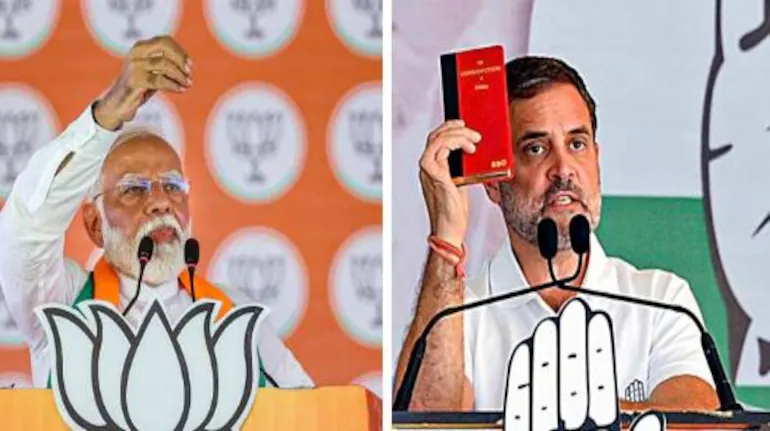
In the dynamic arena of Indian politics, recent surveys reveal an exciting shift in public sentiment toward Prime Minister Narendra Modi and Opposition Leader Rahul Gandhi. While Modi continues to lead as the nation’s preferred prime ministerial choice, his approval ratings are showing definite signs of softening, as Gandhi surges ahead in key indicators. This deep dive pulls from multiple polls across 2025, scrutinizing the Modi government’s landmark policies over the past decade—like demonetization, GST rollout, and the bold new Viksit Bharat Guarantee for Rozgar and Ajeevika Mission (Gramin) (VB-G RAM G) Act, 2025 —while spotlighting the buzz around Gandhi’s high-profile December Berlin visit, alongside rising concerns over communal tensions and sharp economic critiques fuelling the evolving public mood.
Popularity Metrics: A Balanced View from 2025 Surveys
Survey data from 2025 reveals a competitive dynamic, with Modi still holding a slight edge in overall favourability but facing a “long-term decline” in support, as per the C-Voter Mood of the Nation survey conducted in September 2025 with 54,788 respondents across all Lok Sabha segments. This poll highlighted a dent in satisfaction with the NDA government, while Gandhi’s ratings rose, reflecting growing approval for his focus on equity and inclusion.
The India Today Mood of the Nation survey from August 2025, covering a broad national sample, showed Modi as the most favoured PM candidate with 50.5% support, leading Gandhi. However, Gandhi’s popularity as the best-suited opposition leader has surged, with his “very satisfied” rating doubling in some regional comparisons, such as in Karnataka, where public mood polls indicate his appeal on social issues outpacing Modi’s in specific demographics.
Contrasting this, the Morning Consult global leaders survey from July 2025 placed Modi at a 75% approval rating, topping democratic leaders worldwide based on a sample of over 2,000 Indian adults weekly. Yet, online sentiment and smaller polls paint a different picture: An informal online survey cited in social media discussions showed Gandhi at 63.8% popularity versus Modi’s 36.2%, though such metrics are less rigorous and prone to sampling bias. Aggregating these, Modi’s net approval hovers around 50% in structured polls, down from peaks in prior years, while Gandhi’s has risen to 41% in comparable metrics, narrowing the gap to single digits in some national averages.
Social media engagement further underscores this trend. On platforms like Instagram and YouTube, Gandhi’s content on issues like voter deletions and economic inequality garners higher views in youth demographics—e.g., 73% positive sentiment in analysed Instagram comments versus Modi’s 27% in neutral youth-focused reels. X (formerly Twitter) semantic searches from January to December 2025 reveal rising discussions on “declining popularity of Modi vs rising Rahul Gandhi,” with over 20 relevant posts highlighting Gandhi’s digital reach surpassing Modi’s in some metrics (e.g., 601M Instagram views vs. 350M). However, Modi’s official posts dominate top-liked content, with 8 out of 10 most-liked tweets in India from the last 30 days belonging to him.
Policy Decisions Under the Microscope: 11 Years of Modi Governance
Modi’s tenure since 2014 has been marked by ambitious reforms, but data from economic studies and recent criticisms point to mixed outcomes, particularly for small and medium enterprises (SMEs) and traders—sectors that employ over 110 million people and contribute 30% to India’s GDP.
Demonetization (2016): The sudden withdrawal of 86% of currency notes aimed to curb black money but led to a liquidity crisis. A 2020 study by the All India Association of Industries found that 69% of SMEs reported revenue and profit declines, with sectors like textiles and agriculture hit hardest. The PHD Chamber of Commerce estimated a 0.5-3% GDP impact in the short term, with informal sectors facing prolonged recovery. Critics, including Gandhi, argue this destroyed livelihoods without commensurate gains in tax revenue or digital adoption.
GST Implementation (2017): Intended to unify taxation, GST’s rollout has been faulted for compliance burdens on small traders. A 2025 Inderscience study on post-GST challenges noted increased costs for SMEs due to multiple slabs and input tax credit delays, affecting working capital. Airtel’s 2025 analysis highlighted how rate changes and bureaucratic hurdles led to cash flow issues for small businesses, though it broadened market access for some. The Federation of Indian Chambers of Commerce and Industry reported that while GST boosted formalization, it disproportionately impacted micro-enterprises, with 2025 data showing slower growth in this segment.
VB-G RAM G Act, 2025: This recent legislation, passed in December 2025, replaces the Mahatma Gandhi National Rural Employment Guarantee Act (MGNREGA) with a more “disciplined” framework emphasizing digital tracking and state-wise norms. Critics, including Gandhi, label it “anti-village,” arguing it dismantles the legal right to work and favours fiscal control over guarantees. The Tribune’s analysis notes it enables exclusion of non-compliant states like West Bengal, potentially affecting 140 million rural workers. Proponents, however, claim it fixes structural gaps for a resilient rural economy.
Other critiques include Modi’s parliamentary attendance—reportedly low, with absences during key sessions—and foreign tours (over 94 since 2014), costing public funds and yielding benefits for “crony capitalists” like Adani and Ambani, per opposition claims. A 2025 Deccan Herald report highlighted tours overlapping sessions, drawing fire for prioritizing abroad engagements. Policies favoring conglomerates have faced scrutiny: A 2025 LinkedIn report alleged Adani and Ambani groups benefited from Modi’s trips, amid allegations of monopolies damaging SMEs.
Communal Factors and Public Nausea
Recent incidents have fuelled perceptions of rising intolerance under the BJP. In December 2025, an RSS-BJP worker was arrested in Palakkad, Kerala, for assaulting a children’s Christmas carol group, damaging instruments and sparking protests. Similarly, the mob lynching of a Dalit migrant worker in Walayar, Palakkad, was blamed on RSS “politics of hate” by Kerala ministers, with the government announcing ₹30 lakh aid to the family. These events, amid broader X keyword searches showing “anti-Modi sentiment” in over 20 recent posts, contribute to public fatigue with over-projection of Modi in ads, schemes, and even ration packs.
Rahul Gandhi’s Berlin Visit and Trader Engagements
Gandhi’s mid-December 2025 Berlin visit drew mixed reactions. He engaged with think-tanks on India’s global trajectory, visited BMW to emphasize manufacturing boosts, and flagged electoral machinery issues. BJP accused him of meeting “anti-India forces” and Soros-linked groups, alleging insults to India abroad. However, the visit amplified his narrative on institutional capture and economic monopolies, resonating in polls showing his rising approval.
In a December 2025 meeting with small and medium traders from the Vaishya community, Gandhi criticized the government for “shackling” businesses with flawed GST and favouring monopolies, pledging support. This engagement, amid SME woes, has bolstered his image as an advocate for the marginalized, contributing to his poll gains.
Brewing Sentiment and Electoral Implications
X semantic searches from 2025 reveal a “strong anti-Modi and anti-BJP sentiment” in discussions, potentially affecting future prospects like the 2029 elections. While Modi’s global standing remains strong, domestic data suggests policy missteps and communal tensions are eroding his base, allowing Gandhi to close the popularity gap through targeted outreach. Balanced surveys indicate the race is tightening, with economic equity emerging as a pivotal voter concern.
