
New Support System for Young Scientists Introduced at the Center for Diagnostics and Telemedicine

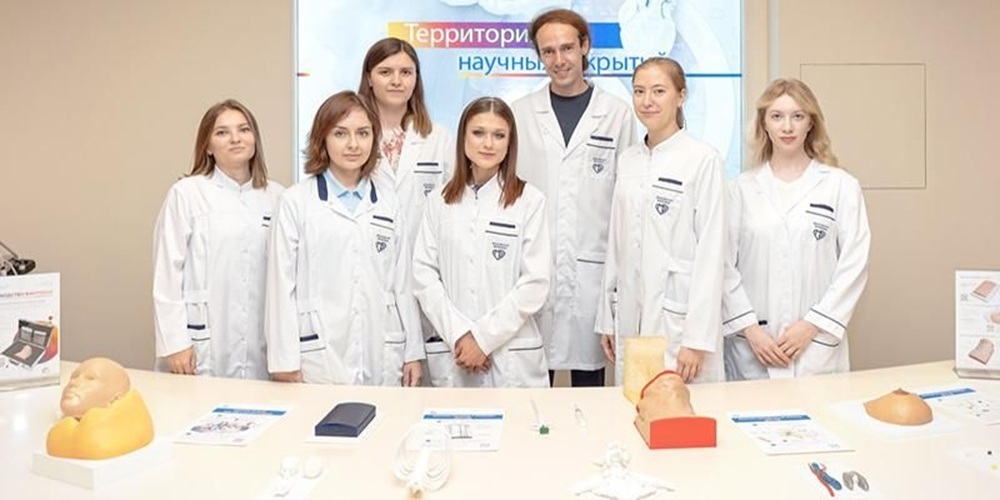
A proprietary support system for young scientists has been implemented at the Center for Diagnostics and Telemedicine Center of the Moscow Health Department. The model is built on a functional division of labor, the separation of technical and organizational processes from research activities, the standardization of scientific work, support for employee engagement, and continuous professional development.
The model enables early-career specialists to gradually adapt to the demands of research, work effectively in interdisciplinary teams, and move from academic assignments to applied research projects in radiation diagnostics, artificial intelligence, and digital medicine. This was announced by Anastasia Rakova, Deputy Mayor of Moscow for Social Development.
“Moscow places particular emphasis on developing healthcare talent, and the Center for Diagnostics and Telemedicine provides a strong example of how systematic support for young scientists delivers measurable results. The Research Department currently employs 137 people, 76.6 percent of whom are young specialists. The Center has created an environment in which emerging researchers can advance from student to project manager within two to three years. Through its mentoring model and proprietary management practices, the time required for scientific research and manuscript preparation has been reduced by half, while pilot studies and the development of methodological recommendations have accelerated by 1.5 times. The model has already demonstrated its effectiveness,” said Anastasia Rakova.
The model is based on a functional division of labor, the separation of technical and organizational processes from scientific research, the standardization of scientific work, and support for employee engagement and continuous development.
The Center applies flexible management practices: employees not only receive assignments but also participate in discussions, propose solutions, and influence how work is organized. A key instrument is the proprietary digital “Task Matrix,” which ensures transparent workload distribution and supports the planning of performance indicators.
In addition, the Center is actively expanding educational pathways for future specialists, offering a postgraduate program in radiation diagnostics and a residency program in radiology. Its scientific and educational laboratory provides training and practical experience for students from leading academic institutions, including I.M. Sechenov First Moscow State Medical University, N.I. Pirogov Russian National Research Medical University, the Moscow Institute of Physics and Technology, and MIREA (Russian Technological University). To date, 64 scientific collaboration agreements have been signed.
The Center’s scientific standing is consistently reinforced by its publication activity. According to the Russian Science Citation Index, the Center ranks fourth among medical organizations of the Moscow Health Department in both the average number of publications per author and the number of publications in journals indexed in Web of Science and Scopus.
The high quality of the Center’s research is also reflected in its first-quartile ranking among research institutions in the Russian Federation for publication volume and citation impact.
The Center’s developments are successfully integrated into clinical practice. It has established its own production facility for high-tech products, manufacturing 16 types of medical phantoms and simulators. These products are already used in Moscow hospitals and educational centers and are also supplied to colleagues in other Russian regions and abroad.
